Policing Practices Vary Across Democratic Nations
Written by Black Hot Fire Network Team on March 10, 2026
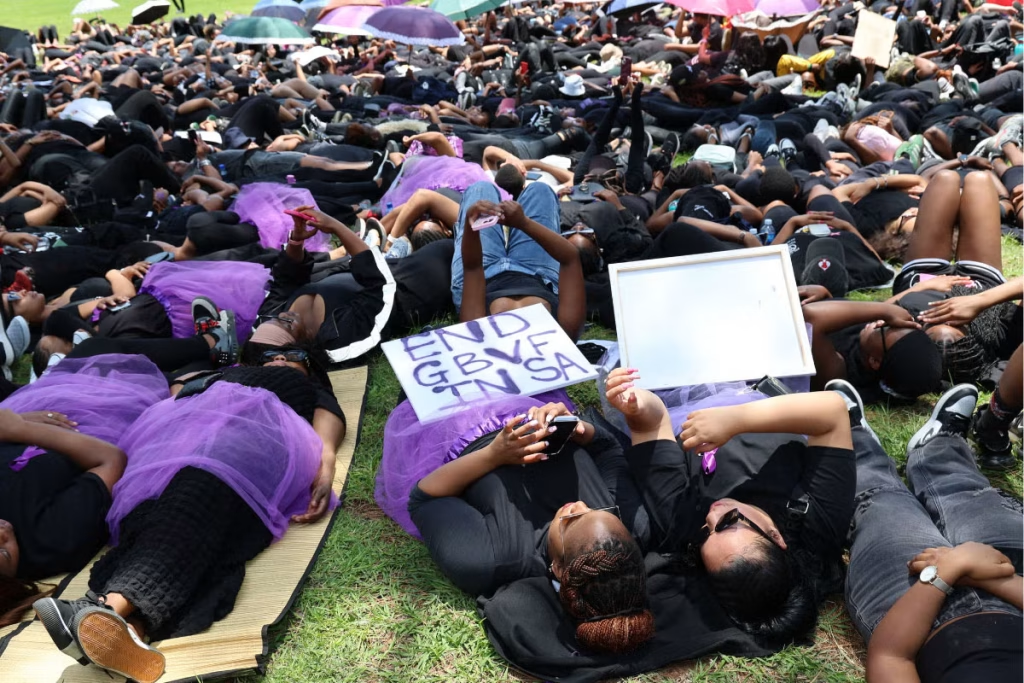
The death of George Floyd in 2020, following an encounter with a police officer, led to widespread protests and a national discussion regarding police practices and racial inequality. Subsequent incidents involving police and civilians have continued to highlight these concerns.
Initial Events and Protests
George Floyd, a Black man, died after Derek Chauvin, a white police officer, knelt on his neck for several minutes. This event occurred in Minneapolis, Minnesota, and quickly gained national and international attention. The incident triggered protests across the United States, with demonstrators calling for changes in policing strategies and an end to systemic racism. Demands included proposals to defund police departments, prohibit chokeholds, and eliminate practices perceived to disproportionately affect minority communities.
Policy Debate and International Comparisons
The protests spurred a public policy debate concerning police reform. Discussions centered on potential changes to law enforcement practices and accountability measures. The debate also included an examination of how policing is approached in other countries, seeking potential models for reform.
Further Incidents and Renewed Focus
The trial and conviction of Derek Chauvin for George Floyd’s murder did not resolve the underlying issues. Subsequent incidents, including the deaths of Daunte Wright, a Black man, and Adam Toledo, a Latinx child, both at the hands of white police officers, have brought renewed attention to the ongoing concerns about police violence and its impact on minority communities.