
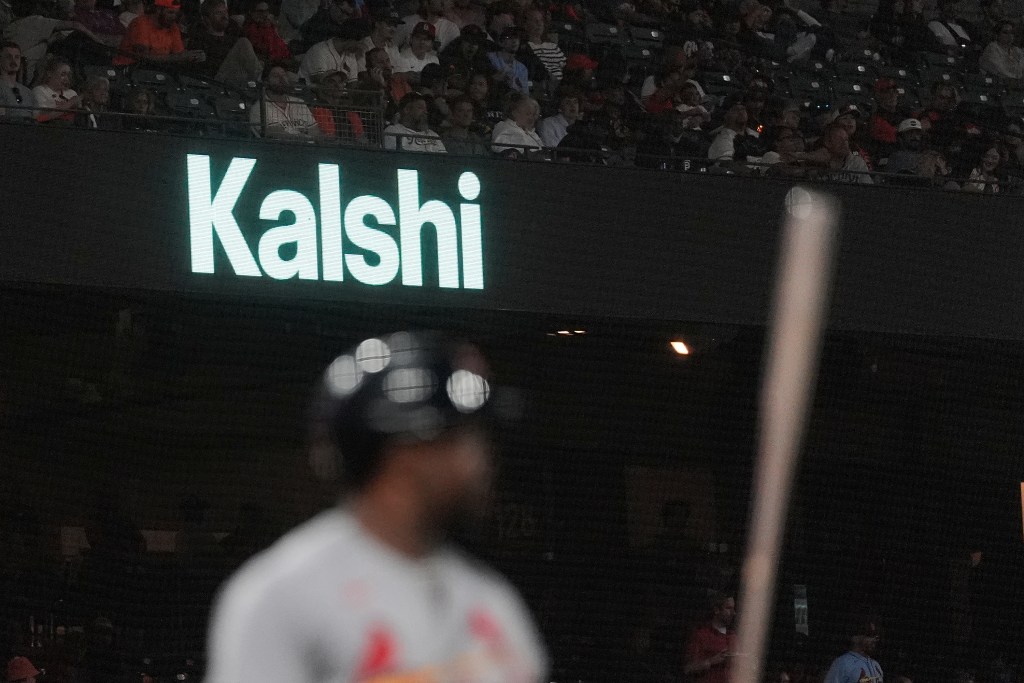
Kalshi will let you put money on a Hawaiʻi hurricane, a Trump speech or Tuesday’s midterms. Hawaiʻi’s House voted this year to ban markets like those, and since July, the company’s poured a lot of money into Democrats in Hawaiʻi.
Kalshi is a prediction market. Each contract is a yes-or-no question, and if you’re right, it pays $1. A federal agency, the Commodity Futures Trading Commission, oversees it as an exchange, and Kalshi argues that federal law overrides state gambling laws. That’s why it has been allowed to operate in Hawaiʻi, where gambling is illegal, as Civil Beat’s Madeleine Valera reported in July.
But in its own ads, Kalshi has been more candid. The 9th U.S. Circuit Court of Appeals, which covers Hawaiʻi, noted in August that the company “advertises itself as ‘the first app for legal sports betting in all 50 states’” and ruled against it in a fight with Nevada. Two other federal appeals courts have split on the same question, and the Commodity Futures Trading Commission has sued 10 states to stop them from enforcing their own laws against exchanges like Kalshi.
New Jersey’s gaming regulators have asked the U.S. Supreme Court to take up the fight, and Hawaiʻi Attorney General Anne Lopez has joined the states’ side at both the 9th Circuit and the Supreme Court.

Hawaiʻi’s House didn’t want to wait for the courts. In January, Rep. Scot Matayoshi and 15 other House Democrats introduced a bill to ban contracts on sports, politics, death and more. The House Judiciary and Hawaiian Affairs Committee’s report explained why: “although marketed as innovative financial products, these markets function as gambling systems often built on human suffering, political instability, and catastrophic events.”
The full House passed it 49-0 on March 10, but the Senate never gave it a hearing.
Four months after the House vote, Kalshi started writing checks. Its own filings with the Campaign Spending Commission show $63,000 in Hawaiʻi political contributions from July 16 through Oct. 19.
The biggest, $25,000, went to the Democratic Party of Hawaiʻi on Sept. 1, tying with five others for the largest single gift the party has reported this cycle. The other $38,000 went to 22 Democratic candidates, including 13 House members who had voted for the ban, four of whom had co-introduced it. Kalshi also hired two lobbyists, including former Rep. Cedric Gates, who represented the Waiʻanae Coast for four terms.
Kalshi’s checks may not sound like much in a year when OpenSecrets projects a record $11.9 billion in federal midterm spending. But Hawaiʻi’s legislative races run on small budgets. In 2024, the median House winner in a contested general election spent $28,518.59 over the two-year election period, according to Campaign Spending Commission records. So the $2,000 Kalshi gave four House candidates, the legal maximum, would cover about 7% of a typical winner’s spending.
Whether that money changes votes is another question. Rep. Andrew Takuya Garrett, who co-introduced the ban and got $1,000 from Kalshi in October, pointed out that “accepting a contribution should not be confused with endorsing a company’s legislative agenda.”
Garrett also said he continues to oppose legalized gambling and supports “efforts to ensure that emerging prediction-market platforms do not undermine our existing gambling laws.”
It seems likely those questions will be on the 2027 legislative agenda, and Kalshi’s checks join the gaming money that is already flowing into Hawaiʻi politics ahead of an upcoming state report on gaming policy.
The Legislature asked for a working group to study gaming, from the new stadium district to ships, and report back before the 2027 session.
The rest of the gaming industry has a seat in that working group. The resolution set aside places for “three individuals representing gaming corporations,” and the members include Boyd Gaming, FanDuel, Aristocrat and Marnell’s Kent Caputo, but no one from Kalshi.
The industry sees Kalshi as a rival: the American Gaming Association told the U.S. Supreme Court in October that letting prediction markets take sports bets outside state law “is inflicting serious competitive harm on state- and tribal-licensed gaming operators.” Still, the line isn’t clean, since the search listing for FanDuel’s own prediction app calls it “available in all 50 states, even where betting isn’t legal.”
Two of the gaming members of that group have been writing checks, too. Boyd’s committee reports giving $34,746.60 to 22 candidates since September 2024, and Boyd gave another $25,000 to the super PAC backing Sen. Jarrett Keohokalole’s run for Congress, as Civil Beat’s Nick Grube reported.
These gaming interests aren’t necessarily all in favor of legalized gambling. Boyd runs 27 gaming properties in 11 states and has deep ties to Hawaiʻi: islanders filled about 75% of the occupied room nights at its California Hotel and Casino in Las Vegas last year, and it owns Vacations Hawaii, a travel agency selling trips there. For companies like Boyd, a change in the status quo could cut into their business.
Gov. Josh Green’s own reports show $41,546.60 this cycle from casino and betting interests: Boyd, the Sports Betting Alliance, Rush Street chairman Neil Bluhm and Rush Street Interactive board member Andrew Bluhm, and three executives of Marnell, a Las Vegas company that designs, builds and owns casinos, Caputo among them.
Gaming is “merely one of a myriad of potential options.”
Senate President Ron Kouchi
Green has also taken $30,000 from people tied to companies that have pushed lawmakers to allow gambling here: $18,000 from developer Stanford Carr, who testified for a stadium casino, his wife and a manager at his company, and $12,000 from six Norwegian Cruise Line employees, whose company this year backed a bill to allow gambling on cruise ships.
I expect that lawmakers have been waiting for the working group’s report, and that the wait likely held up the Kalshi ban and other bills. Keohokalole told Civil Beat he wanted a hearing but couldn’t get enough senators interested, and Sen. Lynn DeCoite, who chairs the other committee it went to, co-chairs the working group.
Senate President Ron Kouchi told me that until the group finishes and the senators caucus, “it would be premature for me to guess” what comes next. He also described a budget squeezed by federal cuts and fewer visitors, and said raising the hotel room tax “does not seem like an option.” Gaming, he said, is “merely one of a myriad of potential options.”
Kalshi has no seat in the working group, but its checks suggest it wants influence when the ban comes back. While we don’t know exactly what the final gambling plan will be, we do know that the money suggests something is about to happen with gambling in Hawaiʻi. It’s the thing to watch as the state figures out where its money will come from.