
Rwanda will shift to a government-to-government (G-to-G) fuel importation deal from August this year, signalling reduced business for Kenyan oil marketers who are still smarting from the loss of the Ugandan market.
Industry executives told the Business Daily that the government of Rwanda has already informed the local players of the changes.
“They have already written to the oil marketers of their shift to a G-to-G model, which is starting in August this year,” an industry executive said on Friday.
Sources revealed that OQ Trading, which is the international energy and commodity trading arm of the Sultanate of Oman, will supply Rwanda with fuel under the G-to-G arrangement.
Rwanda’s shift to a G-to-G importation of fuel will close yet another regional market for Kenyan oil firms that have for decades supplied fuel to the tiny East African nation, which is landlocked.
Rwanda largely imports its fuel through Dar es Salaam, with about 30 percent coming through Kenyan oil marketers.
Kenyan oil dealers are still reeling from the loss of the Ugandan transit market, barely two years after the Yoweri Museveni administration shifted to a G-to-G deal.
Uganda had cited expensive fuel as a key reason behind its decision to roll out its G-to-G deal with Vitol Bahrain in May 2023. The Uganda National Oil Company is handling the imports, cutting out the market that had been dominated by Kenyan oil marketers.
Kenya pioneered the G-to-G arrangement in the region with its April 2023 deal with Saudi Aramco, Abu Dhabi National Oil Company, and Emirates National Oil Company. The three firms supply fuel on a credit period of 180 days to ease dollar demand and prop up the shilling.
Rwanda’s partner, OQ Trading, is wholly owned by the Omani government. The energy investment company was established in 2006 and is headquartered in Muscat, the capital of Oman. Industry executives reckon that Rwanda has signalled its preference to use the port of Mombasa and Kenya Pipeline Company (KPC)’s network in its G-to-G deal.
Top Rwandan energy officials are expected in Nairobi this week to meet KPC officials.
Rwanda’s reasons for shifting to the G-to-G model remain undisclosed. But like many other countries buying fuel in the spot markets, it was recently exposed due to the US-Israel war that disrupted supplies globally.
Rwanda currently has the costliest fuel in the East Africa region, with a litre of petrol going for $2 compared to $1.704 in Uganda and $1.643 in Kenya.
A litre of diesel is currently going for $1.992 in Kigali, compared to $1.712 in Nairobi and $1.665 in Kampala.
The costly fuel has mainly been blamed on the US-Israel war on Iran, which disrupted supplies, leading to sky-high prices of refined fuel and steep freight charges due to the closure of the Strait of Hormuz.
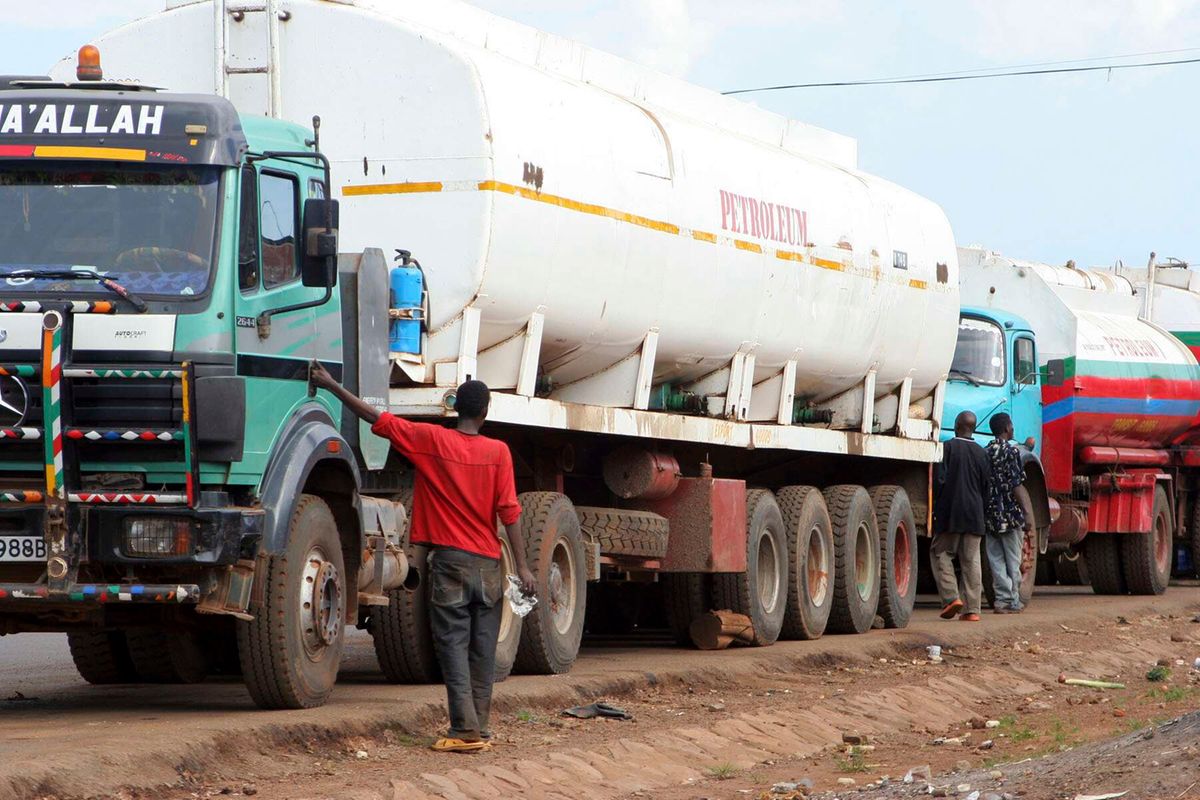
Kenyan oil marketers in the transit market will now be left with the Democratic Republic of Congo (DRC), Burundi, and South Sudan markets. This will, in turn, hurt them, given that a number of these firms primarily play in the transit petroleum market.
Rwanda will now seek allocation in the KPC’s system to store and transport its fuel to the depots from where it will be trucked to Kigali and other parts of the country.
It remains unclear whether Rwanda has already finalised the user agreement with KPC. The agreement will cover critical areas such as ullage, line fill, and user tariffs.
Line fill is the minimum volume of fuel that is needed to occupy the physical space of a pipeline for its efficient flow, while ullage represents the available or required space needed to safely accommodate product expansion, manage batch transfers, or perform line clearing operations without causing overflow.
An oil marketer must meet the ullage and line fill requirements to store and move its product along the KPC system from the import handling tanks at the port of Mombasa to the end stations, from where it is sold to consumers. KPC regulates ullage on its system to curb hoarding and ease congestion.
The marketers negotiate for ullage and line fill with KPC, based on the volumes available and the import quotas. The agreed rates must be approved by the Energy and Petroleum Regulatory Authority (Epra).
Epra also gazettes the user tariffs for storing fuel and transporting it along KPC’s systems. The charges cover all oil marketers licensed in Kenya. Kenya currently charges discounted rates on transit fuel, a decision that was made years ago to boost the attractiveness of the port of Mombasa and ward off competition from the port of Dar es Salaam.
Rwanda will now join Uganda in cutting reliance on Kenyan oil marketers for their fuel supplies, moves that are widely seen as efforts by the respective governments to have a greater say in the pump prices.
Rwanda recently formed a State-backed Rwanda National Petroleum Corporation (RNPC) as the State-backed entity responsible for national fuel imports, setting the stage for President Paul Kagame’s administration to start the G-to-G fuel importation deal.
Rwanda bought a stake of less than one percent in KPC in March this year. The acquisition was part of the initial public offering (IPO), where the Kenyan government relinquished its 65 percent stake to private investors and neighbouring countries.
Uganda bought a stake of 20.1 percent in KPC, earning it two board seats and veto over the hiring and firing of the company’s CEO.