

“You say you want a revolution
Well, you know / We all want to change the world.”
—“Revolution,” The Beatles
In the late nineteenth and early twentieth centuries, feminists such as Elizabeth Cady Stanton and Lucretia Mott worked courageously for family, legal, political, and social equality for women. Some, like Sojourner Truth, were anti-slavery as well. Through the years, others followed, notably Betty Friedan and Gloria Steinem in the ’60s and ’70s.
Yet now, many progressives champion “transgender rights,” meaning boys can play sports on girls’ teams, dress and undress with them in the locker room, and even compete in women’s beauty pageants. All of this compromises, either substantively or symbolically, the hard-fought feminist gains throughout the last century.
What explains such a glaring contradiction? A wise friend of mind explained, “It’s all about the revolution. Sacrifices have to be made.” To be sure, there have been notable and at times destructive revolutions for the last two centuries or more. The most ideological and destructive have been the Marxist Revolution in Russia (1917–1923), the French Revolution (1789–1799), and the Cultural Revolution in China (1966–1976). The thing these revolutions had in common was the desire to overturn the existing cultural, social, and political order, which includes undoing every tradition the revolutionaries can find.
This suggests, then, that the revolution underway in the US has a much larger agenda than identifying or inventing individual rights. The current revolution is out to change the world. At one stage in the Cultural Revolution, Mao Zedong ordered the country to destroy the “Four Olds”: old ideas, old culture, old customs, and old habits. They were to be replaced with the “Four News”: new ideas, new culture, new customs, and new habits. Revolutions may even take on a pseudoreligious dimension, as with the French Revolution’s anti-Christian “Cult of Reason.” Several years ago, actress and talk show host Drew Barrymore attracted considerable attention when she reverently kneeled before transgender activist Dylan Mulvaney.
The revolution underway in the US has a much larger agenda than identifying or inventing individual rights.
The Facts and Legal Issues
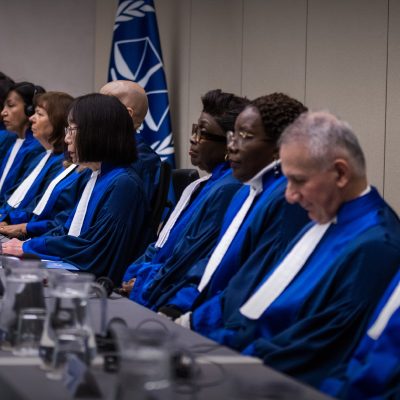
All of this brings us to the recent Supreme Court case involving bans on men playing women’s sports. The Court decided 6–3 with the predictable lineup of votes: The three dissenters were Sotomayor, Kagan, and Jackson—the Court’s liberal justices. In the majority were Kavanaugh, who wrote the majority opinion, Roberts, Thomas, Gorsuch, Barrett, and Alito.
Two “consolidated cases” were combined: one involved Lindsay Hecox of Idaho, the other Becky Pepper-Jackson (B. P. J.), of West Virginia. Both cases have to do with men, after they have declared themselves women, desiring to play girls’ sports. By the time the Supreme Court considered these cases, Lindsay Hecox had withdrawn his complaint.
The opinion, then, is primarily about B. P. J.’s complaint, which is the more interesting of the two cases because in third grade, and with the support of his mother, B. P. J. declared himself female and began hormone therapy. Consequently, B. P. J. did not undergo puberty.
There were primarily two legal issues to consider. One was statutory: Title IX of the Educational Amendments of 1972. Title IX is well known because it brought gender parity to sports on college campuses. The basic formula has been that an equal number of sports opportunities must be available to both men and to women, and the statute has revolutionized women’s sports. The other legal issue was constitutional—namely, the Equal Protection Clause of the Fourteenth Amendment.
Title IX, the Due Process Clause, and Trampolines
Neither the majority opinion nor the minority dissent accept B. P. J.’s argument that exclusion from women’s sports violates Title IX, given that the statute clearly allows a distinction between biological males and biological females. Indeed, the purpose of the law is to achieve parity between the two genders. Since its passage, however, the Fourteenth Amendment’s Equal Protection Clause has been interpreted far more flexibly—sometimes imaginatively—and on this the Court is divided.
The majority opinion asserts,
The Equal Protection Clause allows schools to maintain separate teams for female and male athletes. Schools may determine eligibility for women’s and girls’ teams based on biological sex. That policy is constitutionally justified by the vitally important interests in safety and competitive fairness so as to provide equal opportunities for women and girls to participate in sports.
The reasoning continues: “States need not make case-by-case exceptions—for example, schools are not required to make individual exceptions to allow certain biological males to compete in women’s and girls’ sports whether they show evidence of puberty or not.”

When legal organizations like the American Civil Liberties Union and Lambda Legal decide to back a court case, they look for the right person to defend and the right opportunity. Among other things, they seek an individual likely to elicit the most sympathy from the Court and from the public at large. They seem to have found a suitable candidate in B. P. J.
The dissenting opinion, written by Justice Sonia Sotomayor, is effusive in its sympathy for B. P. J.’s situation to show the reader that B. P. J. is just like the rest of us. Sotomayor writes, “B. P. J. is a transgender girl who wants to live her life consistent with her gender identity” and “when B. P. J. was 11 years old, she sought the opportunity to do what she and so many other children love to do: play sports.” According to B. P. J.’s mother, Justice Sotomayor notes, B. P. J. is “a bright and kind child who cares deeply about her family and friends and excels in school.”
Sotomayor overworks her narrative to convince the rest of us that B. P. J. is as normal as the next child:
She is “very passionate about math and science”; her favorite videogames include Minecraft and Overwatch; and she enjoys jumping on the trampoline, running, playing with her dogs, and seeing her friends.
(Exactly what trampolines have to do with the Equal Protection Clause is not entirely clear. But then again, I’ve not been to law school.)
Equally notable is the ease with which Sotomayor accepts the language of the transgender rights movement and how uncritically and fluidly she employs it in formal jurisprudence. For example, “cisgender” is practically a neologism; it entered English vocabulary in 1994 and was not added to the Oxford Dictionary until 2025. The justice is also careful to use B. P. J.’s preferred pronouns, laying down the contested premise that she really is female in all important respects: Even though B. P. J.’s sex was “identified as male at birth . . . she has known from the time that she was very little” that she is a girl.
Sotomayor’s primary argument is that this case should be “individualized”—that is, given B. P. J.’s unique circumstances, the Court owes him the opportunity to evaluate whether B. P. J.’s “strength, size, and speed” may threaten the well-being of other female athletes or give B. P. J. an unfair competitive edge.

If this position had been accepted by a majority of the Court, it would mean that many similarly situated students be evaluated on a case-by-case basis. Such an approach, of course, might be chaotic. It would require significant time and energy from school personnel and any “conclusions” about whether a student is “too male” or “adequately female” would be subjective and would undoubtedly open up a Pandora’s box of new litigation. It is true that there is no guarantee that SCOTUS decisions be practical: The enjoyment of individual rights is at times disruptive. In this case, however, the majority argues that the Equal Protection Clause does not require what B. P. J. seeks, practical or impractical though it might be.
It is important to note that B. P. J. has not been “excluded” from playing sports; rather, Sotomayor asserts that “it would be inconsistent with her gender identity to play sports with boys.” Sotomayor quotes B. P. J.’s mother, Heather Jackson, who warns that denying B. P. J. the right to play soccer with girls would “‘further isolate, stigmatize, and erase her.’” Does “erasure” mean that B. P. J. would become suicidal? Is B. P. J.’s mother making a threat? A prediction? It is not clear.
Competing Compassion, Normality, and the Future
The majority opinion tries to be just as sensitive as the dissenting opinion to the personal difficulties involved in this case and others like it:
We do not accept the dissent’s assumed monopoly on understanding the effects on individuals involved in disputes over transgender athletes. We are acutely aware of the difficulties sometimes faced by boys who identify as girls (and girls who identify as boys) in middle school, high school, and beyond. And we greatly admire the desire of all students, including transgender students such as B. P. J., who want to participate in sports. But in conducting the equal protection inquiry, we must also account for the effects on girls who are forced to compete against biological males in sports.
Kavanaugh seeks to turn the dissent’s “appeal to pity” argument (argumentum ad misericordiam) on its head. He writes that girls
spend extraordinary time and effort to train in the heat and in the cold, to work out early in the morning and late at night, to get a little faster, to become a little stronger, to jump a little higher, to shoot a little better . . . to make the lonely journey back from an ACL tear to scrap for playing time.
Between the majority and minority opinion, it’s hard to remember a Supreme Court case with such dueling declarations of compassion.
“Men and boys with gender dysphoria are not women or girls, even if they believe that they are.”
In his concurring opinion, Justice Thomas, now seventy-eight years of age and in his typically forthright manner, begins, “A man does not have a legal right to compete against women just because he believes that he is a woman.” He then notes that transgender status is not a “suspect class,” as is the case with the other groups protected by the Equal Protection Clause. Rather, he continues, they are experiencing what is traditionally diagnosed as “gender dysphoria”—which, unlike sex, race, or country of origin, is not an “immutable trait.” He emphasizes, “Men and boys with gender dysphoria are not women or girls, even if they believe that they are.”
To say otherwise, Thomas argues, is an abuse of language, and the justice cites Catholic philosopher Josef Pieper’s book Abuse of Language, Abuse of Power, in which the author argues that instead of a means to understanding truth, language has been hijacked to manipulate and achieve certain ends. In so many words, Thomas insists that B. P. J.’s quest is not normal; rather it is abnormal. No one else on the Court seems willing to employ that vocabulary.
As the decision was announced, twenty-seven states had enacted bans restricting biological males to sports teams and events corresponding to their biological gender, and the same for biological females and their corresponding athletic teams and events. But the decision does not restrict any other jurisdiction from allowing males to compete in female events.
Even though B. P. J. did not win before the Court, three votes out of nine found gender restrictions in school sports unconstitutional, citing B. P. J.’s unique circumstances. That is only two votes away from a majority decision. Will transgender activists now begin to encourage other children suffering from gender dysphoria to make an irreversible decision before they have mastered their multiplication tables? If so, such advice will contradict the official position of the American Medical Association—that life-changing solutions to gender dysphoria be delayed until adulthood.
Whatever the future holds, those opposing the revolutionary aims of the trans rights movement may find that an appeal to “normality” is ineffective.