
- New CMIP6 based study finds that climate driven weather patterns are increasingly synchronising low solar output events across African power pools.
- West Africa and Central Africa could exceed 100 synchronised low solar days per year under high emissions scenarios.
- Southern Africa shows comparatively stronger resilience due to geographic and climatic diversity, but risks still rise in key corridors.
A new study titled ‘Climate driven synchronisation of solar extremes threatens the resilience of Africa’s regional power pool,’ warns that climate change could significantly undermine one of the core assumptions behind Africa’s renewable energy transition, namely that weather related drops in solar power generation do not occur simultaneously across countries.
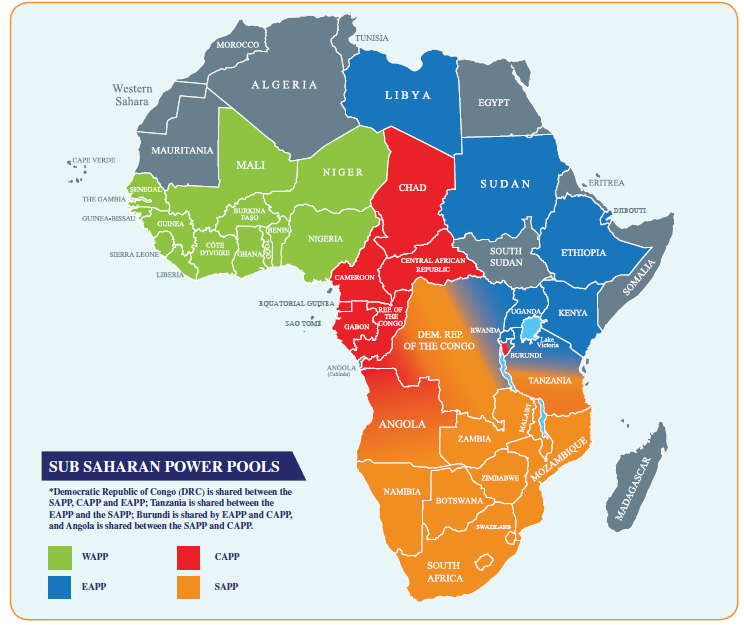
The research assesses all five African regional power pools and finds that increasing atmospheric coherence driven by large scale climate processes is likely to create more frequent synchronised low photovoltaic output events. These are periods when multiple countries within a power pool simultaneously experience weak solar generation, reducing the effectiveness of cross border electricity trade and backup sharing.
Using bias validated CMIP6 climate model projections covering 1980 to 2100 under moderate and high emissions pathways, the study identifies a clear vulnerability gradient across the continent. Under the high emissions scenario SSP5 8.5, the West African Power Pool and Central African Power Pool each exceed 100 synchronised low solar days per year by the end of the century. The Eastern African Power Pool shows a substantial increase in such events, while the Southern African Power Pool demonstrates comparatively stronger structural resilience due to its broader latitudinal spread and partial atmospheric decoupling between member states.
The study highlights that thermal stress from rising temperatures is a universal driver of declining photovoltaic efficiency across all regions, while radiation driven effects vary depending on local atmospheric conditions. In some areas, dust and cloud changes amplify solar losses, while in others they partially offset temperature impacts. These dynamics create a complex and uneven risk landscape for solar dependent power systems.
The authors also find that key transmission corridors could become exposed to high levels of correlated solar variability. In West Africa, for example, synchronized low output events are strongly linked to Saharan dust transport and monsoon cloud systems affecting multiple countries within short timeframes. In Eastern Africa, monsoon related circulation patterns create similar regional coherence, while Southern Africa is influenced by subtropical high pressure systems that affect several countries simultaneously during winter periods.
At the same time, the study identifies meaningful opportunities for resilience through diversification. Southern Africa benefits from weak or negative correlations with West and East African systems, suggesting that continental scale interconnection could provide balancing benefits if transmission infrastructure is expanded strategically. However, in some cases, such as parts of Central Africa, increasing climate driven synchronisation may reduce the effectiveness of geographic diversification that underpins current planning assumptions.
The research also shows that current reserve margin practices of 15 to 20% in many African power pools are based on the assumption of largely independent weather driven generation variability. The findings challenge this assumption, particularly for West and Central Africa, where climate driven synchronisation appears to be increasing over time under high emissions pathways.
From a system planning perspective, the study emphasises that impacts vary significantly depending on each country’s share of solar capacity within a power pool. In Eastern Africa, for example, countries such as Egypt carry a dominant share of projected solar capacity, meaning system wide risk is more sensitive to conditions in a smaller number of locations. In Southern Africa, South Africa’s large solar market similarly shapes aggregate exposure, while smaller countries contribute disproportionately to variability without strongly influencing total capacity outcomes.
Seasonal patterns further refine the risk picture. In West Africa, the highest synchronisation risk occurs during the summer to autumn period when monsoon activity and atmospheric moisture variability intensify cross border correlation in solar output. In Southern Africa, much of the apparent synchronisation reflects predictable seasonal cycles, but when these are removed, the true level of weather driven correlation is lower than initially assumed. In contrast, West Africa shows strong within season variability driven by dust events that are more difficult to predict and manage operationally.
The Central African Power Pool presents a contrasting case. Historically, it has benefited from natural diversity between equatorial and Sahelian climates. However, under climate change, both regions are projected to experience more simultaneous extremes, significantly increasing synchronisation risk from relatively low historical levels. The study finds that synchronised low output days in Central Africa could rise from fewer than 25 per year historically to more than 100 under high emissions conditions.
Despite these risks, the study stresses that solar synchronisation should not be interpreted in isolation as a full measure of system reliability. Many African power systems are expected to include substantial contributions from wind, hydro and other resources that may offset periods of low solar output. In some regions, wind generation during dust events or hydropower availability during rainy seasons may partially compensate for solar shortfalls.
The authors conclude that Africa’s power pool based energy strategy remains viable, but that its underlying assumption of spatially independent solar variability is weakening under climate change. They recommend that planners incorporate climate driven synchronisation metrics into transmission design, reserve planning and cross border interconnection strategies, alongside complementary assessments of wind, hydro and storage resources.
Overall, the study provides a continent wide framework for understanding how climate change may reshape the reliability of Africa’s rapidly expanding solar energy systems, highlighting both emerging risks and opportunities for more resilient cross border power trade.
Link to the full paper HERE
Author: Bryan Groenendaal