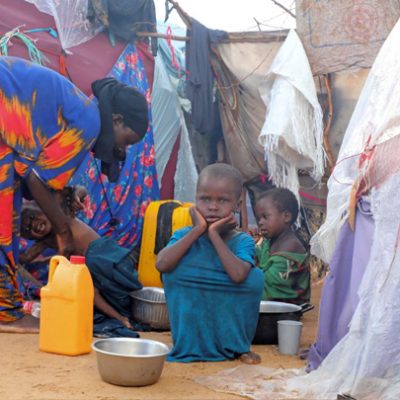

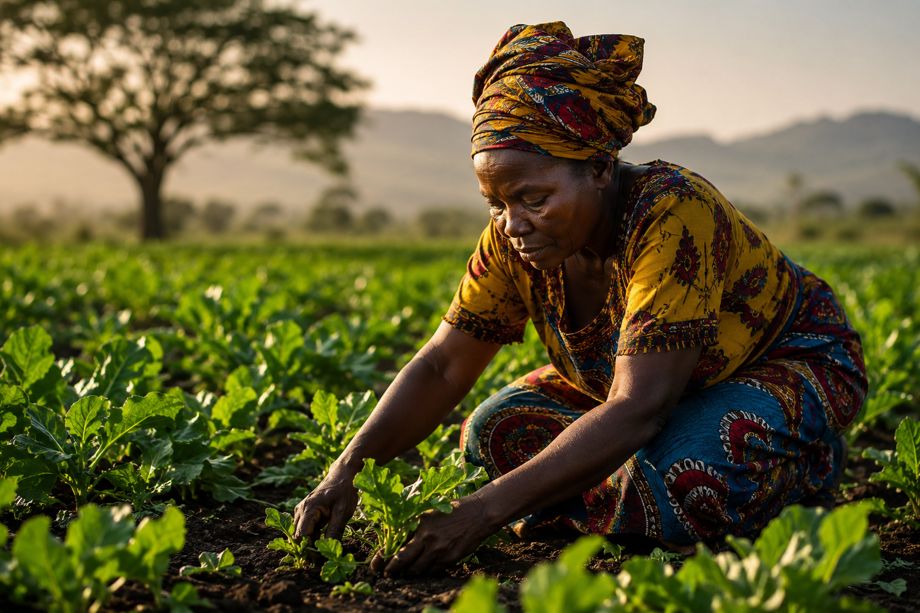
Across sub-Saharan Africa, climate change is magnifying an older vulnerability. The women who grow food, hold families together and keep small farms running are often the same people with the least land security, the least credit, the least access to training and the weakest voice in decisions that shape their survival.
A new review of 41 studies on smallholder women farmers across sub-Saharan Africa makes that imbalance impossible to ignore. The evidence shows that rising temperatures, erratic rainfall, droughts, floods and climate-related farm losses are colliding with entrenched gender inequality in ways that directly threaten livelihoods, food security and rural resilience.
The study “Climate Change Adaptation Strategies and Sustainable Livelihoods of Smallholder Women Farmers in Sub-Saharan Africa: A Scoping Review” is published in the journal Sustainability by Abraham Bugre, Amber J. Fletcher and Maureen G. Reed.
Weather Shock Is Real, But Deeper Crisis Is Structural
Climate change is already disrupting the basics of smallholder agriculture across the region. Women farmers are confronting rising heat, shifting rains, water stress, pest pressure, falling yields and more frequent production losses. In rain-fed systems, even modest climate volatility can turn into an economic shock. In harsher settings, it can become a livelihood crisis.
However, weather alone does not explain why women are hit harder. Their vulnerability is being shaped by the structures around them: insecure land rights, weak access to credit, low educational attainment, limited agricultural extension, restricted access to technology and social norms that still push men to the center of authority.
If climate harm is treated only as an environmental problem, the response will focus on seeds, irrigation, inputs and forecasting tools. Those are necessary, but they are not sufficient. The evidence suggests the bigger challenge is political and institutional: women are expected to adapt while operating from a systematically weaker starting point.
The paper shows how climate change turns pre-existing inequality into a multiplier of risk. The farms are under pressure, but so are the rules that decide who gets support, who controls assets and who gets to plan for the future.
Adapting Against the Odds
The review pushes back against the familiar image of rural women as passive victims of climate change. Across the 41 studies, women farmers were found to be actively adjusting through crop diversification, intercropping, mixed farming, water harvesting, altered planting dates, early-maturing varieties, petty trading, livestock integration and other strategies designed to spread risk.
Many of these responses are shaped by scarcity rather than choice. Women often rely on lower-cost, lower-return or labor-intensive strategies because they cannot afford better options. They may diversify crops to protect household food security, but in doing so they also take on more work and more decision pressure. They may enter off-farm activities to stabilize income, but that often happens on top of domestic work, caregiving and unpaid reproductive labor that men are less likely to shoulder.
Development systems often praise resilience without asking what it costs the people performing it. Women’s adaptation can look successful from a distance while masking exhaustion, overwork and declining long-term opportunity. A coping strategy is not the same as a secure livelihood path. The review warns governments and donors to not confuse visible adaptation with sufficient support. Women are adjusting because they have to, not because the system has equipped them well.
Locked Out of Resilience
Women’s climate vulnerability is being driven less by a lack of awareness than by a lack of access, the review stresses. The most common barriers identified across the studies were limited access to credit, insecure land tenure, restrictive social and cultural norms, weak access to information and training, and low decision-making power.
Land is a particularly revealing fault line. Without secure land rights, women may be reluctant or unable to invest in long-term adaptation measures. They may also struggle to access loans, inputs or formal recognition as economic actors. Credit follows the same pattern. Where women cannot borrow at reasonable terms, climate-smart technologies remain out of reach. The result is a highly unequal adaptation landscape in which those under the greatest pressure have the fewest tools.
The review also highlights a subtler but equally important issue: the language and assumptions built into research and policy. The continued use of terms such as “male-headed households” can quietly reinforce the idea that men are the default authority figures, even in households where women farm, earn, manage and adapt. What policy sees is often shaped by how research names people. If women are not fully recognized as farmers in their own right, then adaptation policy will continue to undercount their needs, undervalue their agency and misunderstand how decisions are made on the ground.
Why Gender-Blind Adaptation Policy Will Keep Falling Short
The review insists that gender alone is not enough to explain adaptation outcomes. Only a small number of the studies explicitly used an intersectional lens, yet the evidence clearly showed that women’s experiences differ sharply depending on poverty, education, marital status and caregiving burdens.
Too many interventions talk about “women farmers” as if they form a single category with a single solution set. The review suggests that such broad targeting can miss the women facing the heaviest burdens. It can also produce programs that appear gender-sensitive on paper but do little to shift the deeper conditions shaping who can adapt.
Adaptation policy must become more precise, more locally grounded and more honest about power, which means securing land rights, designing credit and insurance products that women can actually access, expanding extension systems that reach women on practical terms, and building programs around the realities of unpaid care work and constrained mobility.
Supporting women farmers is not a niche gender issue at the margins of climate policy – it’s vital to the future of rural livelihoods, agricultural resilience and inclusive development across the region.