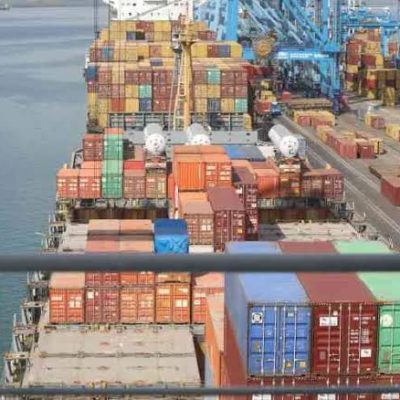


A volatile, unpredictable, and inherently contradictory tax regime is systematically dismantling Kenya’s highly touted industrialization agenda. By fostering a punitive regulatory environment where importing fully assembled goods is significantly more profitable than manufacturing them locally, government policy is actively undermining the very foundation of the nation’s economic independence and long-term prosperity.
Policy inconsistencies—characterized by sudden tariff shifts, erratic excise duty implementations, and the unpredictable taxation of raw industrial inputs—have severely shattered investor confidence in the domestic manufacturing sector. This relentless regulatory turbulence not only stifles mass job creation but directly contradicts the administration’s stated strategic goal of transforming Kenya from a net importer into a robust, export-led industrial powerhouse.
The Penalty on Local Production
The core of the crisis lies in a structurally flawed customs and excise framework that perversely penalizes value addition. When the statutory law treats a fully built, imported electronic appliance or vehicle more favorably than a raw component destined for a domestic assembly line, the underlying economic logic is fundamentally broken. Local manufacturers are subjected to a labyrinth of import duties on raw materials, soaring energy levies, and heavy compliance costs, rendering their final products uncompetitive against cheap, subsidized imports from Asia.
This hostile environment forces prospective industrialists into a brutal calculus. Rather than investing billions of shillings in factories, machinery, and local labor, corporate entities increasingly opt to operate as mere distribution hubs for foreign manufacturers. The resulting deindustrialization strips the Kenyan economy of high-value engineering jobs, drains foreign exchange reserves, and leaves the nation entirely vulnerable to global supply chain shocks.
- Inconsistent tax policies actively favor finished imports over raw manufacturing inputs
- Constant regulatory shifts severely undermine long-term foreign direct investment
- The domestic manufacturing sector’s contribution to national GDP continues to stagnate
- High compliance costs and energy levies render Kenyan products regionally uncompetitive
A Crisis of Investor Confidence
Industrialization requires immense capital expenditure and a planning horizon measured in decades, not political election cycles. However, the annual unpredictability of Kenya’s Finance Bill creates an environment of perpetual anxiety. Manufacturers who design five-year expansion strategies frequently find their business models obliterated overnight by sudden alterations to the corporate tax rate, the introduction of new environmental levies, or the abrupt removal of crucial tax exemptions.
This chronic lack of fiscal predictability operates as a massive deterrent to Foreign Direct Investment (FDI). International conglomerates analyzing the East African market repeatedly cite tax flip-flops as the primary reason for bypassing Nairobi in favor of more stable regulatory environments within the region. The inability of the treasury to commit to a static, pro-production tax code effectively signals to the global market that Kenya is closed for serious industrial business.
The Path to Regulatory Stability
To salvage the industrialization dream, the government must execute a radical paradigm shift in its fiscal philosophy. The treasury must transition from viewing manufacturers purely as immediate revenue-generating targets to recognizing them as the foundational pillars of long-term national wealth. Economists and the Kenya Association of Manufacturers have repeatedly advocated for the implementation of a legally binding, 10-year stable national tax policy designed specifically to protect and incubate native industries.
If the state is genuinely committed to eradicating poverty and absorbing millions of unemployed youth into the formal economy, it must immediately harmonize its tax code to aggressively reward local value addition. Eradicating the flip-flops and zero-rating taxes on raw industrial inputs is not merely a corporate concession; it is the absolute prerequisite for Kenya’s survival and dominance in the fiercely competitive global industrial landscape.