

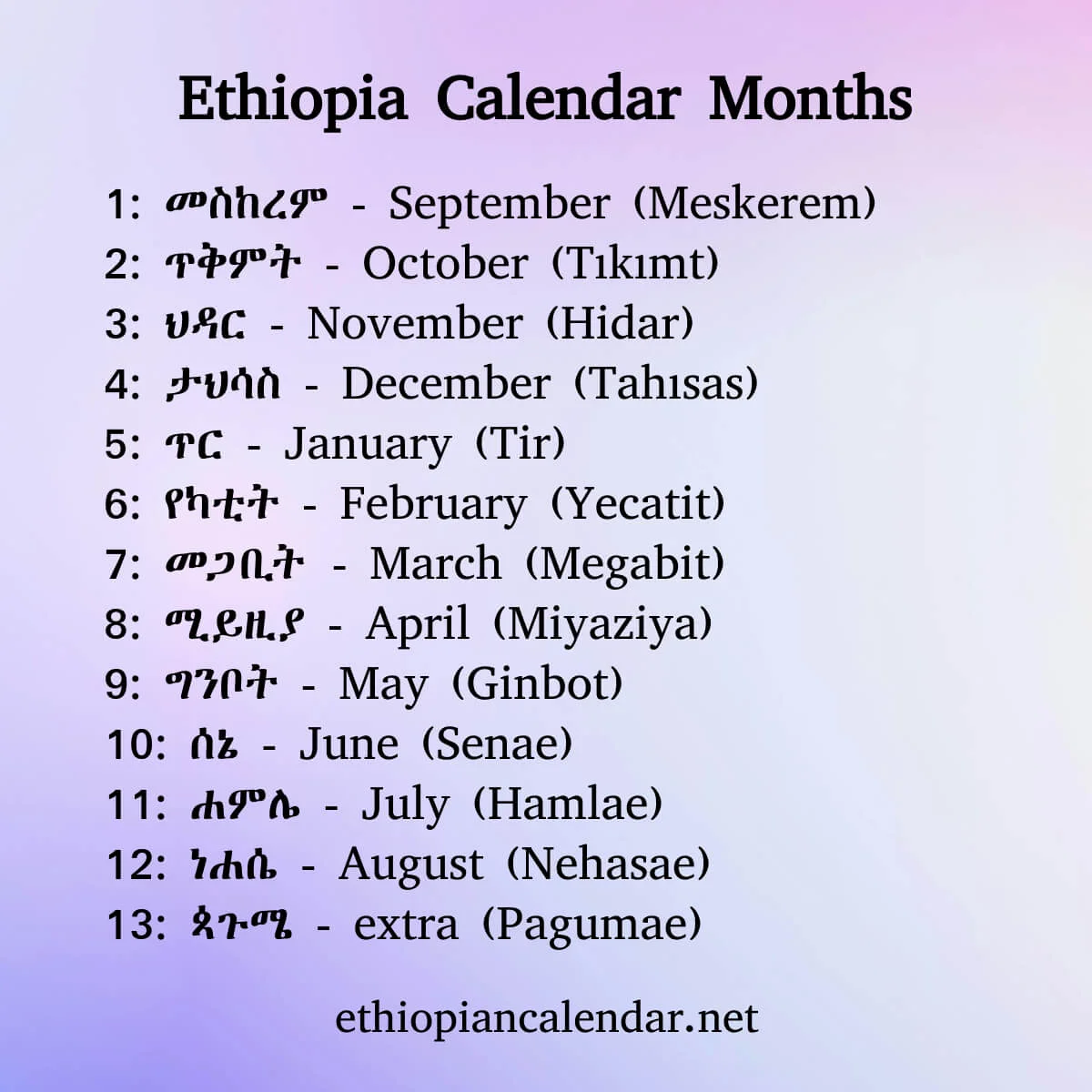
The Ethiopian calendar is one of the most unique and culturally significant calendar systems still actively used in the modern world. Deeply rooted in history, religion, astronomy, and tradition, it continues to shape daily life in Ethiopia and among followers of the Ethiopian Orthodox Tewahedo Church. For many visitors, one of the most surprising discoveries is that Ethiopia follows a calendar that is around seven to eight years behind the Gregorian calendar used internationally.
The Ethiopian calendar traces its origins to the ancient Coptic and Egyptian solar calendars. Unlike the Gregorian system with irregular month lengths, the Ethiopian calendar is admired for its simplicity and consistency. The year contains 12 months of exactly 30 days each, totaling 360 days. An additional 13th month known as Pagumē is added at the end of the year and contains five days, or six during leap years. This structure has inspired the popular phrase associated with Ethiopia: “13 months of sunshine.”
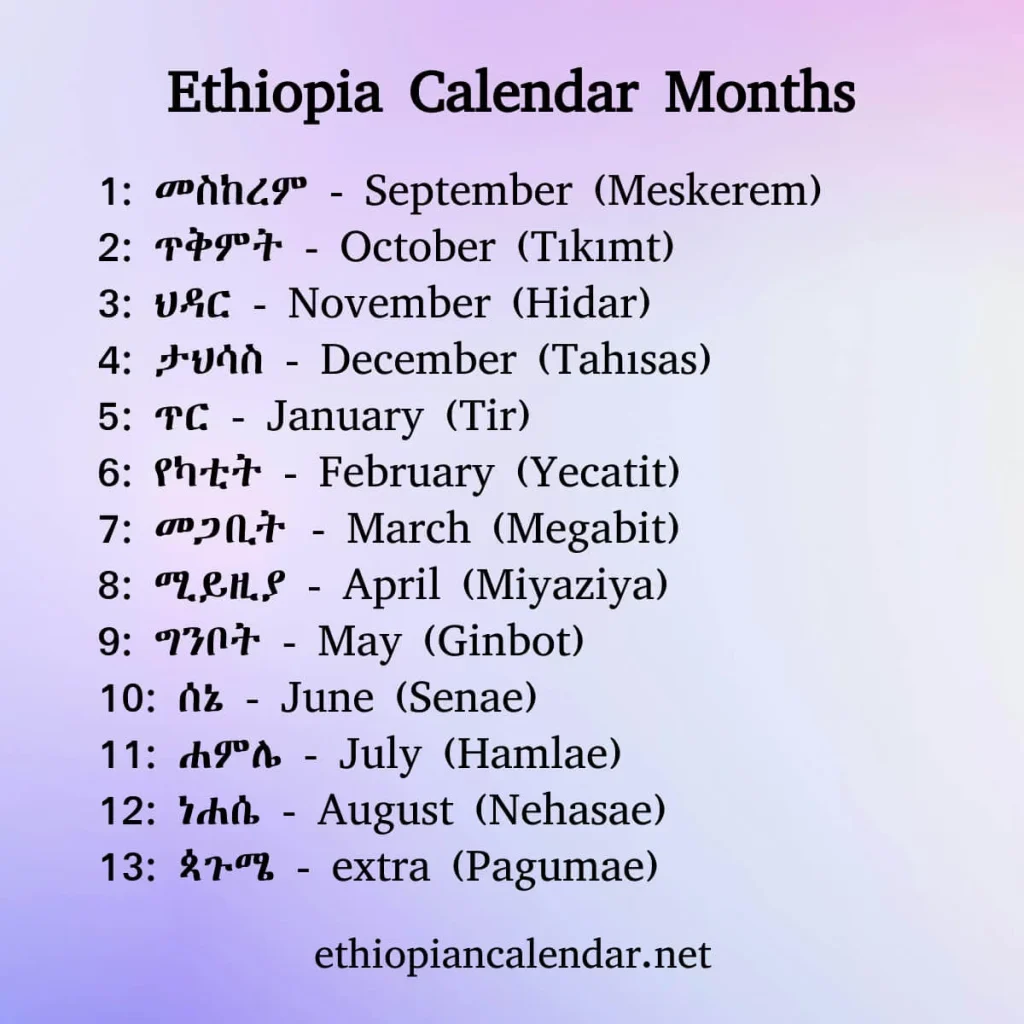
One of the biggest differences is the calculation of the birth and annunciation of Jesus Christ. Ethiopian scholars and the Ethiopian Orthodox Church followed a different historical computation from the Western Christian world, leading to the current seven-to-eight-year difference between the Ethiopian and Gregorian calendars.
The Ethiopian New Year, called Enkutatash, is celebrated on September 11 in most years and September 12 during Gregorian leap years. The celebration marks the end of the rainy season and the beginning of spring-like sunshine across Ethiopia. Families gather, children sing traditional songs, and communities celebrate with flowers, food, and cultural ceremonies.
Another fascinating aspect of Ethiopian culture is its traditional timekeeping system. Rather than starting the day at midnight, Ethiopian time begins at sunrise, approximately 6:00 AM Gregorian time. This means that what is considered 7:00 AM internationally becomes 1:00 in Ethiopian time. Similarly, 6:00 PM is regarded as 12:00. The system reflects a practical understanding of daylight and the natural rhythm of life, especially because Ethiopia’s daylight hours remain relatively stable throughout the year due to its proximity to the equator.
Religious holidays are also central to the Ethiopian calendar. Celebrations such as Genna (Christmas) on January 7, Timkat (Epiphany) on January 19, and Fasika (Orthodox Easter) are observed with colorful ceremonies, spiritual devotion, traditional clothing, and community gatherings. Timkat, in particular, is internationally admired for its vibrant processions and symbolic water blessings.
Today, the Ethiopian calendar remains more than a method of counting days. It is a symbol of national identity, spiritual heritage, cultural pride, and continuity with ancient African civilization.