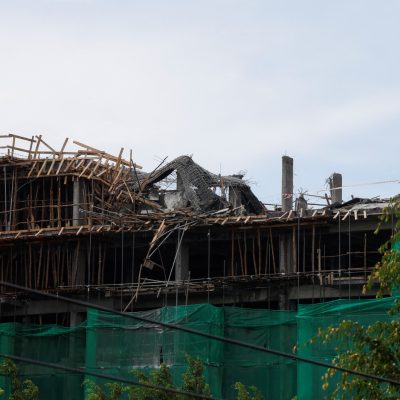

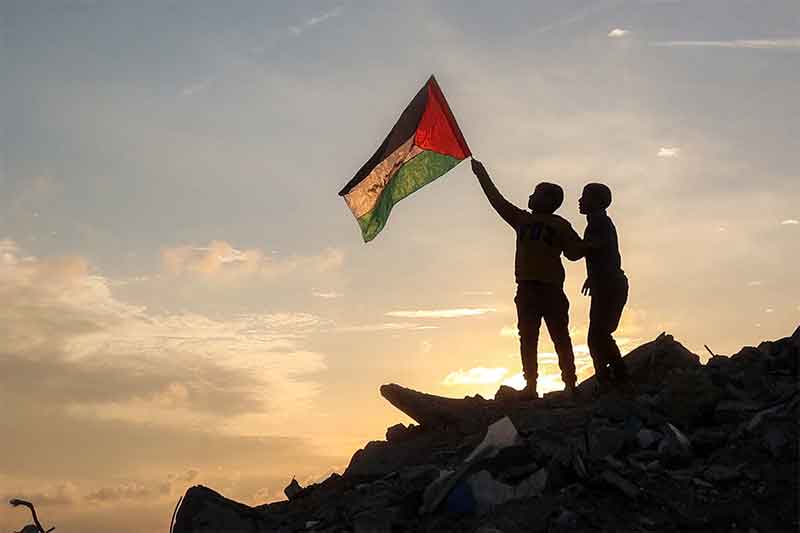

Gazza has ceased to be, in the contemporary global landscape, merely a small geographical territory subjected to bombardment, siege, and destruction. Palestine has likewise ceased to be simply a political question contested by regional and international powers. The Palestinian tragedy has become a defining historical moment, exposing the true nature of the international order and revealing the actual limits of the principles upon which its institutions were established after the Second World War. While the vocabulary of freedom, justice, and human rights continues to dominate the official discourse of the major powers, the Palestinian people face a war machine consuming human lives, homes, and the very foundations of existence, while international institutions struggle to translate legal principles into effective protection.
The tragedy lies in its accumulated historical, social, and economic dimensions. War destroys homes, hospitals, and schools; displaces populations; destroys livelihoods; and undermines the infrastructure upon which social life depends. As destruction expands, society’s capacity to reproduce the conditions of its everyday existence comes under immense pressure. Workers lose their jobs, children lose their schools, families lose their homes, and producers lose their means of production. New generations find themselves confronting a future burdened by the consequences of war and occupation. From the perspective of political economy, these developments carry implications extending far beyond immediate material losses. The destruction of economic and social infrastructure strikes at the material conditions necessary for the continuity and development of society. The wider the destruction becomes, the more difficult economic recovery grows, the deeper dependence on external assistance becomes, and the weaker society’s ability to control its own resources and determine the priorities of its future. Herein lies the fundamental contradiction of the contemporary international order: a world equipped with an extensive arsenal of international charters, courts, and legal institutions, yet incapable of providing effective protection to a people whose lives and fundamental rights are subjected to widespread violations. Palestine thus becomes a mirror reflecting the contradiction between the universality of proclaimed principles and the particular interests governing their implementation.
The question Gazza poses to the world extends far beyond when the war will end and under what conditions a ceasefire might be achieved. It concerns the very nature of the international order, the relationship between law and power, between rights and interests, and between humanitarian discourse and the political and economic structures governing international relations. What kind of international system claims to place human protection at the centre of its charters while allowing the balance of power to determine who deserves protection and who is left to face their fate alone?
(I) Palestine Between International Law and the Balance of Political Power
The Palestinian question exposes a structural contradiction governing a fundamental dimension of contemporary international relations. Legal rules are formulated as universal principles applicable to all peoples and states, while the mechanisms through which they are implemented remain subject to the balance of power and the interests of the most influential states. Between these two levels, the distance widens between law as a declared norm and law as an actual practice.
International charters recognize the right of peoples to self-determination. International humanitarian law requires the protection of civilians during armed conflicts, prohibits attacks against civilian objects, and imposes clear restrictions on the means and methods of warfare. These rules have developed through a long history of conflict and human experience, becoming an integral part of the international legal framework. Nevertheless, the Palestinian experience demonstrates that the existence of a legal norm often remains dependent upon the willingness of powerful states to enforce it. This problem is particularly evident in the institutional structure of the United Nations Security Council. Its framework grants the five permanent members veto power, making decisions concerning international peace and security vulnerable, in numerous cases, to the political interests of these states. An institutional paradox consequently emerges: an organ established to maintain international peace operates within a structure that allows a handful of states to obstruct the will of the majority.
From a materialist perspective, this structure can be understood as a reflection of the balance of power that emerged after the Second World War. The international order did not develop in a historical vacuum. It was shaped by the consequences of a major war that redistributed political, military, and economic influence among the victorious powers. These power relations were subsequently reflected in international institutions, in the authority granted to major powers, and in the limits within which international decision-making operates.
The consequences of this arrangement are particularly evident in the Palestinian case. When the requirements of humanitarian protection conflict with strategic alliances, international decisions become vulnerable to diplomatic obstruction, and legal principles turn into instruments of political contestation. Civilian populations bear the material consequences of this institutional paralysis: suffering continues, displacement and reconstruction costs increase, and the prospects for economic and social recovery deteriorate. The consequences of this double standard extend far beyond Palestine. Selective enforcement of international law undermines confidence in international institutions and encourages states and peoples to question the practical value of legal obligations when they conflict with the interests of major powers. It also encourages the treatment of international law as an instrument conditioned by political influence rather than as binding framework governing relations between states and protecting peoples. Defending Palestinian rights is therefore inseparable from defending the principle of equality before international law. The issue concerns the future of the legal norm itself, its capacity to restrain the use of force, and the willingness of the international community to free justice from political selectivity. When the rights of peoples become divisible according to their positions within the map of international interests, the global order enters a phase in which its legitimacy begins to erode from within.
(II) Gazza and the Political Economy of War: When the Destruction of the Conditions of Life Becomes Part of the Conflict
The war on Gazza demands an analysis extending beyond immediate military considerations to examine its consequences for the economic and social structure of Palestinian society. Contemporary wars reshape the conditions of production and social life, influence the distribution of resources, undermine the institutions upon which societies depend, and leave behind new political and economic relations whose effects may persist long after military operations have ceased. From the perspective of political economy, the Palestinian economy represents one of the principal arenas in which the consequences of occupation and conflict become manifest. Production, labour, the movement of goods, resource management, and the formation of economic institutions are all connected to national independence and society’s ability to control the conditions under which it reproduces its own existence. The destruction of productive facilities and infrastructure, the disruption of commercial activity, and restrictions on movement and supply therefore produce consequences extending far beyond the monetary value of destroyed property. They undermine the material foundations of economic life itself.
A society that loses its productive capacities becomes increasingly dependent on external sources. Employment opportunities and household incomes shrink, while the ability to satisfy basic needs through domestic economic activity steadily deteriorates. As these conditions persist, dependency deepens, and the inability to produce becomes one of the mechanisms through which economic subordination is reproduced.
The danger intensifies when basic necessities become instruments within the conflict. Food, water, energy, medicine, and freedom of movement constitute the material conditions necessary for the continuation of life. When these conditions are interrupted or restricted, entire areas of economic and social activity come to a halt. Families, workers, producers, and institutions suffer, while poverty and deprivation spread. Here, the humanitarian, economic, and political dimensions converge. A worker who loses employment loses both income and the ability to support a family. A producer whose enterprise is shut down loses productive assets and access to markets. A child deprived of education faces a deterioration in future capabilities. A society whose health and educational institutions are incapacitated loses part of its capacity to rebuild itself.
From this perspective, measuring the cost of war solely through the monetary value of destroyed buildings, facilities, and roads provides only a partial picture of the catastrophe. There are additional losses arising from interrupted production, the destruction of skills, the erosion of human capital, the suspension of investment, the disruption of economic relations, and the declining capacity of society to generate income. These losses accumulate over time and may ultimately exceed what can be recorded in conventional assessments of physical damage.
These developments raise a fundamental question concerning the concept of reconstruction. Rebuilding homes, hospitals, schools, and roads is an urgent necessity, but its impact remains limited as long as the structural conditions governing Palestinian economic activity remain unchanged. Development requires freedom of movement, access to resources, control over the means of production, access to markets, and institutions capable of managing economic activity.
Reliance on humanitarian assistance, despite its vital importance in confronting catastrophe, also places society in a continuing relationship of dependence upon external sources of funding. Assistance mitigates the effects of deprivation and provides for immediate needs, but it cannot, by itself, establish an economy capable of production, expansion, and employment generation. The historical priority must therefore be the restoration of Palestinian productive capacity and the establishment of conditions allowing society to manage its resources and determine its own economic trajectory. The question of future generations is equally important. Children who lose years of education, young people whose employment opportunities disappear, and families who lose their possessions and sources of income all carry the consequences of war into the future. In this way, catastrophe becomes a prolonged process of exhausting human and social capabilities. Protecting education, healthcare, employment, and production is therefore an essential component of any serious project to rebuild Gazza. The reconstruction of the Strip must consequently be understood as a process of restoring the conditions of economic and social life, rebuilding institutions, reviving productive activity, and safeguarding national rights. Reconstruction confined to the physical restoration of buildings, while control over resources, movement, and production remains outside the hands of the population, merely reproduces the structural imbalances that leave society vulnerable to recurring crises.
(III) Palestine and the Future of Regional Security: The Impossibility of Stability While Conflict Persists
The Palestinian question is closely connected to the political and strategic balance of the Middle East. The prolonged conflict affects the region’s security environment, influences state calculations, reshapes alliances, increases the likelihood of escalation, and imposes economic and political burdens on neighbouring societies.
History has demonstrated that conflicts whose fundamental causes remain unresolved are liable to erupt again. Settlements that concentrate on managing tensions while leaving their underlying causes untouched produce periods of relative calm that remain vulnerable whenever the conditions that originally generated the crisis reappear.
In the Palestinian case, the right of the Palestinian people to self-determination and the establishment of an independent state occupy a central position in any serious conception of regional security. This right concerns sovereignty, independence, and national existence, while also shaping the future of relations among the states of the region and their ability to establish a stable political environment. The consequences of the conflict extend beyond the military sphere into the regional economic structure. Prolonged tensions increase investment risks, disrupt trade and maritime transport, threaten the stability of supply chains, and encourage states to expand military and security expenditure. Financial and human resources are consequently diverted away from production, development, and public services. This issue is particularly important in a region whose economies are connected to maritime corridors, international trade, energy, and cross-border investment. The stability of these sectors requires a political environment whose developments can be anticipated, regional relations based on respect for rights and sovereignty, and settlements capable of addressing the causes of conflict. A contradiction consequently emerges within regional economic projects. States seek to attract investment, expand trade, develop infrastructure, and strengthen their competitiveness, while the region remains exposed to open conflicts that drain resources and increase uncertainty. Sustainable development is difficult to envisage in an environment where the possibility of war and escalation remains permanently present. From the perspective of political economy, increasing military expenditure must also be examined as part of the distribution of resources within society. Every expansion in military and security spending carries economic and social costs, involving resources that could otherwise be directed towards education, healthcare, production, and infrastructure. The continuation of conflict may therefore become a mechanism for reshaping development priorities, forcing societies to bear an increasing cost for the preservation of fragile security arrangements.
Military power undoubtedly plays a role in deterrence and defence. Yet military superiority alone cannot produce sustainable peace. Stability requires addressing the sources of conflict, establishing political settlements that respect national rights, developing economic cooperation based on reciprocal interests, and building regional institutions capable of managing disputes.
Within this framework, Palestine remains central to the future of the Middle East. Economic agreements, commercial and investment connectivity projects, and diplomatic normalization may create shared interests, but they remain vulnerable as long as the Palestinian question persists without a just settlement. Lasting peace requires a political foundation that recognizes Palestinian rights, brings occupation to an end, and opens the way for an independent and sovereign Palestinian state.
The security of the Middle East will ultimately depend on the ability of its peoples and states to move beyond the logic of domination and imposed will, and to establish more balanced political and economic relations. Any regional project that disregards Palestinian rights carries within itself the sources of its own instability, regardless of how coherent it may appear diplomatically or economically.
(IV) The Responsibility of the International Community: From Statements of Condemnation to the Requirements of Justice
International responsibility towards Palestine has become a measure of the seriousness with which states and institutions honour the obligations they proclaim. Political positions and official statements remain of limited value unless translated into practical measures that protect civilians, guarantee humanitarian access, support legal accountability, and address the conditions that allow violations to continue. This responsibility begins with ensuring compliance with international humanitarian law, protecting civilian populations and medical and educational facilities, preventing forced displacement, and securing access to food, water, medicine, and fuel. It also requires supporting the international mechanisms responsible for investigation and accountability, providing the conditions necessary for their work, and resisting attempts to obstruct justice under political pressure. Accountability holds particular importance within the international legal system because it concerns responsibility for actions and violations, the prevention of impunity, and the protection of the rules governing the conduct of states and parties during armed conflicts. The absence of accountability creates conditions for repeated violations and undermines confidence in the ability of international institutions to fulfil their responsibilities. This responsibility is also connected to the nature of the political, military, and economic relations maintained by certain states with parties involved in the conflict. Military assistance, arms transfers, security cooperation, and economic relations raise legal questions concerning the extent to which states comply with international law and fulfil their obligations to prevent complicity in violations. These matters remain subject to legal examination and accountability under the relevant international obligations. Economically, Gazza requires a comprehensive programme of reconstruction and recovery extending beyond emergency assistance. Such a programme must include rebuilding infrastructure, restoring healthcare and educational institutions, rehabilitating productive sectors, generating employment, supporting small enterprises, and rebuilding human capabilities. The management of reconstruction is particularly important. Effective Palestinian participation in determining priorities and managing resources is an essential condition for the success of the process. Guarantees must also be established to prevent international funding from becoming an instrument for imposing political or economic arrangements that do not reflect the will of the Palestinians. Reconstruction is inseparable from sovereignty, the right to manage resources, and the right to determine the future.
The Arab role, meanwhile, must move beyond humanitarian responses and fragmented diplomatic positions towards a common political and economic vision. Arab capabilities, including resources, markets, international relations, and diplomatic instruments, can play an influential role in supporting Palestinian rights, strengthening the Palestinian negotiating position, providing resources for recovery, and protecting the strategic interests of the region’s states.
Such a vision requires coordination of political positions, organized use of economic and diplomatic instruments, support for Palestinian institutions, and a common framework for reconstruction and development. It also requires recognizing that the continuation of the conflict carries strategic costs for the entire region, and that addressing the Palestinian question serves an Arab interest connected to security, sovereignty, and stability. Nevertheless, the essence of any settlement remains inseparable from ending the occupation, respecting the Palestinian people’s right to self-determination, and establishing their independent state in accordance with relevant international resolutions and frameworks. Humanitarian assistance, reconstruction, and a ceasefire are urgent requirements, while ending the tragedy demands a political process that addresses its historical causes and guarantees national rights. Through the Palestinian question, the international order faces a test of the credibility of the foundations upon which it claims to stand. As the gap between proclaimed principles and actual practice widens, the legitimacy of institutions declines, confidence in international law weakens, and international relations become increasingly subject to the logic of power. The consequences extend far beyond Palestine and affect the future of the entire global order.
(V) Palestine: Justice Cannot Be Postponed
The Palestinian tragedy has exposed a profound crisis in the very concept of peace. A ceasefire is an urgent humanitarian and political necessity, and the reconstruction of Gazza is an obligation that cannot be delayed. Yet the future of the region will remain dependent upon addressing the political and historical foundations of the Palestinian question. Wars may end, buildings may be reconstructed, and economic activities may resume, while the causes of conflict remain intact and capable of producing new tragedies. Gazza has become a mirror of the international order, revealing the limitations of institutions that claim to represent the international community and exposing the relationship between law and the balance of power. It has also demonstrated that security founded exclusively upon military superiority remains vulnerable, that development requires political and social conditions capable of sustaining it, and that the economy loses its humanitarian purpose when resources and productive capacities become instruments of domination and control.
The Palestinian question therefore demands a reconsideration of the concept of regional and international security. Security is inseparable from the right of peoples to life, freedom, and sovereignty, from their ability to manage their resources and institutions, and from the existence of international relations that respect the law and restrain the use of force. Reducing security to military arrangements and strategic alliances leaves the roots of conflict untouched and merely postpones their consequences. Palestine remains an unresolved historical question concerning a people’s right to their land, their future, and self-determination. Time, declining media attention, and changing international priorities cannot extinguish these rights or terminate the responsibility arising from the continuation of occupation. Ultimately, the world must confront a question that goes beyond the date on which the war in Gazza will end: What kind of peace can emerge from this tragedy? Will the coming phase lead to the restoration of Palestinian national rights, the rebuilding of Palestinian institutions, control over Palestinian resources, and the exercise of sovereignty over Palestinian land? Or will it produce new arrangements for managing the conflict, redistributing its burdens, and leaving its fundamental causes intact? History does not preserve statements of condemnation as sufficient evidence of justice. It records positions through decisions, consequences, and the rights that were defended. Peoples, too, measure the credibility of principles by the actual protection they provide for life, freedom, and dignity. Gazza will remain a witness to the contradiction between a world that speaks of human rights and an international order governed by the balance of power. Palestine will remain a question exposing the fact that justice subordinated to interests loses its meaning, and that peace which disregards rights carries within itself the seeds of future conflicts. Gazza needs the restoration of the conditions of life, production, and dignity, and the liberation of its future from siege, destruction, and dependency. Palestine needs the end of occupation, the restoration of its national rights, and the establishment of an independent state. Only then can we begin to speak of a peace worthy of its name, and of an international order possessing the legitimacy required to claim that it defends humanity.