
Updated on April 29 at 9:58 p.m.
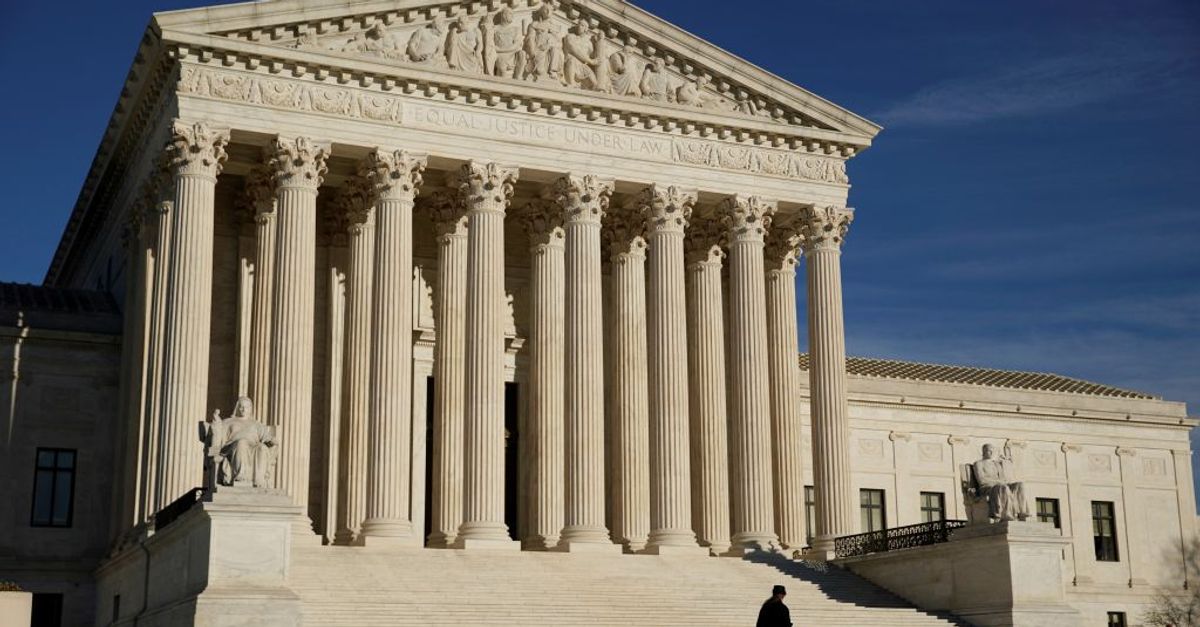
The Supreme Court on Wednesday, in the case of Louisiana v. Callais, struck down a Louisiana congressional map that a group of voters who describe themselves as “non-African American” had challenged as the product of unconstitutional racial gerrymandering. By a vote of 6-3, the justices left in place a ruling by a federal court that barred the state from using the map, which had created a second majority-Black district, in future elections. Although Wednesday’s ruling did not strike down a key provision of the federal Voting Rights Act, as Louisiana and the challengers had asked the court to do, Justice Elena Kagan suggested in her dissent (which was joined by Justices Sonia Sotomayor and Ketanji Brown Jackson) that the majority opinion by Justice Samuel Alito had rendered the provision “all but a dead letter.”
The decision was the latest, and presumably final, chapter in a long-running dispute arising from Louisiana’s efforts to adopt a new congressional map in the wake of the 2020 census. The first map that the state adopted, in 2022, had one majority-Black district out of the six allotted to the state. A group of Black voters – who comprise roughly one-third of the state’s population – went to federal court, where they alleged that the map violated Section 2 of the VRA, which prohibits discrimination in voting.
A federal judge agreed that the 2022 map likely violated Section 2, and the U.S. Court of Appeals for the 5th Circuit upheld that ruling. It instructed Louisiana to draw a new map by January 2024 or risk having the court adopt one for it.
The map that Louisiana drew in 2024 created a second majority-Black district, leading to the election in November of that year of Cleo Fields, a former member of Congress who had represented another majority-Black district during the 1990s.
The map also prompted the lawsuit leading to Wednesday’s opinion. It was filed by a group of “non-African American” voters who contended that the 2024 map violated the Constitution’s equal protection clause by sorting voters based on race. A three-judge federal district court agreed with them and barred the state from using the 2024 map in future elections, but a divided Supreme Court temporarily paused that ruling in May 2024.
The Supreme Court took up the case and heard oral arguments for the first time in March 2025. Defending the 2022 map, Louisiana contended that once the lower courts determined that the 2022 map was likely invalid and ordered it to adopt a new map with a second majority-Black district, its focus was not on race but on creating a map that would protect the state’s powerful Republican incumbents in Congress, such as Speaker of the House Mike Johnson and Rep. Julia Letlow, who sits on the House Appropriations Committee.
The “non-African American” voters challenging the 2024 map told the justices that it was “utterly implausible” that both race and politics were equally responsible for the 2024 map.
In a departure from their normal practice, the justices did not issue a decision in the case before their summer recess last year. Instead, they issued a brief order setting the case for a second argument in the fall. They later instructed the litigants to file new briefs addressing whether “the State’s intentional creation of a second majority-minority congressional district violates” either the 14th Amendment or the 15th Amendment, which bars the government from denying or restricting voting rights based on race.
By the time the justices heard the second round of oral arguments in October, the Black voters were the only litigants who continued to defend the 2024 map. Louisiana and the “non-African American” voters contended that race-based redistricting is unconstitutional, even if it is done to comply with Section 2. Although the Trump administration did not contend that the justices should strike down Section 2 altogether, it urged the justices to uphold the three-judge district court’s decision.
In a 36-page opinion, Alito explained that “the Constitution almost never permits the Federal Government or a State to discriminate on the basis of race.” The question before the court, he said, is “whether compliance with the Voting Rights Act should be added to our very short list of compelling interests that can justify racial discrimination.”
As a general rule, Alito wrote, Section 2 of the VRA guarantees voters, including minority voters, an opportunity to cast a vote for their preferred candidate, but that candidate’s chances of success may be affected by the choices that the state is allowed to make when drawing a redistricting map – such as the desire to protect incumbents or increase the number of seats held by a particular political party. And under the Constitution, Alito continued, a violation of Section 2 only occurs when “the circumstances give rise to a strong inference that intentional discrimination occurred” – for example, when there are several possible maps that contain majority-minority districts, but the state “cannot provide a legitimate reason for rejecting all those maps.”
Alito next turned to the legal standard, known as the Gingles test, based on the 1986 case of Thornburg v. Gingles, that courts use to determine whether a map violates Section 2 by diluting minority voting power. The majority’s interpretation of Section 2, Alito said, “does not require abandonment” of that test. Instead, he stressed, the court only needed to “update the framework so it aligns with the statutory text and reflects important developments since we decided Gingles 40 years ago.”
The first of three “preconditions” that courts consider under Gingles is whether there is a group of minority voters that is “sufficiently numerous and compact to constitute a majority in a reasonably configured district.” Alito pointed to the “increased use and capabilities of computers in drawing districts and creating” maps that illustrate redistricting possibilities, and he suggested that plaintiffs challenging a map should be able to provide an alternative map that both “fully achieves all the State’s legitimate goals” and creates a new majority-minority district.
Under the second and third “preconditions” under the Gingles test – whether the minority votes as a politically cohesive group and whether the majority group votes as a bloc – the challengers must “provide an analysis that controls for party affiliation. In other words,” Alito said, “they must show that voters engage in racial bloc voting that cannot be explained by partisan affiliation.” Alito cited the development of a “full-blown two-party system” in the South, as well as the court’s 2019 decision in Rucho v. Common Cause holding that federal courts cannot consider partisan gerrymandering claims: “In a State where both parties have substantial support and where race is often correlated with party preference,” Alito said, “a litigant can easily exploit §2 for partisan purposes by ‘repackag[ing] a partisan-gerrymandering claim as a racial-gerrymandering claim.’”
If the three preconditions are met, courts move to the final step of the Gingles analysis to consider whether, when all of the circumstances are considered, the political process is not equally open to minority voters. Alito emphasized that this inquiry should “focus on evidence that has more than a remote bearing on what the Fifteenth Amendment prohibits: present-day intentional racial discrimination regarding voting.” Quoting the Supreme Court’s 2013 opinion in Shelby County v. Holder, which struck down a provision of the Voting Rights Act used to determine which state and local governments were required to obtain approval from the Department of Justice before making changes to their voting laws and practices, Alito wrote that “‘things have changed dramatically’” in the South “in the decades since the passage of the Voting Rights Act.” When the law was enacted, he noted, “the Nation had faced nearly a century of ‘entrenched racial discrimination in voting,’” but “Black voters now participate in elections at similar rates as the rest of the electorate.”
In this case, Alito said, Louisiana’s goal in adopting the 2024 map “was racial”: the state enacted it in the wake of the lower court’s finding that the 2022 map likely violated Section 2, and sought to avoid having the court impose a different map that would have created a second majority-Black district but which would also “have imperiled one of the influential incumbents the legislature sought to protect.”
The state did not have the kind of compelling interest that would have justified considering race in drawing the 2024 map, Alito wrote, because “the State did not need to create a new majority-minority district to comply with the Act. That is because,” he explained, “at every step of the Gingles framework,” the Black voters challenging the 2022 map “failed to prove their §2 case.”
Among other things, Alito said, the Black voters “did not provide an illustrative map that” protected the state’s Republican incumbents. Alito acknowledged that the Black voters had “offered evidence that black and white voters consistently supported different candidates, but their analysis did not control for partisan preference.” “And none of the historical evidence presented by plaintiffs came close to showing an objective likelihood that the State’s challenged map was the result of intentional racial discrimination.”
“In sum,” Alito concluded, “because the Voting Rights Act did not require Louisiana to create an additional majority-minority district, no compelling interest justified the State’s use of race in creating SB8. That map is an unconstitutional gerrymander, and its use would violate the plaintiffs’ constitutional rights.”
Justice Clarence Thomas joined Alito’s opinion, but he also wrote a brief, separate concurring opinion that was joined by Justice Neil Gorsuch. Thomas suggested that the Supreme Court “should never have interpreted §2 of the Voting Rights Act of 1965 to effectively give racial groups ‘an entitlement to roughly proportional representation.’” Wednesday’s decision, Thomas wrote, “should largely put an end to this ‘disastrous misadventure’ in voting-rights jurisprudence.” Thomas would have held, he added, that Section 2 “does not regulate districting at all.”
In a somber tone, Kagan read a summary of her 48-page dissent from the bench – a signal of her strong disagreement with the majority’s ruling. “The Voting Rights Act,” she wrote “is—or, now more accurately, was—‘one of the most consequential, efficacious, and amply justified exercises of federal legislative power in our Nation’s history.’ It was born of the literal blood of Union soldiers and civil rights marchers. It ushered in awe-inspiring change, bringing this Nation closer to fulfilling the ideals of democracy and racial equality.” And only Congress, Kagan argued, can “say it is no longer needed—not the Members of this Court.”
But the requirements that the court imposes on Wednesday, Kagan contended, “will effectively insulate any practice, including any districting scheme, said by a State to have any race-neutral justification. That justification can sound in traditional districting criteria, or else can sound in politics and partisanship. As to the latter, the State need do nothing more than announce a partisan gerrymander,” she said. “Assuming the State has left behind no smoking-gun evidence of a race-based motive (an almost fanciful prospect), Section 2 will play no role.”
Kagan rejected Alito’s contention that the majority had merely made “updates” to the Gingles framework, arguing instead that the majority’s changes “eviscerate the law, so that it will not remedy even” classic cases of vote dilution. “Without a basis in Section 2’s text or the Constitution,” Kagan argued, “the majority formulates new proof requirements for plaintiffs alleging vote dilution.” The new requirements that the majority imposes, Kagan said, “leverage two features of modern political life: that racial identity and party preference are often linked and that politicians have free rein to adopt partisan gerrymanders.”
Kagan also emphasized that when Congress amended Section 2 of the VRA in 1982, it did so specifically to override the Supreme Court’s decision holding that Section 2 prohibited only intentional discrimination. “It made sure instead,” Kagan wrote, as this court recently explained, “that Section 2 would ‘turn[] on the presence of discriminatory effects.’” “Today’s decision,” Kagan argued, “returns Section 2 to what it was” before the 1982 amendment. “Now, as then, vote-dilution plaintiffs will have to show more than vote dilution: They will have to show, as well, race-based motive. Now, as then, that requirement will make success in their suits nearly impossible.”
In another sign of her disagreement with the majority’s decision, Kagan omitted the traditional “respectfully” from her conclusion, writing only, “I dissent.”
Under the Supreme Court’s rules, the court normally sends a copy of its opinion and the judgment to the lower court – effectively making its decision final – 32 days after they are issued. But on Wednesday night, lawyers representing the “non-African American” voters asked the justices to go ahead and send the opinion immediately, to leave open the possibility that the state could still adopt a new map before the 2026 elections.
The primary in Louisiana is currently scheduled for May 16, but the voters said in their two-page filing that “the Legislature is considering pushing back these deadlines substantially to allow for the 2026 congressional elections to occur under a remedial map.” Therefore, they argued, “[t]hose 32 days could matter.”
The responses to the voters’ request are due on Thursday, April 30, by 4 p.m. EDT, suggesting that the court could act quickly.