
“Had I had the same success as an entrepreneur in France as I had in Kenya, I’d be a millionaire…” Marie Lora -Mungai confesses as she reflects on the one-time popular Kenyan TV show, The XYZ, that defined Kenyan television but never made her rich.
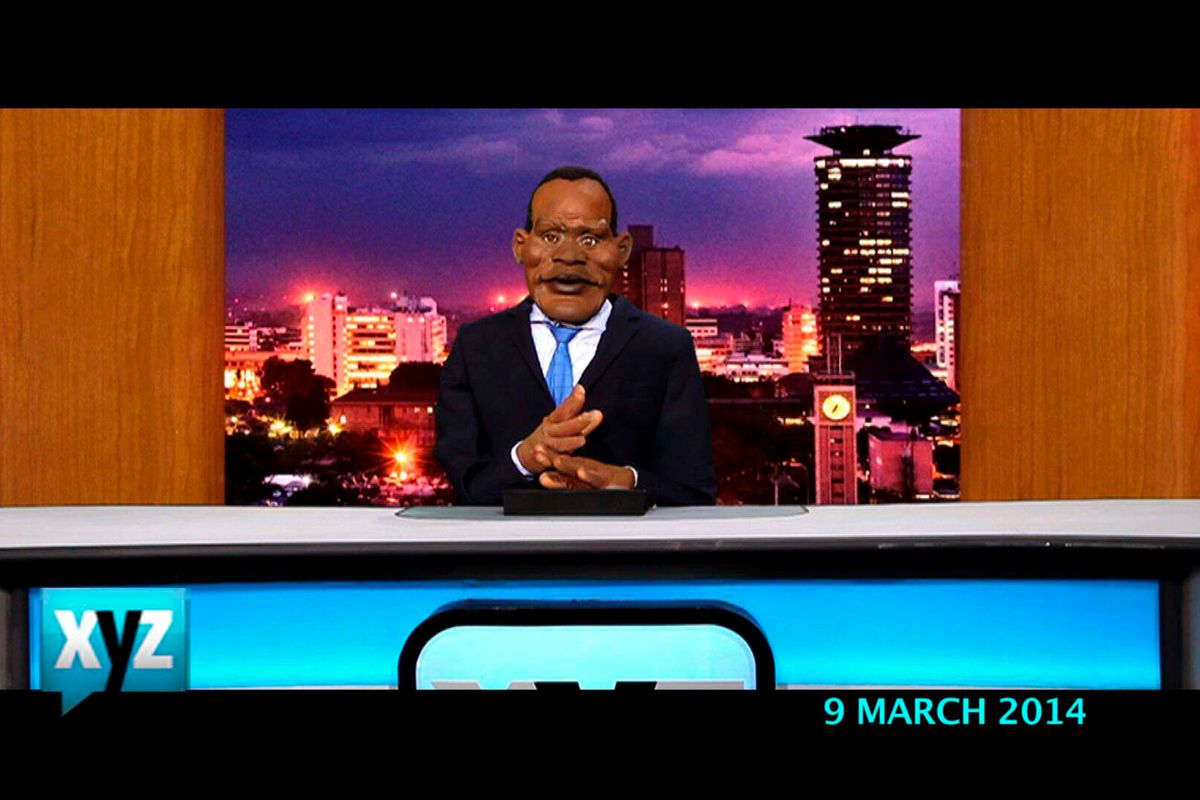
When the creative entrepreneur and author of Creative Cash Flow teamed up with legendary Tanzanian-born political cartoonist Gado (Geoffrey Mwampembwa) to create the satirical political series The XYZ Show, they had little idea it would become one of the country’s most iconic television productions.
That was in 2009, when the duo co-founded Buni Media in Nairobi and launched the show. Although the show ran for 14 seasons on NTV, reaching an audience of 10 million viewers and even inspired a viral Nigerian adaptation, Ogas at the Top, it never made any money.
I caught up with Marie for a deep analysis of what it is like to produce a successful show in Kenya, yet miss out on making any profit.
XYZ Show was hugely popular in Kenya. Did you expect it not to make any money?
The XYZ Show was undeniably a popular hit, that much was clear. But we were always very upfront about the challenges of putting the show together. People may have forgotten this, but XYZ was mostly funded by donors.
When a show, a project, or an initiative is funded by donor money, it is not commercially viable, otherwise we wouldn’t need donor money to begin with.
Several reasons forced us to go the donor-funding route when we started the show in 2008-2009. First, the Kenyan media market was transitioning from a barter model (where producers pay for airtime and split ad revenue with broadcasters) to a licensing model (where broadcasters pay for content). So getting paid for a TV show was very new at the time.
Second, the format of The XYZ Show – a political satire show with puppets – was so new and so unheard of in Kenya. The only ones who understood the role that political satire could play in a country and the positive impact it could have on governance, transparency, and democracy were the donors.
Third, XYZ was a technically complex show, with sophisticated foam latex puppets that took three weeks and $7,000 (about Sh900,000) each to make. Plus we had voice talent, set designers, animators…it was a big production that was way too expensive (Sh1.9m per episode) for the Kenyan market.
And the show was very controversial from the start. Brands didn’t want to be associated with it. So the issues with the show were very much embedded in its nature, format, and mismatch with the realities of the market.
If you were to reproduce it again, would it be different and profitable?
It would still be very difficult. Licence fees from broadcasters have not improved in 15 years; they are still about $3,000 (Sh400,000) per episode.
Also, the media space has actually tightened and regressed in Kenya since then. I’m not sure that the show would air on national TV today, or even on Netflix or MultiChoice.

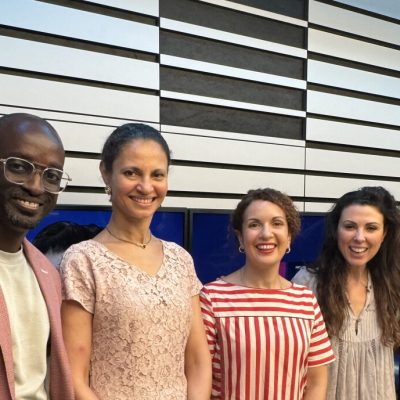
Marie Lora-Mungai, co-founder of Buni Media and producer of the once-popular political satirical TV show XYZ Show.
Photo credit: Pool
So the solution would probably be to drastically lower the costs of production, which would mean replacing the puppets with AI animation and focusing on digital distribution via YouTube and Facebook, which, contrary to 15 years ago, you can now monetise.
Was there any moment where the show ever broke even?
No, throughout its life, the show was financed at 80 percent by donor funding and 20 percent by the broadcast licence fee. The market itself could never have carried such an expensive show. We were openly criticising the government, so brands refused to be associated with us, meaning sponsorship revenue was zero. That is why we couldn’t get a telco deal f.
Over the six years we ran the show, I paid myself $4,000 (Sh517,000) a month. Needless to say, there were no royalties then. That adds up to $288,000 (Sh22 million) in six years. It was lumpy and unpredictable, of course, and there were some months I didn’t pay myself so I could pay the team.
As a creative entrepreneur, what kept you going?
Gado and I never started The XYZ Show to make money. We made it because Kenya had just gone through the trauma of the 2008 post-election violence, and we believed that if Kenyans had had an outlet to express their frustrations, ideally with humour, things might have gone differently.
As soon as it came out, the show became a big hit. The entire country was obsessed with it, including the politicians themselves! Seeing how passionate the audience was about the show, how far and wide it traveled, and the mindset shift that it helped create in Kenyan society was extremely fulfilling. That was more than enough to keep us going over these 14 seasons. Plus, it was just fun to make. We had a great, smart, and fearless team, and it was a joy to work with them for so many years on a project we all deeply believed in.
In estimates, if XYZ were to be profitable, what figure comes to mind?
I cannot answer that, but what I can say is that Les Guignols de l’Info, the French show that inspired XYZ, had a budget of €75,000 (About Sh11m) per eight-minute episode, fully funded by its broadcaster Canal+. But of course, France is one of the world’s richest countries.
If you were to invest and/or produce again in Kenya, what would be your dos and don’ts?
I left the production world years ago. For the past 11 years, I have run my own advisory firm called Restless Global. I have moved to the finance side of things within the creative space.
But my main advice for producers today is to make sure to understand their market and identify clearly how they will monetise their content before rushing into anything.
Too many creatives on the continent only think about the story they want to tell or the art they want to make, and forget to consider who will actually buy their product. This leads to a situation similar to the one I was in when I was producing XYZ; receiving awards and press mentions but struggling to pay myself. I call this “Prestige Poor.”
In your view, what business models are better suited to African audiences, and what approach would you recommend for creative entrepreneurs targeting the Kenyan market?
When I launched Buni TV, we distributed our own shows (The XYZ Show and its Nigerian version Ogas At The Top), along with content that we licensed from content producers from across Africa and the diaspora. I experimented with many models: Subscription, transactional, ad-supported, telco-based…before Buni TV was acquired by Trace in 2016. Since then, I’ve followed the space very closely.
What we know now is that subscription is not a model that works well in Africa. Ad-supported models could work if only the ad inventory was deeper, but we are not there yet (too few brands advertise in Africa and their budgets are too low). Platforms or solutions that can partner with a telco for reach and monetisation have a better chance of success.
In Nigeria, we are seeing other models being tested. Startups like Circuits or Filmporte are trying out online film premieres and individual screenings on pay-per-view. Fusion Intelligence has a software solution that can turn any public space into a secure community cinema. Some producers are experimenting with selling AI-assisted micro-drama series to companies like ReelShort.
What is sure is that there is no silver bullet, only experimenting, stacking revenue streams, and learning from every little incremental progress.
Why do you think Kenya media market looks lucrative from the outside but is hollow inside?
The only people who think that the Kenyan media market is lucrative are those who don’t work in it! The reality is that it is small, and more worryingly, it is not growing. Kenyan producers are telling me that it is worse now than it was 15 years ago. There are fewer buyers, less advertising money, and more competition.
Unfortunately, this is not unique to Kenya, it is a global phenomenon. The global media industry has been heavily disrupted by the arrival of the streaming platforms, and the wave of consolidation that has ensued. Now, it faces an even bigger threat – competition from free, short- form, social media platforms like TikTok. How do you compete against free? No one has the answer right now.
Do you see a way out?
For producers determined to have a career in this sector, it is important not to stay stuck on old ways of working and to think outside of the box. Build multiple revenue streams by working across advertising, corporate, entertainment, and service work.
Become proficient in AI tools and use them to lower your costs as much as possible. Figure out how to produce content that you can monetise on YouTube and Facebook. Explore the new trend of vertical micro-drama. The era of doing one big show for TV and building your entire business on it is over.