
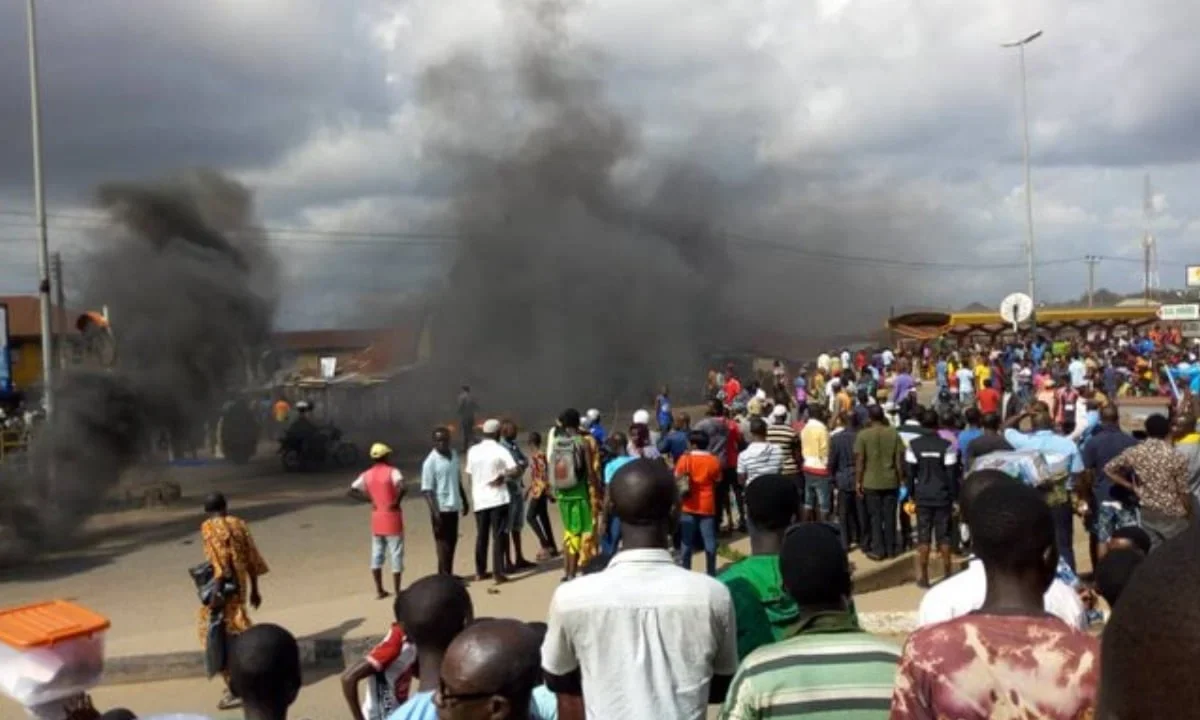
The growing cases of jungle justice in Nigeria have continued to raise concern, with human rights advocates and legal experts calling for urgent action to stop mob violence and protect innocent lives.
Human rights groups have documented at least 555 cases.
Several victims have been killed by angry mobs based on allegations that were never tried in court. Cases such as those of Deborah Yakubu in Sokoto, Ummul Khairi in Kaduna, and the 16 Hausa travellers killed in Uromi, Edo State, have remained painful reminders of the dangers of taking the law into one’s own hands.
Stakeholders insist that no one should be punished outside the judicial process, warning that mob justice has led to the deaths of innocent people and deepened divisions across the country.
Govt must ensure justice for victims – Sunusi
The Country Director of Amnesty International Nigeria, Isa Sunusi, told DAILY POST that the Nigerian government has a legal obligation to investigate every case of mob violence and prosecute those responsible.
“Under international law, the government of Nigeria has an obligation to ensure prompt, thorough, impartial, independent, transparent, and effective investigation of cases of mob violence and bring those suspected to be responsible to justice in fair trials.”
He also urged authorities to prevent future attacks and ensure justice for victims.
“Authorities should also take appropriate and effective measures to prevent cases of mob violence across the country and ensure access to justice and effective remedies for victims.”
Sunusi stressed that the police must be adequately equipped to respond quickly to incidents of mob violence.
According to him, existing laws are sufficient to deal with the problem, but authorities need to improve enforcement.
“Current regulations and rules are enough and sufficient to ensure the prevention and prosecution of mob violence, but the government has to do more to provide sufficient ground for prevention and prosecution.”
He also called for sustained public enlightenment, saying many people who take part in mob attacks do not fully understand the consequences of their actions.
The Amnesty official further expressed concern over attacks on women accused of witchcraft, noting that many of these incidents occur in rural communities where false accusations are sometimes used to settle personal or family disputes.
He blamed weak law enforcement and corruption within the justice system for encouraging mob violence.
Justice belongs to the courts – IHRC-RFT
The Country Director of the International Human Rights Commission – Relief Fund Trust (IHRC-RFT) Nigeria Chapter, Amb. Abdullahi Bakoji Adamu, also condemned jungle justice.
He said, “Jungle justice is a grave violation of human rights and the rule of law. No individual should be condemned, assaulted, or killed without due process, regardless of the allegations against them.”
He urged the government to strengthen the criminal justice system through prompt investigations, speedy trials, effective policing, and prosecution of those involved in mob attacks.
Adamu also emphasised the importance of public awareness.
“Public education is equally essential. Citizens must understand that taking the law into their own hands is a criminal offence that undermines justice and can result in the killing of innocent people.”
He said the position aligns with the Universal Declaration of Human Rights.
“Article 3 guarantees the right to life, liberty, and security of person; Article 10 guarantees the right to a fair hearing; and Article 11 affirms that every person accused of a criminal offence is presumed innocent until proven guilty in a court of law. Justice must always be administered by competent courts of law, not by the mob.”
The law does not permit mob justice – Lawyer
Nigerian lawyer and social commentator Ibrahim Kiyawa also told DAILY POST that there is no legal basis for jungle justice in the country.
He said, “What the Nigerian law says is that if you suspect someone has committed a crime or intends to do so, the law instructs or permits people to report that incident to security agencies.”
He explained that security agencies are responsible for investigating allegations and prosecuting suspects.
“The security agencies would investigate. If a crime has already been committed, they will arrest the suspect and take him to court for a proper ruling.”
Kiyawa stressed that the law does not permit citizens to punish suspects.
“There’s no place where the law allows people to take the law into their own hands by punishing a suspect.”
He warned that if a suspected thief is beaten to death by a mob, those responsible could also face prosecution.
The lawyer also urged Nigerians to avoid taking part in mob violence and called on media organisations to intensify campaigns against jungle justice across the country.