

Artificial intelligence is increasingly shaping how people learn, work and interact with the world. Now, Kenya is among the countries being positioned to participate in a global effort to bring emerging technologies closer to younger generations.
The country has been included in Fostering the Future Together (FTFT), an international initiative championed by US First Lady Melania Trump that seeks to expand children’s access to education and technology.
The announcement was made on the sidelines of the 81st United Nations General Assembly in September 2026, where the coalition unveiled new private-sector partnerships and expanded its membership to 57 countries. Among the technology companies involved is Intel, which is expanding its AI in Education, education technology and digital literacy programmes across 10 countries, including Kenya.
What Kenya stands to gain
The proposed programmes include AI for Citizens, AI for Youth and Semiconductor for Youth, designed to introduce participants to artificial intelligence, digital technologies and skills relevant to the evolving global economy.
For Kenyan learners, the initiative could provide opportunities to develop digital competencies beyond conventional classroom instruction, particularly as AI becomes increasingly relevant to education and the workplace. However, the specific schools expected to participate, implementation timelines and the number of Kenyan beneficiaries have not yet been disclosed.
The initiative also comes with wider financial commitments. These include a US$4 million (approximately KSh518 million) investment towards expanding an AI education programme and making it freely accessible to educators worldwide. A further US$2.75 million (approximately KSh356 million) in grants has been committed towards education, workforce development and helping non-profit organisations build their capacity to adopt artificial intelligence.
Inside Melania Trump’s technology initiative
Fostering the Future Together brings together governments, First Spouses and private-sector technology companies around a shared ambition of empowering children through education and technology. The initiative was introduced during the 80th United Nations General Assembly before its inaugural Global Coalition Summit brought together representatives from 45 countries and 28 technology entities in Washington, DC, in March 2026.
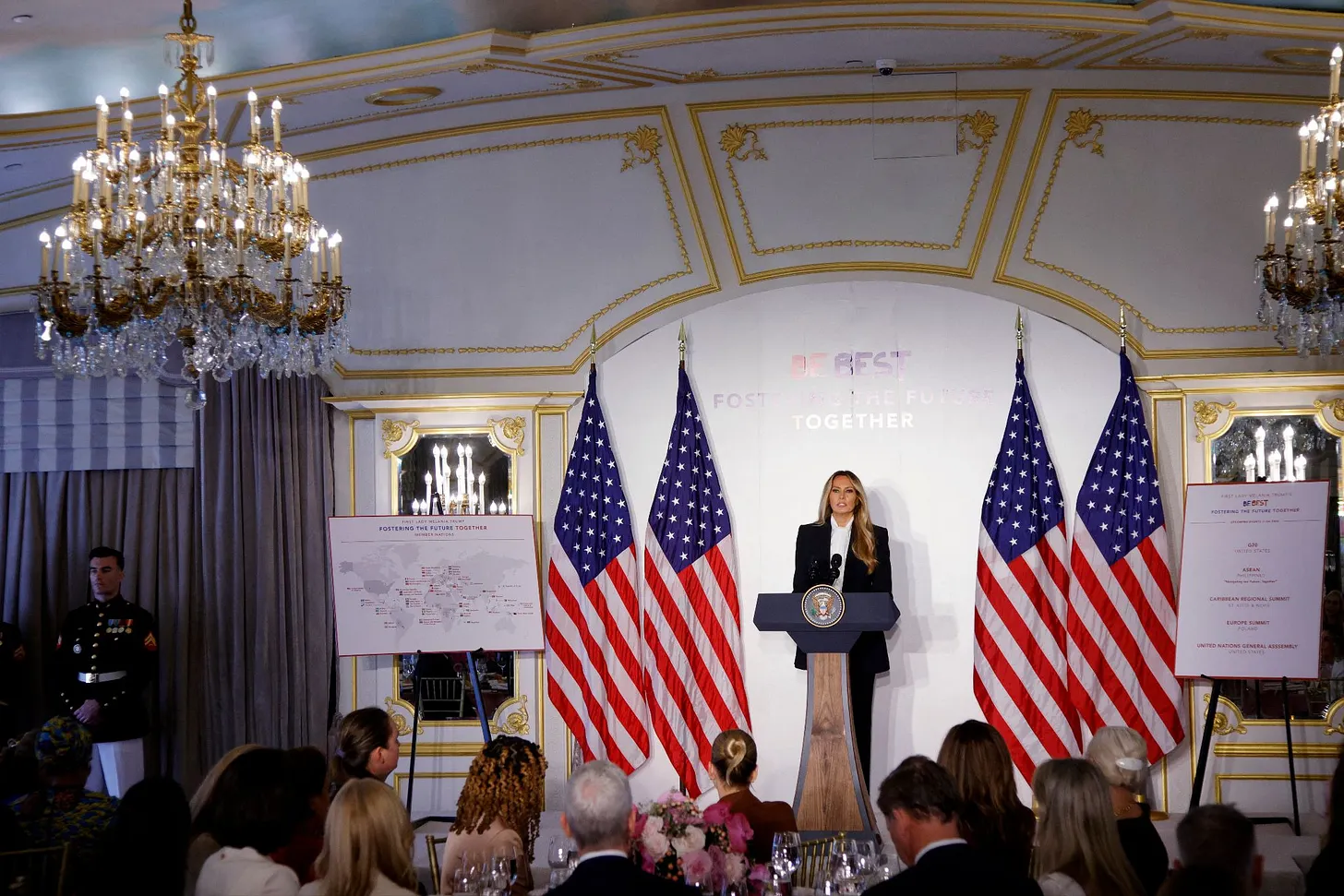
Its focus spans four key areas: artificial intelligence in education, education technology tools, online safety and digital skills development. Among the technology companies associated with the coalition are Google, Microsoft, Adobe, Amazon and Intel.
A bigger conversation about Kenya’s digital future
Kenya’s participation comes at a time when artificial intelligence is reshaping conversations around education, employability and the future of work. For a country with a growing technology ecosystem and a young population, access to digital skills could prove increasingly important in preparing learners for emerging industries.
Nevertheless, participation in an international coalition is only the starting point. The real measure of its impact will be whether these commitments translate into accessible learning opportunities, trained educators, appropriate digital infrastructure and meaningful exposure to technology for Kenyan children. The distinction is important: introducing learners to AI is one thing; equipping them to understand, question and responsibly use it is another.
For now, Kenya has secured a place in the conversation. The next chapter will depend on how effectively that international ambition is translated into opportunities in local classrooms.