

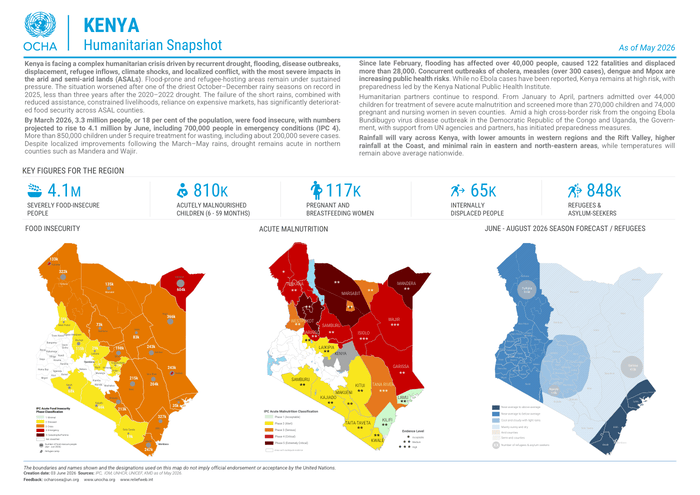
Kenya is facing a complex humanitarian crisis driven by recurrent drought, flooding, disease outbreaks, displacement, refugee inflows, climate shocks, and localized conflict, with the most severe impacts in the arid and semi-arid lands (ASALs). Flood-prone and refugee-hosting areas remain under sustained pressure. The situation worsened after one of the driest October–December rainy seasons on record in 2025, less than three years after the 2020–2022 drought. The failure of the short rains, combined with reduced assistance, constrained livelihoods, reliance on expensive markets, has significantly deteriorated food security across ASAL counties.
By March 2026, 3.3 million people, or 18 per cent of the population, were food insecure, with numbers projected to rise to 4.1 million by June, including 700,000 people in emergency conditions (IPC 4). More than 850,000 children under 5 require treatment for wasting, including about 200,000 severe cases. Despite localized improvements following the March–May rains, drought remains acute in northern counties such as Mandera and Wajir.
Since late February, flooding has affected over 40,000 people, caused 122 fatalities and displaced more than 28,000. Concurrent outbreaks of cholera, measles (over 300 cases), dengue and Mpox are increasing public health risks. While no Ebola cases have been reported, Kenya remains at high risk, with preparedness led by the Kenya National Public Health Institute.
Humanitarian partners continue to respond. From January to April, partners admitted over 44,000 children for treatment of severe acute malnutrition and screened more than 270,000 children and 74,000 pregnant and nursing women in seven counties. Amid a high cross-border risk from the ongoing Ebola Bundibugyo virus disease outbreak in the Democratic Republic of the Congo and Uganda, the Government, with support from UN agencies and partners, has initiated preparedness measures.
Rainfall will vary across Kenya, with lower amounts in western regions and the Rift Valley, higher rainfall at the Coast, and minimal rain in eastern and north-eastern areas, while temperatures will remain above average nationwide.