
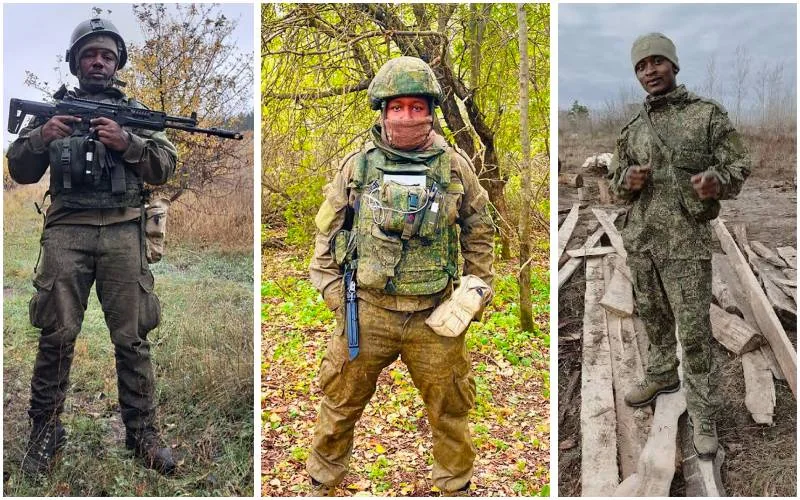
An estimated 841 Kenyans were recruited into Russia’s war against Ukraine between May 2025 and February 2026, making the country the largest documented source of African fighters in a recruitment network that has generated more than Sh6.5 billion in fees for agencies, brokers and intermediaries across the continent.
An investigative report by Journalists For Justice (JFJ), titled “The Death Contract”, identifies at least 3,034 African nationals from 40 countries who have been enlisted into Russia’s armed forces since October 2022. At least 502 of them had been documented as killed in action by the end of June 2026, although the report warns that the actual figures could be higher.
Kenya had the largest contingent among the recruits, with 841 documented cases during the period under investigation. Of these, 500 were found to have been recruited through Global Face Human Resources Limited, a Kenyan recruitment agency at the centre of the investigation.
The 841 cases are, however, notably lower than figures cited in other government reports, which have placed the number of Kenyans recruited to fight for Russia at more than 1,000.
According to the report, recruitment in Kenya took place in plain sight, under the legal cover of a licensed employment agency and a government-sponsored labour export programme.
“Officials from immigration, criminal investigation, intelligence, and employment services were named in Kenya’s Parliament in connection with the facilitation of what now increasingly appears to be a human trafficking racket. JFJ found that none of those officials has been prosecuted,” the report adds.
JFJ estimates that Global Face alone may have earned more than USD8.9 million (Sh1.16 billion) in agency fees during the recruitment period. Across Africa, recruitment agencies and intermediaries are estimated to have extracted more than USD50 million (Sh6.5 billion) from the recruits.
“They (recruits) also reported additional informal payments to brokers: between sh50,000 and sh200,000 in Kenya, and between USD5,000 and USD7,000 in Ghana, Sierra Leone, and Cameroon,” the report adds.
The investigation found that financial incentives, rather than ideology, were the main motivation behind the recruitment of African men and those facilitating their enlistment.
“Recruits described a signing bonus of about 1.9 million roubles (approximately USD 23,400 or sh3.04million) paid by Russia,” the report shows.
However, recruitment agencies and Russian handlers reportedly deducted service fees of between 1 million and 1.4 million roubles (approximately USD12,300 to USD17,200) directly from recruits’ Russian bank accounts within 35 days of signing their contracts. The deductions represented between 58 and 66 per cent of the promised signing bonus.
This left recruits with only about 900,000 roubles (approximately USD11,100), equivalent to roughly Sh1.14 million and less than half the amount they had initially been promised.
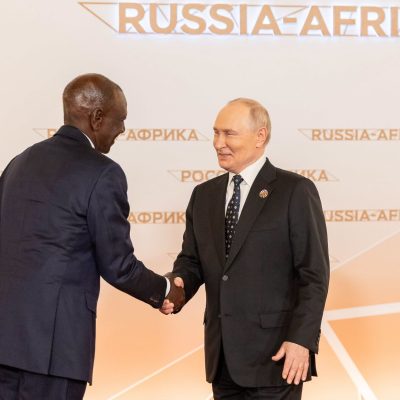
The findings come as African governments meet Russia to discuss expanded cooperation in trade, investment, security and other sectors.
Despite the scale of the recruitment of African citizens into Russia’s war against Ukraine, the issue has not featured on the summit’s programme or in remarks delivered by participating heads of state and government.
African governments have largely pursued bilateral diplomacy with Moscow rather than coordinated action to secure the return of their citizens or hold the recruitment networks accountable.
The report also reveals that recruitment extended beyond jobseekers in Africa, targeting migrant workers in the Gulf, students in Russia facing visa difficulties and, in some cases, people held in prisons.
In South Africa, politically influential figures with links to Russia were involved in recruiting supporters, while in Cameroon, social media platforms were used to approach serving soldiers with promises of substantially higher wages.
“Kenya has the largest documented contingent, with 841 identified cases, followed by Egypt with 407, Cameroon with 383, Ghana with 337, Nigeria with 214 and Uganda with 108. South Africa accounts for 69 identified cases and Sierra Leone 13. Smaller cohorts have been identified across North, West, East, Central, and Southern Africa,” the report states.
JFJ cautions that the figures represent a minimum estimate rather than the full scale of recruitment. Ukraine has told the European Parliament that Russia has enlisted at least 27,000 foreign nationals since the war began.
On casualties, the investigation documented at least 502 deaths among African recruits from 29 countries.
“Cameroon has the highest documented death toll, with 104, followed by Ghana with 85, Egypt with 81, and Kenya with 76. Nigeria has recorded 24 deaths, The Gambia 22, Mali 15, Algeria 14, South Africa 10, and Senegal eight. Deaths were also documented among recruits from Burundi and South Sudan, with seven each; Zimbabwe, six; Côte d’Ivoire and Sierra Leone, five each; Morocco, four; Guinea, Ethiopia, the Democratic Republic of Congo, Togo and Uganda, three each; and several other countries with smaller numbers,” the report shows.
The investigation also highlights how quickly some recruits were moved from recruitment centres to the battlefield, often with little military preparation.
A survey of families of 57 Kenyan recruits found that the average period between their arrival in Russia and their death, hospitalisation or disappearance was just 44 days.
“The evidence indicates that the recruitment system expanded from targeting men with military or police experience to recruiting large numbers of untrained civilians,” it says.
While some early recruits received up to six weeks of military training in 2023, the report found that Kenyan recruits were receiving as little as three days of training before deployment by 2025.
“Interviews with returnees and prisoners of war indicate that most recruits were civilians whose recruitment displayed indicators of human trafficking under United Nations Office on Drugs and Crime standards,” the report says, confirming findings by Amnesty International and this year’s annual US Trafficking in Persons report for Kenya.
The investigation also questions the Kenyan government’s claim that it deregistered about 600 recruitment agencies in response to the revelations.
A review of the national employment register by JFJ, however, found that the claim was overstated, with 569 agencies still registered and another 786 listed as having expired licences.
“Some companies publicly described as de-registered were never in the register in the first place, or held valid, current certificates,” the report says.
Beyond the recruitment networks, the report highlights what it describes as a lack of meaningful government action to protect affected citizens.
As of May 2026, no African government had completed a formal prisoner exchange, established a repatriation fund for victims or prosecuted a government official identified as having facilitated the recruitment of its citizens.
This contrasts with India and Nepal, whose governments confronted Russia directly over the recruitment of their nationals without severing bilateral relations.
JFJ says the recruitment, deaths, disappearances and detention of African citizens in Russia’s war should form part of the ongoing discussions between African governments and Moscow.
The organisation recommends stronger protection and repatriation measures for affected citizens, investigations into recruitment agencies, brokers and intermediaries, and accountability for officials who enabled the recruitment networks.
It also calls for safeguards to prevent the exploitation of African jobseekers.
JFJ says it will continue working to establish the full number of African recruits and investigate the fate and treatment of those reported missing, killed or held as prisoners of war.