
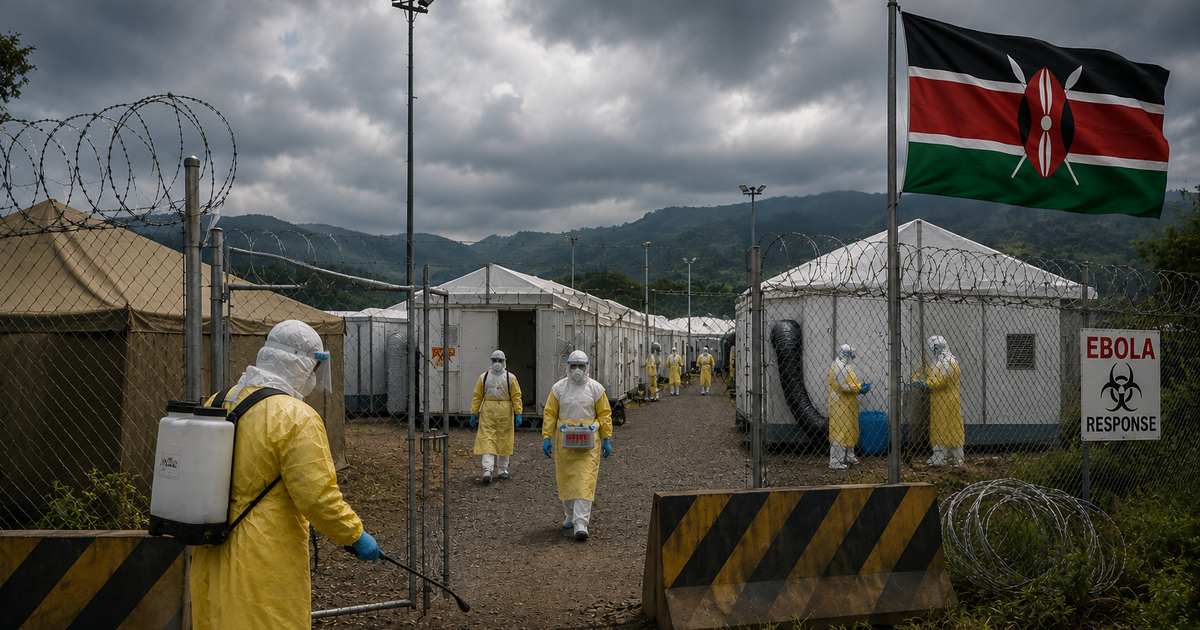
The funding request, submitted to Congress as part of a broader $1.4 billion Ebola response package, highlights Washington’s determination to position Kenya as a key hub in efforts to contain what U.S. officials warn could become the worst Ebola outbreak in recent history.
According to an exclusive report by Reuters, a Trump administration official said the proposed funding would support the Kenyan quarantine center alongside treatment supplies, contact tracing operations, infection-control measures, and a regional logistics network designed to respond to the rapidly expanding outbreak.
The request comes at a sensitive moment for the project.
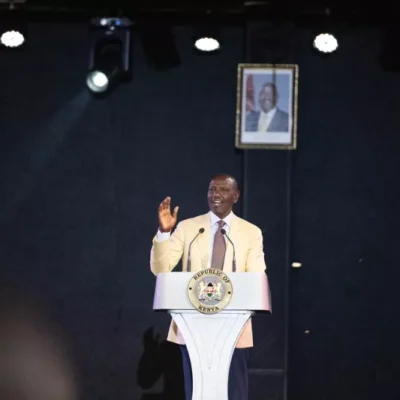
Earlier this week, Kenya’s health minister ordered an immediate halt to construction of the U.S.-backed Ebola facility after being found guilty of contempt of court, following a prolonged legal dispute over the project’s development.
The quarantine center, intended to strengthen regional preparedness against infectious disease outbreaks, has faced fierce resistance from activists, lawyers, and local communities who argue that authorities failed to adequately consult affected residents before construction began.
Critics have also raised concerns over environmental safeguards, public health risks, and transparency surrounding the project’s approval process.
The dispute has transformed what was initially presented as a public health initiative into one of Kenya’s most contentious foreign-funded infrastructure projects.
Why Washington is still backing the project
Despite the legal setbacks, the White House’s latest funding request signals that U.S. officials continue to view the facility as a critical component of regional disease containment efforts.
Kenya occupies a strategic position as East Africa’s largest aviation and logistics hub, connecting countries across the region, including those considered vulnerable to cross-border disease transmission.
The proposed facility is expected to play a broader regional role beyond Kenya, serving as a quarantine and response center for individuals exposed to Ebola while supporting surveillance and containment efforts across East and Central Africa.
The administration’s supplemental request also includes $500 million for global health security initiatives aimed at preventing the virus from reaching the United States.
The funding would support disease surveillance, laboratory capacity, cross-border coordination, and partnerships with international organizations and private-sector actors.
A further $90 million has been earmarked for diplomatic operations, including evacuations and transportation of U.S. citizens infected with the virus.
Growing political scrutiny
The funding request is likely to face scrutiny both in Washington and Nairobi.
In the United States, lawmakers from both parties have questioned the administration’s request for additional Ebola funding amid criticism that previous cuts to international health programs weakened outbreak preparedness efforts.
The U.S. government has already committed hundreds of millions of dollars to the Ebola response. Earlier this month, the Centers for Disease Control and Prevention announced $107 million in emergency funding to strengthen domestic and international containment efforts.
For Kenya, however, the renewed U.S. commitment raises questions about the future of a project that remains tied up in legal proceedings.
While Washington sees the facility as an important pillar of regional health security, opponents argue that public health emergencies should not override legal requirements, environmental safeguards, or community consultation.
As Congress weighs the administration’s request, the fate of the Kenyan quarantine center is increasingly becoming a test case for how Africa balances urgent health security needs against local accountability and public consent.