How MultiChoice Sabotaged Showmax to Save DStv
7518 SOUTHPOINTE PL
Pensacola, United States,
Florida, 32514

 Black Hot Fire Network Team
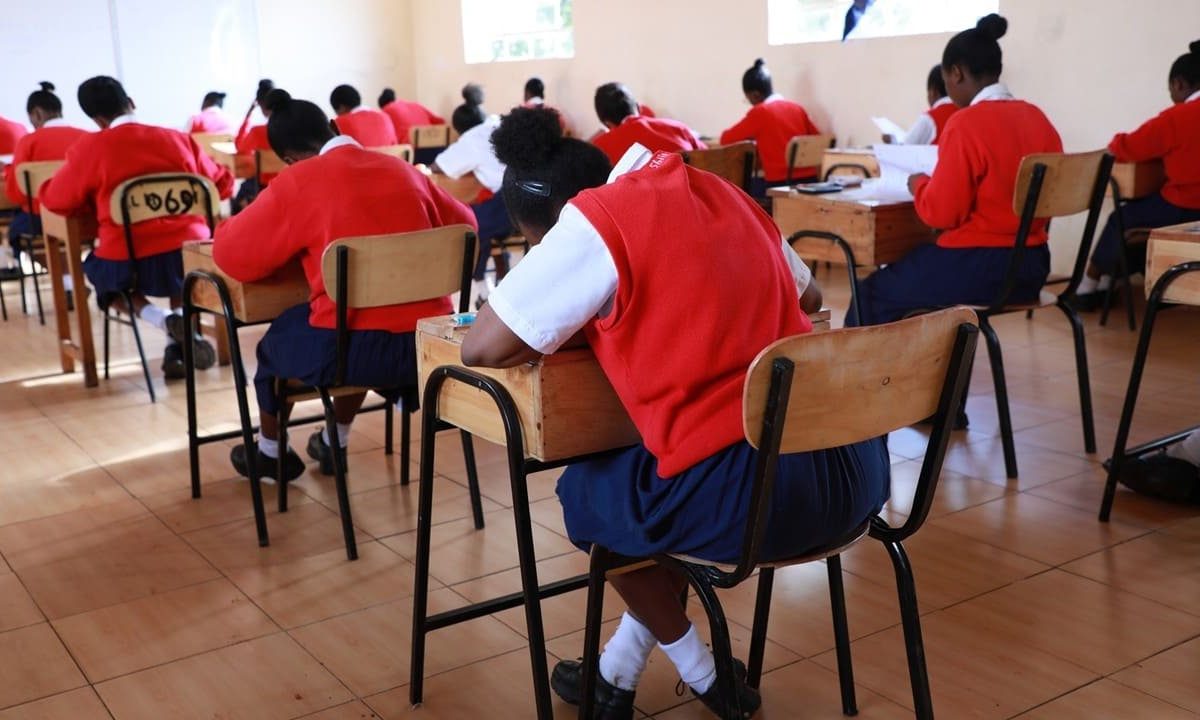
Kenya’s exam body wants to move national examinations off paper and onto screens, starting with senior schools in 2027. The Kenya National Examinations Council (KNEC) frames it as a cost and modernisation play. On the money, the case is strong. On readiness, it is shaky, and the gap between those two things is where this plan could fail.
First, why now. KNEC needs roughly KES 12.5 billion a year to run national exams and has rarely received that. For 2026/27, administering exams and invigilation is projected to cost KES 14.7 billion, but only KES 9.9 billion has been proposed. That leaves a shortfall of KES 4.82 billion. Much of the cost goes abroad, because for years KNEC has printed exam booklets and optical mark recognition forms through foreign security printers, much of it in London. Treasury Cabinet Secretary John Mbadi has publicly questioned why this continues. Going digital is meant to cut the printing, the transport, and the armed logistics that move millions of papers around the country.
It helps to be clear about what “paperless” actually means. It is not handing every candidate a laptop. It means rebuilding how exams are designed, delivered, secured, and marked. That covers computer-based testing in thousands of schools, encrypted exam files that work offline, electronic marking, biometric checks on who is sitting the paper, and analytics on the results. Each is a project on its own. Now to the reasons this is harder than the announcement suggests.
The funding contradiction comes first. KNEC cannot fully fund the cheaper paper system it already runs. The examiner crisis made that plain, with the Treasury scrambling to release KES 1.5 billion to pay teachers owed for the 2025 exams, part of a bill reported at around KES 2.7 billion. A digital transition does not save money at the start. It costs more, because devices, networks, training, and security all have to be bought before any efficiency shows up, usually over five to ten years. The question nobody has answered is where that upfront capital comes from when the body is already KES 4.82 billion short.
Then there is access to devices. Only about 40 per cent of Kenya’s secondary schools have functional computer labs, more than a decade after the first big push to digitise classrooms. (You can read that report from the Eastleigh Voice here.) Senior schools are exactly where the 2027 rollout begins. The 2013 Digital Literacy Programme, budgeted at about KES 24.6 billion, set out to put devices in over 20,000 schools and stumbled on poor infrastructure, unreliable power, budget gaps, and weak teacher training. The newest rollout of 25,000 laptops and smartboards is going to primary schools, not the senior schools that will sit these exams first.
Google News
Star tech-ish.com on Google. We move up your daily feed.
1 Tap “Open Google” below
2 Find tech-ish.com in the list
3 Tap the ✓ to favourite us
Connectivity is more complicated than it looks. Coverage is not the same as usage. 4G reaches about 97 per cent of the population, but 5G covered only around 13 to 14 per cent at the end of 2024, almost all of it urban. Actual internet use sits near 35 to 40 per cent nationally, about 25 per cent in rural areas. The spread is stark, from roughly 64.7 per cent in Nairobi to 12.7 per cent in Turkana and 9.1 per cent in West Pokot. Offline exam packets reduce the live-bandwidth problem, but the files still have to be downloaded securely and uploaded afterwards, and that assumes the school has the rest of the kit.
Power is the quiet dealbreaker. Research on Kenya’s earlier device rollouts found frequent blackouts, near-useless connections in some areas, and tablets whose batteries lasted only one or two lessons before they sat locked and unused. A class can absorb a power cut. A timed national exam cannot.
On the theft of exams, digital does not fix the real problem. Leakage in Kenya is an insider problem, run as a syndicate involving principals who manage centres, teachers, invigilators, and even security officers paid to look away. In 2025, 418 candidates were flagged for malpractice, down from 614 in 2024, while in 2023 some 4,113 candidates and 120 contracted professionals were implicated. Leaks now spread on Telegram and WhatsApp, with one arrested fraudster running a channel of over 78,000 followers. A digital exam changes the attack surface but not the humans inside the chain. Worse, a single breach of a central system can leak to everyone at once, instantly and nationally, rather than one school at a time.
That points to the government’s own cyber record, which is not reassuring. In July 2023 the eCitizen portal was knocked out, freezing access to more than 5,000 government services, and the Auditor-General had flagged those weaknesses before the attack. As recently as November 2025, hackers hit several state websites and briefly took over the presidency’s portal. Education already ranks among the most targeted sectors in Kenya. (The Nation has the detail on the latest attacks here.) A national exam system also stores the personal data of minors, which raises the stakes if it is breached.
Capacity building is the slowest piece of all. Many learners meet a computer for the first time during an exam, typing proficiency is low, and teacher training has lagged every previous rollout. Digital exams also open a new door to AI-assisted cheating, and the proposed Kenya National Educational Assessments Council (KNEAC) Bill, 2025 even floats AI-supported marking, which carries its own integrity questions.
Underneath all of this sits one risk that ties the rest together. If national and urban schools get reliable devices, trained invigilators, and backup power while rural schools get an underfunded version of the same system, results will measure access rather than ability. The Competency-Based Curriculum has already drawn that criticism. Repeating it at the exam stage would hit learners at the highest-stakes moment of their schooling.
The technology itself is not the worry, and the direction is defensible. Kenya has strong mobile penetration, expanding fibre, and a working e-assessment model in teacher colleges, which grew from 45 candidates in 2021 to more than 50,000 across over 100 institutions by 2025. But that pilot worked because it was small, controlled, and run inside institutions that already had the equipment. A national senior-school rollout is a different order of difficulty, and 2027 is only two years away.
So treat the announcement as the cheap part. Whether this works depends on solving the same things that sank earlier programmes: power, devices, trained people, and a system that cannot be opened by the very insiders who leak exams today. Watch three things between now and 2027. Watch whether the device and power procurement for poorly resourced schools is actually funded. Watch how seriously the cybersecurity build is taken. And watch how the system holds when it jumps from a controlled college pilot to a full senior-school cohort. If those are not funded and tested in time, the safer choice is to slow the timeline rather than ship an exam that works for advantaged learners and fails everyone else.
We have already seen a smaller version of the readiness problem. When the 2025 KCSE results were released in January, the online portal struggled under traffic on the morning of release, and we covered how candidates kept hitting errors trying to log in. Simply checking a result is far lighter than running the exam itself.
How MultiChoice Sabotaged Showmax to Save DStv
administrator
BHFN Editorial Team covers breaking news, culture, and global developments impacting Black America, Africa, Kenya, and the African diaspora. Focused on timely reporting and community-driven perspectives, the team delivers news, analysis, and stories that inform, connect, and amplify diverse voices.