

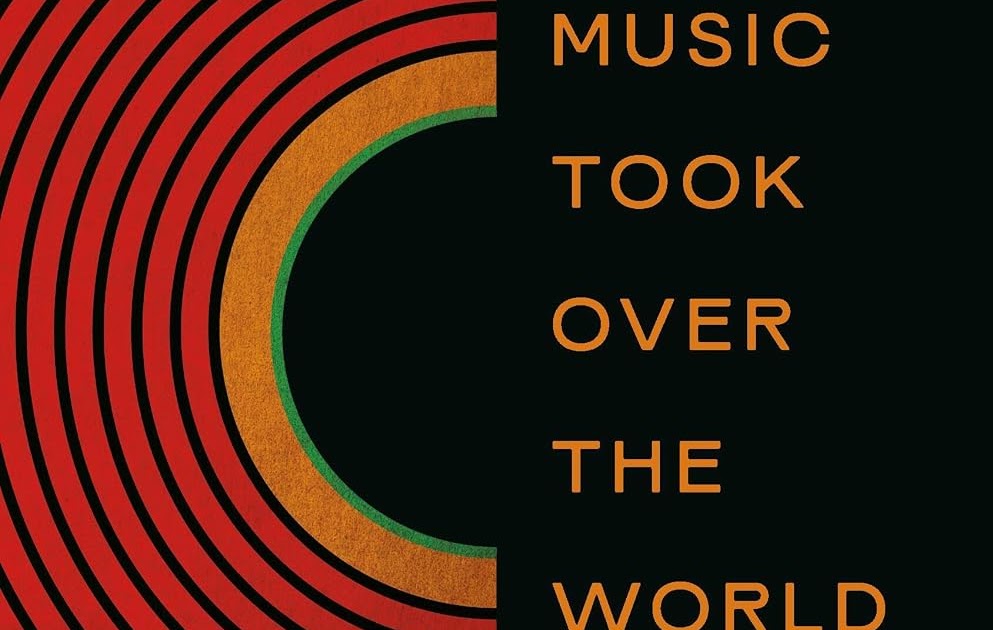

As a writer, researcher, musician, composer, and artist in the public
sphere, Melvin Gibbs seems to have been working towards something like
How Black Music Took Over the World
for while now—a synthesizing work that brings together personal history,
polemic, Black music made in and beyond America both under and in spite of a
racialized cultural hierarchy, and the heartbreak and joy that come with
learning and acknowledging this shared (like it or not) history. How that
synthesis enacts itself on paper is one of Gibbs’s particular skills, his
melding of register (as he lays out in the Prelude) replays his musical
practice. An open reader who lets the book take over will be, I think
inarguably, rewarded.
One of the key areas that’s under-discussed in literature, as far as I’m
aware, which Gibbs both personally and academically goes over in the book is
the Gullah-Geechee, the community rooted in the Sea Islands, along the
Georgia and Florida coast. In the chapters “Stono’s Children” and “Changing
Time With the Times,” Gibbs recounts his discovery of his Gullah heritage,
then takes readers on a fascinating journey of the elemental components of
rhythm, from ring shout, hambone, swing, and backbeat, to dub. What works
pretty well in idea—merging registers, mixing personal memoir with rhythmic
analysis—plays out (pardon the unintentional pun) wonderfully on paper. From
an extended rhythmic analysis in “Stono’s Children,” Gibbs drops us right
into a Harriet Tubman rehearsal. In a later chapter “Can’t Stop,” Gibbs
breaks down a specific rhythm he’s dubbed the “lunch table cell,” then
demonstrates its use in school lunch ad libs, James Brown’s “Soul Power,”
Fela Kuti’s “Shakara,” and Led Zeppelin’s “When the Levee Breaks.” There’s a
joy in taking all this in, and the infectious enthusiasm Gibbs seems to take
in sharing the rhythms and ideas he’s studied and generated.
“The Music of Black Science” demonstrates the linkage from mythos developed
through sharing stories to cosmologies that underpin systems of belief,
math, science, and artistry. As a somewhat mystical rumination on West
African frameworks, and what Gibbs describes as an ontology of Black music.
The ensuing pages explore mythologies, fables, and physics through the lens
of oral communication and visualization. It’s one of the chapters I’ve
dipped back into multiple times, letting myself drift to and fro, which
doesn’t seem to contradict Gibb’s intent.
However intentional, or not, How Black Music Took Over the World is
in conversation with two crucial writers and researchers in this area,
Race
Music by Guthrie Ramsey and Blacksound by Matthew Morrison. Ramsey’s been in
the space for over 30 years building up a compelling and provocative (for
me, personally, I’m using this word in terms of “provoking intellectual
thought and reflection”) body of work, and Morrison’s Blacksound is
the kind of seminal work that hopefully becomes required reading for anyone
seeking to understand the acoustical aspects of blackface minstrelsy that
became the bedrock of the recording industry. Much like Gibbs’s assembly of
evidence showing Black performance and foundational rhythms permeating
styles and genres, Morrison demonstrates how Blacksound (re-)centers the
ephemeral sonic and performance aesthetics that were capitalized on by early
white adopters of vaudeville and dance. While no single author can be
expected to cover all aspects of a topic, there are areas Gibbs elides or
leaves out of his narrative that are readily picked up in these two—and,
yes, many other—books, which an earnest reader is encouraged to also seek
out.