
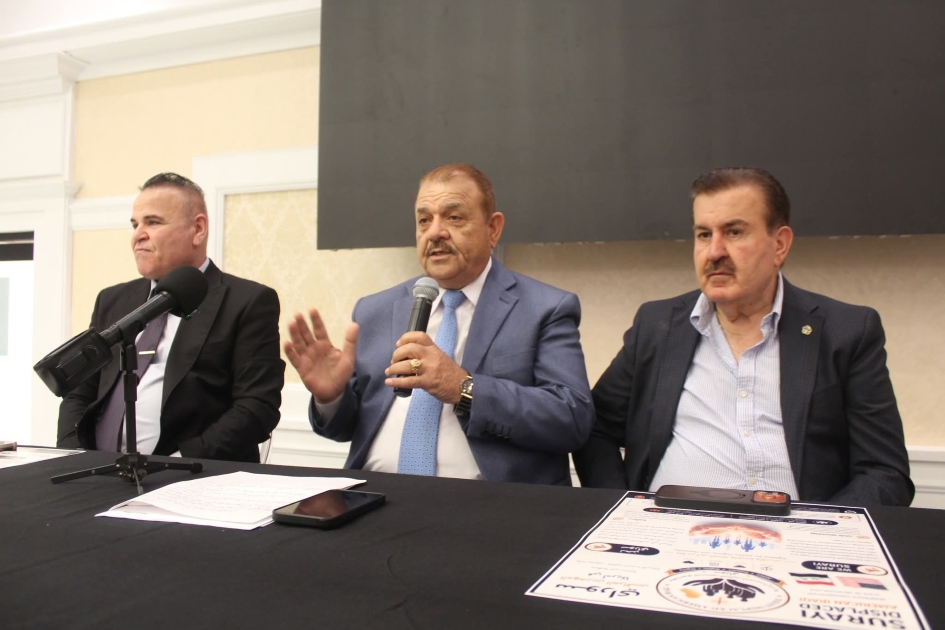
MICHIGAN, United States — More than two decades after violence forced thousands of Iraqi Christians especially Chaldean-Syriac-Assyrian people from their homes, community leaders, legal experts, and human rights advocates gathered in Michigan to renew calls for justice, accountability, and the protection of one of Iraq’s oldest indigenous communities.
The conference, organized by the Souraye Organization for Displaced Iraqis, brought together representatives of Iraqi civil society organizations, legal professionals, academics, and members of the Iraqi diaspora to discuss the lasting consequences of displacement and the path toward restoring the rights of victims.
Opening the event, conference chairman Stepho Habash said the organization’s mission is rooted in defending human dignity rather than advancing political or sectarian interests.
“Our organization was established not only to preserve the memory of what happened, but to give a voice to those who lost their homes, their security, and their future,” Habash said. “Justice begins with documenting the truth, holding perpetrators accountable, and ensuring that such crimes are never repeated.”
Speakers reflected on the dramatic decline of Iraq’s Christian population since 2003, when worsening insecurity, targeted attacks, kidnappings, and church bombings triggered a wave of migration. They noted that the crisis reached its most devastating point in 2014, when ISIS seized Mosul and large parts of the Nineveh Plain, forcing tens of thousands of Christians to flee their ancestral towns while churches, monasteries, and centuries-old cultural heritage sites were destroyed.
Read Also: Iraqi Premier pledges support for Christian return as Patriarch Nona urges new era of confidence
Among the keynote speakers was Dr. Nouri Baraka, who stressed that safeguarding Iraq’s Christian presence is essential to preserving the country’s historical and cultural identity.
“Iraq’s religious and ethnic diversity has always been a source of strength,” Baraka said. “Protecting that diversity is a shared responsibility of the Iraqi state and the international community.”

Legal adviser Majdi Khudouri emphasized that international law guarantees displaced persons the right to seek restitution and compensation. He called for the creation of specialized legal teams to document evidence and prepare cases for national and international judicial bodies, arguing that crimes committed against Iraqi Christians should not go unpunished.
The conference also featured testimonies from displaced families who described fleeing under threat of violence, losing their homes and livelihoods, and rebuilding their lives abroad while carrying the emotional burden of exile.
At the conclusion of the gathering, participants called for the establishment of an international legal committee to document violations, the restitution of confiscated property, compensation for victims, greater support for the reconstruction of Christian towns, and stronger cooperation among Iraqi diaspora organizations. They also urged a broader international campaign to raise awareness of the continuing challenges facing Iraqi Christians.
Organizers reaffirmed that their work extends beyond legal advocacy to preserving the cultural and historical heritage of Iraq’s Christian community, while continuing to engage with Iraqi authorities, international institutions, and human rights organizations in pursuit of justice and lasting recognition for those displaced by years of conflict.