

We can disagree fiercely about the direction of
our country. We can criticise the government, challenge its
policies, question its priorities and ultimately campaign to remove it from
office. That is the essence of democracy.
But when political competition reaches the point
where a former Deputy President publicly urges tourists not to visit Kenya and
investors not to invest in our country, we must ask ourselves: who exactly are
we fighting?
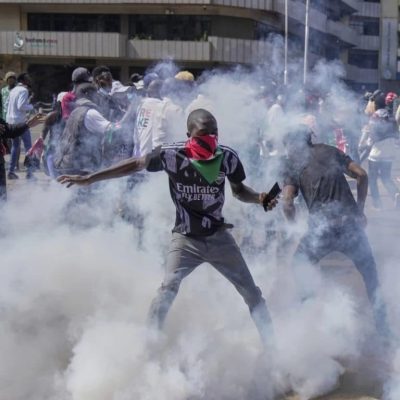
Recent remarks by Rigathi Gachagua urging foreign
tourists and investors to stay away from Kenya are not an attack on President
William Ruto or his administration. They are an attack on the livelihoods of
ordinary Kenyans.
Gachagua reportedly urged tourists to postpone
their visits and investors to hold back their investments, citing insecurity.
His remarks have attracted criticism from the tourism industry and,
significantly, even from political actors in the opposition. The Kenya Tourism
Federation has warned that such statements risk damaging confidence in Kenya as
a tourism and investment destination. That should concern all of us.
Last
year Kenya
welcomed about 2.7 million international visitors, alongside 5.2 million
domestic tourists. Tourism earnings reached about Sh500 billion, up from
Sh452.2 billion the previous year. International arrivals themselves grew by
about nine per cent. Behind those numbers are people.
That Sh500 billion does not disappear into some
abstract government account in Nairobi. It pays salaries. It buys food. It pays
school fees. It pays rent. It keeps businesses open. For us at the Coast, this
is deeply personal.
Tourism is woven into the economic fabric of
Mombasa and the wider coastal region. When an aircraft lands at Moi
International Airport carrying visitors, its economic impact spreads far beyond
the hotel where those visitors will sleep.
There is the taxi driver who takes them from the
airport. There is the hotel receptionist who welcomes them. There is the waiter
serving breakfast, the chef preparing dinner, the fisherman supplying seafood,
the farmer supplying vegetables, the tour guide taking visitors around our
heritage sites, the beach operator earning a living and the young entrepreneur
selling crafts.
There are security guards, cleaners, entertainers,
photographers and thousands of other workers whose jobs are sustained directly
and indirectly by tourism.
So when you stand on a political platform and tell
tourists not to come to Kenya, who exactly are you punishing? Certainly not the
President.
You are punishing the waiter in Mombasa. You are
punishing the hotel worker in Diani. You are punishing the tour operator in
Malindi. You are punishing the young person looking for their first job.
You are punishing the small business that borrowed
money to expand in anticipation of another strong tourism season.
And when you tell investors not to come, you are
not denying the government an investment. You are denying a Kenyan
a job.
This is particularly painful because those of us
entrusted with leadership at the Coast are working extraordinarily hard to move
in precisely the opposite direction.
We are advocating for open skies and greater
aviation liberalisation because we want more airlines flying directly into
Mombasa. We have roughly 40,000 hotel beds across the coastal tourism ecosystem
that we want filled.
We want a visitor sitting in London, Frankfurt,
Dubai, Johannesburg or elsewhere to be able to choose Mombasa and reach our
destination conveniently.
We want investors to build new hotels, conference
facilities, restaurants, entertainment venues and other businesses here.
We want international capital coming into Kenya,
not leaving Kenya. Imagine, therefore, the contradiction. On one hand, leaders
at the Coast, tourism stakeholders and the private sector are travelling,
marketing, negotiating and advocating to convince the world to come to Kenya.
Then a former DP of stands up and
effectively tells that same world: do not come.
Gachagua knows better.
He is not a newcomer to government. He occupied
the second-highest office in the republic. He participated
in the management of this economy and understands how difficult it is to
attract investment and build confidence in an international tourism
destination.
Destination confidence can take years to build and
moments to damage. The same applies to investment.
Capital is cautious. Investors compare countries,
cities and opportunities. They consider political stability, security,
infrastructure, regulation and market confidence before committing their money.
We should therefore be competing with Kigali,
Johannesburg, Dubai, Mauritius and other destinations to attract that
investment.
We should never be competing among ourselves to
frighten it away. None of this means that legitimate security concerns should
be ignored.
Where insecurity exists, we must confront it.
Where government has failed, we must say so. Where citizens are
dissatisfied, leaders must articulate those grievances without fear.
But there is an enormous difference between
saying, “Government must make Kenya safer,” and telling the world, “Do not come
to Kenya.”
One demands accountability.
The other exports political disagreement at the
expense of Kenyan livelihoods.
And this cannot simply be explained away as
opposition politics. The Jubilee Party itself publicly rejected the remarks,
warning that declining tourism and investment ultimately hurts ordinary workers
rather than political officeholders. That is an important principle.
There must remain certain things that are Kenyan
before they are government or opposition. Our flag is Kenyan. Our athletes are
Kenyan. Our international reputation is Kenyan. And our economy belongs to the
Kenyan people.
As leaders from the Coast, therefore, our message
to the world must be unmistakable: Come to Kenya. Come to Mombasa.
Come experience our beaches, our history, our
culture, our food and the warmth of our people. Bring your conferences here.
Bring your families here. Bring your businesses here. Bring your investments
here.
We will continue demanding better governance. We
will continue fighting for a fair share of national development. We will
continue holding every government accountable.
But we will never ask the world to punish our
people because of our politics. Governments come and governments go. Elections
are won and lost. Political alliances are made and broken. But the Kenyan
mother running a small business must still feed her family. The hotel employee
must still earn a salary. The graduate must still find a job. The entrepreneur
must still find customers. And our country must continue moving forward.
Oppose the government if you must. But
never oppose Kenya.