
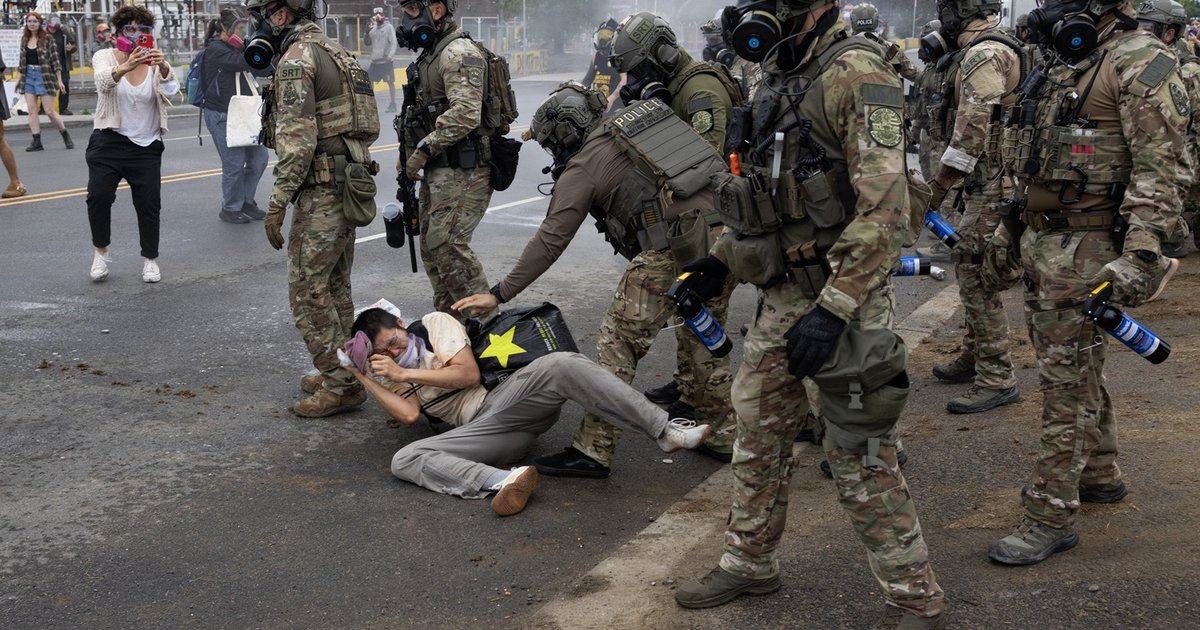
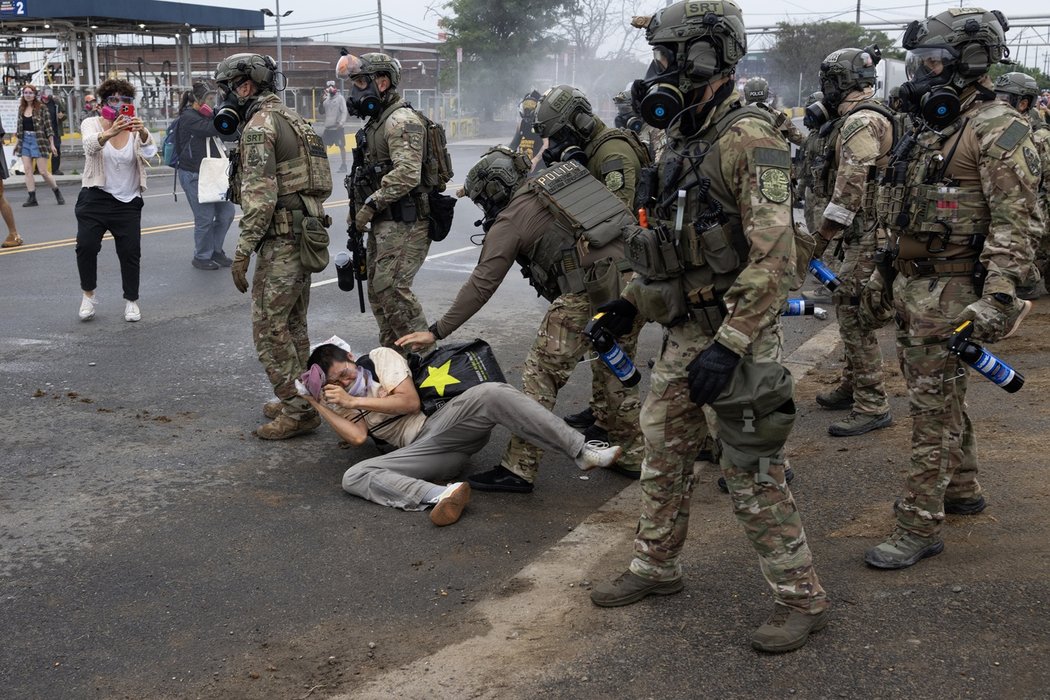
Pro immigration activists continue to protest and clash with ICE agents outside the Delaney Hall Detention Facility on 27th June 2026 in Newark, New Jersey.
This update covers developments relating to the freedoms of expression, association and peaceful assembly in the United States of America from 1st May to 30th June 2026.
Context
Deaths rise as US expands immigration detention system amid broader assault on migrants’ rights
On 25th June 2026, Human Rights Watch and Physicians for Human Rights released a report titled “Dying in Detention: Rising Deaths in an Expanding US Immigration Detention System”. The report highlights that 52 people died in Immigration and Customs Enforcement (ICE) custody between 20th January 2025 and 4th June 2026 (the first 500 days of President Trump’s second term), and that this mortality rate is at its highest level in over a decade, even higher than during the Covid-19 pandemic.
The report finds lack of transparency and public accountability for deaths, evidence of inadequate or delayed health care, and poor conditions of detention, raising concerns of violations of the International Covenant on Civil and Political Rights (ICCPR), the UN Standard Minimum Rules for the Treatment of Prisoners (Mandela Rules), ICE’s own standards, and also, possibly, the Convention Against Torture (CAT).
Just the day before, the U.S. District Court for the Northern District of California struck down the Trump administration’s courthouse arrest policy as unlawful, vacating it nationwide, as well as a policy that eliminated the 12-hour limit on detention in temporary holding cells.
Agencies cannot simply abandon longstanding practices without justifying the change. The government agencies failed to do so here, and the court rightfully vacated their policies. This ruling serves as a powerful deterrent to future administrations who will think twice before weaponising the courthouse and detention conditions, knowing that such overreach cannot survive judicial scrutiny.
– Duff Beach, Coblentz Patch Duffy & Bass LLP.
According to a Reuters analysis of ICE data, immigration detention facilities recorded an annual death rate equivalent to one death per 3,848 detainees between 2009 and 2024, based on their average daily detained population. Since President Donald Trump returned to office in January 2025, the annual death rate has more than doubled, reaching approximately one death per 1,630 detainees, according to preliminary data through early June 2026.
Supreme Court allows Alabama to use a map that intentionally discriminates against Black voters
On 2nd June 2026, the U.S. Supreme Court cleared the way for Alabama to use a congressional map that had been previously struck by a lower court as racially discriminatory. The Court left the lower court’s ruling on hold while the appeal continues. Deuel Ross, Director of Litigation at the Legal Defence Fund, stated that “The Supreme Court’s decision gives cover to Alabama and others to deliberately and openly discriminate against Black voters without fear of any consequence. The Court’s shameless decision to reinstate a racially discriminatory map defies any thoughtful or consistent application of the law. We will continue to throw all of our resources into the fight to ensure that Alabama voters have the fair representation that they deserve in Congress.”
This decision followed the April 2026 Supreme Court ruling in the case of Louisiana v. Callais, which struck down Louisiana’s congressional map that included two districts that allowed Black voters to elect a candidate of their choice, thus opening the door for states to enact discriminatory maps that dilute the vote for voters of colour.
Association
FBI searches raise concerns over intimidation of voter registration activism
On 11th June 2026, a hundred agents from the Federal Bureau of Investigation (FBI) raided the Cleveland office of the Ohio Organizing Collaborative (OCC), – an organisation that builds grassroots community power in the state and works on voter registration – in connection with a federal investigation into potential fraud violations. Agents questioned staff, seized computers, phones and documents, and went to the homes of employees, volunteers, and board members across Ohio seeking interviews and information, in some cases with subpoenas and requests for information and electronic devices.
OOC Board Member Prentiss Haney accused agents of using “intimidation tactics” and said the operation had frightened staff members and their families. “Demanding and accusing people of voter fraud as if it was a witch hunt […], and scaring them with the children, following them in their cars to school and to work. I mean this was a full-out assault. I mean, we haven’t seen anything like this since Selma. And so this was completely […] politically motivated.”
According to Signal Ohio, an independent, community-led, nonprofit newsroom, the federal investigation concerned, at least in part, voter registration forms submitted by canvassers working for Black Fork Strategies, a company owned by OOC founder Kirk Noden. However, election officials said they had found no evidence that the registrations resulted in fraudulent voting, while federal authorities have not publicly disclosed the full basis or scope of the investigation.
In response, civil society organisations, including the Brennan Center for Justice, have criticised the scale of the operation aiming “to intimidate voters and those who helped them exercise the franchise.” It also warned that law enforcement action targeting people involved in voter registration could have a chilling effect on citizen participation, especially ahead of the 2026 midterm elections. OOC allies also launched the #HandsOffOhio campaign.
In recent months, federal authorities have also scrutinised election administration in at least eight states, seeking or seizing election records and other materials. These included records related to the 2020 election in Arizona, Georgia, and Wisconsin, as well as ballots and other records from the 2024 election in Michigan. The Department of Justice has also sought detailed voter registration data from states across the country, including Minnesota, saying it intended in part to compare voter rolls with federal databases to identify possible non-US citizens registered to vote. Reuters reported that only 129 people had been prosecuted for non-citizen voting since Congress criminalised it in 1996, with most cases involving voter confusion or miscommunication with election officials rather than fraud.
Departments of Treasury, Justice, and State target Cuba-solidarity networks
Between 23rd-26th May 2026, openly conservative news outlets and commentators reported that the Departments of the Treasury and Justice were investigating 145 civil society organisations and activist networks engaged in Cuba solidarity efforts for their alleged violations of the Foreign Agents Registration Act (FARA) and sanctions restrictions. Their information indicated that prominent progressive activists, including Medea Benjamin, CodePink Co-Founder and Twitch streamer, Hasan Piker, were allegedly sent administrative subpoenas seeking more information about their involvement in the March 2026 Nuestra América Convoy, an effort to deliver humanitarian aid to Cuba.
CodePink and Piker initially denied having received any such subpoena, though CodePink later acknowledged receiving an inquiry via email. The reporting further indicated that the investigation “closely mirrors” the framework laid out in National Security Presidential Memorandum 7 (NSPM-7). As previously raised by the CIVICUS Monitor, NSPM-7 directed federal agencies and law enforcement bodies to investigate and target civil society organisations, their funders, and activists, under the pretext of preventing political violence, but rather establishing a roadmap for the suppression of dissent, and which, months after its publication, continues to be followed to the letter, evidencing a pattern of investigations into numerous civil society organisations.
On 4th June 2026, the Department of State imposed sanctions on 10 entities and individuals linked to the Cuban regime, including the Cuban Institute of Friendship with the Peoples (known as ICAP, for its acronym in Spanish), with which various U.S. nonprofits, including CodePink, would have allegedly worked regarding the aforementioned convoy. On 17th June 2026, Florida Senator Rick Scott doubled down and called on the Internal Revenue Service (IRS) to strip CodePink of its tax-exempt status.
People’s World noted that “[t]he factual basis for the investigations comes entirely from Fox News reporting” and that this “weaponising [of] federal law enforcement against the left [is] not to address genuine security threats, but to silence political opposition and intimidate movements that challenge the bipartisan foreign policy consensus”, “serv[ing] a chilling function regardless of whether charges are ever filed”.
The situation raises multiple concerns. Investigations of this nature force civil society organisations to focus their resources (human, financial, etc.) on protecting and/or defending themselves, rather than on carrying out their existential missions. Findings of violations of sanctions programmes administered by the Department of the Treasury’s Office of Foreign Assets Control (OFAC) may result in substantial civil and, in some cases, criminal penalties.
The revocation of a civil society organisation’s tax-exempt status could force them to have to cease operations altogether. Looking to the future, the most recent sanctions further complicate matters for U.S. nonprofits whose mission is to provide humanitarian assistance around the world, of heightened relevance after the dismantling of the U.S. Agency for International Development (USAID), as previously reported by the CIVICUS Monitor.
Moreover, the right-wing media appears to be doing the government’s bidding for them; not only by conducting the foundational research into civil society organisations leading to the government investigation, but also by seemingly acting like a government spokesperson in expressly linking said investigations to NSPM-7 and amplifying the coverage in this regard. Each of these factors, on their own—and more so in the aggregate—constitute severe obstacles for the operations of civil society organisations, they serve to intimidate, harass, and generate a chilling effect on civil society organisations and their members and, ultimately, to promote an environment not conducive for the full exercise of the right to freedom of association.
Increasingly politicised scrutiny of federal spending for nonprofits
On 5th May 2026, the Committee on Ways and Means of the U.S. House of Representatives reiterated its 4th September 2025 request for information and documentation concerning the funding sources and fiscal sponsorships of three U.S. nonprofit organisations (BreakThrough News, Tricontinental, and The People’s Forum) who would have received funding from Neville Roy Singham, a wealthy American expatriate alleged to have close ties to the Chinese Communist Party (CCP).
On 29th June 2026, Fox News reported that the Department of Justice had launched a federal grand jury investigation into possible financial crimes by Singham, the organisations he would have funded (which include CodePink, one of whose co-founders is married to Singham) and/or their leaders, a move supported by the Chairman of the US House Committee on Ways and Means.
On 13th May 2026, the Office of Management Budget (OMB) circulated a memo to all federal agencies requesting that they submit information on all monetary agreements and awards of federal funding provided to 49 listed nonprofit organisations “to better understand the scope of funding.” The groups targeted by this memo carry out work primarily on immigration, humanitarian aid, and civil rights.
Compounding this increasingly politicised scrutiny over nonprofit organisations, on 29th May 2026, the OMB published a proposal for significant revisions to the Guidance for Federal Financial Assistance, which governs federal grants, agreements, and federal assistance at large. The summary indicates that the OMB proposes these revisions to ensure “that American tax dollars are not wasted or misused, […] that basic American principles of equality and equal opportunity are upheld throughout all stages of the award making process and that unlawful discrimination is no longer permitted.”
An analysis by The Dispatch highlights, among other proposed changes, the sidelining of merit-based reviews for grant applications, declaring technical peer review as advisory, limiting the ability of grant recipients to challenge terminations, and requiring senior appointees to conduct pre-issuance reviews in alignment with the President’s policy priorities and reject proposals related to racial preferences, illegal immigration, those where the recipient denies the “sex binary in humans,” and others that “compromise public safety or promote anti-American values.”
A former federal programme officer noted that this is “not a reform of grants management” but “a complete political control apparatus layered over every stage of the federal […] funding lifecycle.” Diane Yentel, President and CEO of the National Council of Nonprofits (which issued a summary of the proposed harmful provisions and a corresponding call to action), expressed concern over the implications of overhauling this guidance: “The sweeping changes included in the more than 400-page proposal may profoundly impact nonprofits that partner with the federal government to deliver essential services, including housing, health, education, food, shelter, disaster recovery, and more, in communities nationwide.” Her colleague, Sarah Saadian, added that this was “an attempt by the White House to achieve what they haven’t been able to achieve in courts” and warned that “many nonprofits […] may simply decide it is not worth the risk to seek funding.” Comments on the proposal were due in mid-July 2026.
The escalation of congressional investigations into federal grand jury investigations signals a worrisome turn that could result in the potential criminalisation of nonprofit leaders. The increased scrutiny over nonprofit public and private funding further pushes a narrative framing their critical work as lacking government oversight, despite the burdensome requirements from multiple agencies already in place.
Sanctions hinder awareness-raising, solidarity, research, and activism on Palestine
On 19th May 2026, the federal government imposed sanctions on four activists participating in a flotilla seeking to deliver humanitarian assistance and bring attention to the siege and blockade of Gaza. On that day, Israel intercepted the 50-boat flotilla organised by the Global Sumud Flotilla and Freedom Flotilla Coalition. Without producing any evidence, the Office of Foreign Assets Control (OFAC) called them a “pro-Hamas flotilla” organised by a group previously designated as Specially Designated Global Terrorists (SDGTs) for its work on Palestine issues.
On 20th May 2026, UN Special Rapporteur on the Occupied Palestinian Territories, Francesca Albanese, was removed from OFAC’s list of Specially Designated Nationals. This followed her family’s legal challenge to sanctions imposed on Albanese, by way of the International Criminal Court (ICC) sanctions regime of 9th July 2025 (previously reported on by the CIVICUS Monitor), in which they argued that the sanctions restricted their First Amendment and property rights. The court had granted a temporary injunction against the sanctions, paving the way for her delisting. One week later, she was re-added to the list after a District of Columbia Appeals Court issued an order to stop the preceding, favourable order. The Trump administration has also filed an appeal against this order.
On 24th June 2026, three ICC judges filed a lawsuit against the Trump administration in response to the 2025 ICC sanctions regime. The complaint argues that the sanctions violate US obligations under international law, as well as the judges’ property rights, and are further arbitrary, capricious, and an abuse of discretion violative of the Administrative Procedures Act. They also allege that the US fails to consider their impact on US-supported prosecutions for international crimes and attempts to punish and influence their judicial decisions. The government’s position has been to publicly refer to the ICC’s involvement in “an unusual and extraordinary threat to the national security and foreign policy of the [US]” and, on 30th July 2026, it filed its opposition and motion to dismiss.
The blanket conflation of advocacy for Palestine with terrorism can have severe financial and legal implications for civil society actors and organisations. The sanctions, together with rhetoric against the ICC and other international bodies, interfere with the work of civil society organisations, precluding them from freely engaging with judges, prosecutors, and other international officials in documenting and calling for accountability by states committing human rights violations, war crimes, and crimes against humanity. Moreover, the effects of the sanctions transcend the targeted individuals, even affecting their family members in fulfilling their most basic needs. They also violate the individual’s freedom of expression and provoke a broader chilling effect on civil society organisations and anyone wishing to speak up. CIVICUS has highlighted the harmful impacts of sanctions as a tool for repression against civil society.
The #US sanctions are weaponised against human rights. From @UN expert Francesca Albanese to #ICC officials & #Flotilla activists, sanctions are increasingly targeting human rights advocates speaking out on #Gaza. Read the full article at: https://t.co/FH8smjdzBJ #CIVICUSLens https://t.co/dL2GMguKy2
— CIVICUS (@CIVICUSalliance) June 2, 2026
White House publishes concerning counterterrorism priorities encompassing “violent left-wing extremists”
On 6th May 2026, the White House released its 2026 United States Counterterrorism Strategy, outlining national security threats to the US and how the government seeks to address them. The document explicitly indicates that “a new type of domestic terrorism has emerged, driven by violent extremists who have adopted ideologies antithetical to freedom and the American way of life” (p. 4) and that the strategy will prioritise “the rapid identification and neutralisation of violent secular political groups whose ideology is anti-American, radically pro-transgender, and anarchist.” (p. 7)
An analysis by the Charity & Security Network (C&SN) notes that “[b]road and vague terms like ‘anti-American’ are not defined, leaving their interpretation to the discretion of law enforcement and granting the administration power that can be easily weaponised to target political opponents. In addition, the inclusion of ‘radically pro-transgender’ political groups marks a dangerous escalation in targeting of organisations working on issues of gender, sexuality, and reproductive justice.”
The strategy builds on previous worrisome policies and directives put out by the administration that characterise advocacy and organising around progressive or “left-wing” issues as terrorism, such as NSPM-7, the sanctions against the International Criminal Court, and terrorism designations (see above). But it goes further in including “left-wing” groups as part of its formal, comprehensive strategy and referring to their “neutralisation” (language typically reserved for conflict settings), thus continuing to push a dangerous narrative aimed at instilling fear based on an alleged internal enemy of their own creation (widely known authoritarian strategy).
As noted by the C&SN, while the document “does not carry any specific regulatory weight, [it] does demonstrate the Administration’s continued effort to paint perceived political enemies as terrorist threats,” further contributing to a chilling and challenging environment for civil society organisations, and the erosion of civic space.
The White House’s new #Counterterrorism Strategy names “violent left-wing extremists” alongside al-Qaeda, with vague terms like “anti-American” left undefined and ripe for abuse against #CivilSociety.
C&SN breaks down what it means for #nonprofits.
🔗 bit.ly/4ud931F— Charity & Security Network (@charitysecurity.bsky.social) June 2, 2026 at 11:40 PM
Attack on leading civil rights organisation expands and escalates
On 20th May and 9th June 2026, the Judiciary Committee of the US House of Representatives facilitated a two-part hearing titled “The Southern Poverty Law Center: Manufacturing Hate”. According to a Charity & Security Network report, both hearings followed similar patterns in which, on one hand, Republican members and majority witnesses referred to the organisation’s alleged fraud on donors and purported deviations between its past and present work, and on the other, Democratic members and the minority witnesses pushed back against the alleged fraud narrative and defended the organisation’s civil rights track record.
Some Congress members have raised concerns and demanded an investigation into what they characterise as the “politically motivated prosecution” of the Southern Poverty Law Center (SPLC), while others have focused on the funding restrictions imposed on the SPLC, wondering “whether financial institutions are beginning to deny services to IRS approved non-profit organisations based on political pressure, ideological disagreement, or fear of retaliation from the Trump Administration”. Civil society organisations and leaders have turned out in droves to condemn the hearings supporting the Administration’s smear campaign and to defend the SPLC and the sector itself from government attacks.
These legislative hearings follow the grand jury indictment against the SPLC in April, as previously reported by the CIVICUS Monitor, evidencing the multi-pronged nature of the government’s strategy. The mere title of the hearing reflects an unquestionable bias and an active attempt to continue to publicly delegitimise the organisation and to perpetuate the unsubstantiated claims of fraud made against it.
While the government is targeting the SPLC, these actions have significant implications and constitute a harbinger for civil society organisations at large.
Deportation proceedings reinstated against Palestinian activist Mohsen Mahdawi
On 29th April 2026, the US Board of Immigration Appeals (BIA), part of the Department of Justice’s Executive Office for Immigration Review (EOIR), reinstated deportation proceedings against Mohsen Mahdawi, a lawful US permanent resident from Palestine and student at Columbia University. As previously reported by the CIVICUS Monitor, after his arrest in April 2025, his deportation was halted in February 2026 by an immigration judge who was subsequently fired by the Trump administration. On 29th May 2026, Mahdawi’s lawyers, which include the American Civil Liberties Union Foundation and the CLEAR Project, filed a Petition for Review with the US Court of Appeals for the First Circuit, challenging his order of removal.
Mahdawi’s lawyers have kept the U.S. Court of Appeals for the Second Circuit apprised of developments in his immigration proceedings, insofar as they impact his habeas corpus petition before them. It is because of this case that Mahdawi remains protected against re-detention or deportation.
As framed by Mahdawi’s lawyers, at stake in this case is “whether a lawful permanent resident of the U.S. can be arrested and detained on the basis of their political speech and advocacy.” As thoroughly reported on by the CIVICUS Monitor, this is not an isolated case; it comes amid a crackdown on pro-Palestinian speech (portrayed as antisemitism) on university campuses, affecting students’ and professors’ free speech regardless of their immigration status.
Pro-Palestine activists indicted on conspiracy charges
On 10th June 2026, federal prosecutors unsealed a grand jury indictment that had been filed the month before with the US District Court of the Eastern District of Michigan. The indictment charges eight pro-Palestinian activists associated with the University of Michigan for their alleged roles in purported conspiracies to threaten University of Michigan leaders, law enforcement, and businesses, in an effort to convince the University to divest, financially and politically, from Israel. The indictment is related to a year-long vandalism investigation that led to coordinated raids in April 2025, as previously reported by the CIVICUS Monitor.
National Labour Relations Board finds extensive anti-union conduct by ADT
On 5th May 2026, a three-member panel of the National Labor Relations Board (NLRB) affirmed an Administrative Law Judge’s conclusions of December 2022 that ADT LLC, a company providing security systems and the largest smart home security company in the USA, violated Section 8(a)(5) and (1) of the National Labor Relations Act with respect to the International Brotherhood of Electrical Workers, Local Union No. 369, AFL-CIO, by, among others, withdrawing recognition from the Union and failing and refusing to bargain with it; failing and refusing to recognise and bargain with the Union before unilaterally making changes to the terms and conditions of employment; failing to deduct and remit dues to the Union; failing and refusing to bargain collectively and in good faith with the Union; promising employees increased benefits and improved terms and conditions of employment if they got rid of the Union; soliciting the decertification of the Union; assisting in the anti-union activities; and bypassing the Union and dealing directly with employees.
This constitutes a favourable ruling in the face of extensive anti-union conduct by a corporation, strengthening protections for unions’ and their members’ freedom of association.
Huge victory for Indigenous Peoples defending religious freedom, land, and the environment in South Dakota
On 7th May 2026, mining company Pete Lien & Sons, Inc. sent a letter to the US Forest Service (USFS) permanently withdrawing from its planned graphite-drilling project near Pe’ Sla, a sacred site to the Oceti Sakowin, Lakota, Dakota and Nakota tribes. The company’s decision came after a legal victory for the community: a 14-day temporary restraining order (TRO) issued by a federal court on 5th May 2026 halting all drilling, pending the consideration of a longer-term preliminary injunction banning the drilling for the entire duration of the proceedings, in the context of the 1st April lawsuit. But the legal action was only one part of a multi-faced strategy involving a year-long campaign seeking to prevent USFS’ approval of the permit, and a week-long occupation in parallel to the TRO request.
Wizipan Garriott, president of NDN Collective, one of the groups that filed the lawsuit, highlighted that “as the original people of this land sovereignty in this matter is inherent,” that the project was “in a unique and fragile biological and geological area” and would disrupt the surrounding areas’ water supply, and that this was not an isolated conflict, but part of a broader pattern of attacks on tribal sovereignty, sacred sites, and cultural resources, including in Arizona and the Great Lakes region. In this regard, Earthworks, also part of the lawsuit, noted the increasing pressure to mine for minerals used for electric vehicle batteries, cleaner energy projects, and military technology, which often impacts Indigenous People’s land, and highlighted that “[a] just transition to sustainable energy demands solutions that honour Indigenous People’s sovereignty and stewardship.”
Although it was hard-fought, this situation demonstrates the positive impact of Indigenous Peoples exercising their civic freedoms, in defence of their rights to develop and maintain their own culture and religion, as well as of everyone’s right to a healthy and sustainable environment. However, as concluded by Earthworks, in the face of many other similar situations in the U.S. (and around the world), “asking a judge to step in every time a mine threatens Pe’Sla or any other sacred place is not a good system. Congress should pass meaningful mining reform and provide a better way.”
Peaceful Assembly
“Antifa” case in Texas signals shocking clampdown on protest
On 23rd June 2026, a judge handed down extreme sentences for eight defendants involved with the “noise demonstration” that took place outside the Prairieland Immigration Customs Enforcement (ICE) facility in Alvarado, Texas, last year, where a police officer was non-fatally shot (see prior report by the CIVICUS Monitor). The protesters, and even their partners, charged with providing material support for terrorism and conspiracy charges, were given 30-to-100-year prison sentences, partly due to the terrorism enhancements, but also because of the judge’s decision to stack sentences consecutively, as opposed to them being served concurrently.
The Partnership for Civil Justice Fund (PCJF) stated that “[t]he sadistically cruel and politically motivated sentencing of the Prairieland defendants, following a trial rife with due process violations, on terrorism and conspiracy charges for involvement with the non-existent Trump-fantasy ‘antifa’ organisation, is unjustified, disproportionate and openly targets political speech.” PCJF further highlighted the judge’s admission “that he sought to ‘send a message to anyone who shares a similar ideology’ — rather than a focus on alleged criminal activity” specifically pending before him.
In response, CIVICUS condemned the sentences as “a brutal assault on First Amendment rights” and called on the US government to, among others, “[c]ease the criminalisation of peaceful protest and end the abuse of ‘domestic terrorism’ and ‘material support’ provisions to attack civic freedoms protected by the First Amendment.”
This was the first “material support for terrorism” case attempting to link protesters to “antifa” and so-called “domestic terrorism,” a strategy which continues to be used in other cases around the country (see below).
🇺🇸United States: Harsh sentences of up to 100 years against ICE protestors risk undermining fundamental freedoms. This is a brutal assault on First Amendment rights and a dangerous precedent that could chill protest nationwide. Read our statement: https://t.co/7cMWQOFw7l https://t.co/vYLOXoEpSy
— CIVICUS (@CIVICUSalliance) June 25, 2026
Activists for principled immigration enforcement face charges
On 11th June 2026, federal prosecutors indicted 15 protesters who, earlier in the year, were demonstrating against immigration enforcement in Minnesota, where two US citizens were killed by agents (see previous report by the CIVICUS Monitor). The charges include conspiracy to impede or injure a federal officer, interstate stalking, interstate threats, solicitation to commit a crime of violence, and assaults on federal officers. The prosecution alleges that the defendants, who are part of a coalition group called Direct Action Minnesota (DAMN), were affiliated with local “antifa” groups. The press release issued by the U.S. Attorney’s Office for the District of Minnesota emphasises their use of the Signal Messenger application to share information and alerts in various groups, as well as their statements on their political and social views during community trainings.
The White House supported the indictment, stating that “the Department of Justice struck another decisive blow by charging 15 Antifa-linked terrorists in a conspiracy to violently obstruct lawful immigration enforcement operations in Minneapolis.” It further framed this action as “the latest in the Trump Administration’s relentless campaign to eradicate Antifa’s domestic terrorism threat,” adding it to other arrests, charges, and convictions in ICE-related protests in Oregon, Texas, Washington, New Jersey, California, and Indiana.
Prosecutors’ heavy reliance on messages exchanged between activists on the Signal Messenger application raises concerns about how the government interprets the use of this secure messaging platform. Moreover, the charges’ emphasis on an individual’s public expression of their political and social views further exposes their politically motivated nature and their intent to criminalise freedom of speech.
May Day demonstrations at San Francisco International Airport led to 25 citations, including against local and state officials
On 1st May 2026, hundreds protested at San Francisco International Airport (SFO), including members of SFO’s workers’ union. The workers picketed for higher wages and fully funded healthcare, and they and other protesters also decried the presence of ICE at airports across the country. Although ICE was not deployed to assist the Transportation Security Administration (TSA) agents at SFO, because SFO uses private contractors rather than federal employees for security screenings, this “security structure does not prevent ICE from being at the airport and supervisors cannot bar them.”
Current and former San Francisco city officials, including Board President Rafael Mandelman, Supervisor Connie Chan, and former supervisor Jane Kim, as well as California state senator Josh Becker, blocked the street to the international terminal, holding a banner in support of the union. The protest, which had been issued a “freespeech permit,” was subsequently declared an unlawful assembly. At least one news report noted that the San Francisco Police Department (SFPD) had “released a statement saying that there are ‘no arrests or reports of injuries at this time.’” However, other news reports refer to 25 individuals arrested or detained (and later released) and cited for failure to disperse, among them Mandelman, Chan, and Becker.
Although protesters would have blocked the international departures-level roadway for two hours, the fact that flight passengers were able to be re-directed to the arrivals level for drop-off, and that there were no reports of flight delays, calls into question whether the detentions were even necessary.
Federal government challenges state laws restricting masked law enforcement
On 11th June 2026, the U.S. Department of Justice (DOJ) filed a lawsuit against the Commonwealth of Virginia, Virginia Attorney General Jay Jones, and Commonwealth Attorney for Fairfax, Virginia Steve Descano, challenging a state law, set to go into effect on 1st July 2026, that would have made it a Class 1 misdemeanour for law enforcement officers to wear facial coverings (with exceptions) and to fail to display identifying information while performing official duties. On 30th June 2026, a judge granted the government’s motion for a preliminary injunction, blocking the law from going into effect pending the conclusion of the proceedings. The judge held that the DOJ was likely to succeed in its arguments on the merits of the case that States cannot regulate Federal officials, and that the government was likely to suffer irreparable injury if the law were allowed to go into effect. Virginia appealed the decision.
Similar legal disputes emerged in other states. On 22nd June 2026, the State of New York and the Federal Government sued each other, seeking court intervention regarding a similar law, with the mask ban going into effect on 26th June 2026, but a federal judge blocked their enforcement on 3rd August 2026.
On 29th April 2026, the DOJ also sued New Jersey over its Law Enforcement Officer Protection Act, which imposed comparable restrictions. In California, on 22nd April 2026, a three-judge panel of the US Court of Appeals for the Ninth Circuit unanimously granted the federal government’s request for an injunction pending appeal against the identification requirements of the No Vigilantes Act. A separate federal court ruling on 9th February had already blocked the state’s prohibition on facial coverings under the No Secret Police Act as applied to federal officers.
Those opposing these laws argue that they place law enforcement officials at risk of doxing and physical harm. Proponents, on the other hand, state that they are an effort to promote transparency and accountability, and restore the public’s confidence in policing, following the increased immigration enforcement by the Trump administration.
San Francisco police arrest protesters during Trans Pride weekend events
On 26th June 2026, San Francisco Police Department (SFPD) arrested multiple individuals after the Trans March. After the conclusion of the march, many participants remained in the Taylor Street area to continue the celebration with dance music blaring from speakers on the lead truck. Someone sprayed paint on public property and, according to SFPD’s statement, on a person as well, leading to SFPD’s attempt to detain those responsible. A clash ensued among participants and officers, when some people surrounded the officers to try to free the alleged suspects. Trans March production organiser, Niko Storment, noted that “SFPD escalated a situation, detaining, pepper spraying, and pulling guns at members of our community.”
Other march organisers and participants also described the SFPD’s response as unnecessary and disproportionate, in “deciding that an appropriate response to spray paint is to drive vehicles into a crowd full of people and point guns at them”. Initially, only five arrests had been reported: three on suspicion of assault and vandalism, and two for allegedly obstructing the officers’ investigation.
On 1st July, District Attorney Brooke Jenkins announced criminal charges against four individuals in connection with the incident, including two who faced eight felony vandalism counts each and two others charged with offences involving obstruction or battery on an officer. The arrests and police response prompted criticism from transgender rights activists, who called for the charges to be dropped, greater accountability for police use of force and the replacement of police officers with civilian traffic management personnel at future marches. San Francisco Supervisor Jackie Fielder also requested information about police deployment, surveillance and de-escalation procedures.
On 8th July, SFPD Chief Derrick Lew “reported six arrests at the march, on charges that included felony vandalism with a hate-crime enhancement, conspiracy, resisting arrest and battery on an officer, and more than 20 acts of vandalism, mostly to security and license-plate-reader Flock cameras”. Chief Lew also reported “eight uses of force,” as classified by SFPD, and indicated that over a hundred people blocked Kissling Street with boulders, built barricades out of wood, traffic cones, and plumbing pipe on Washburn Street, and spray-painted anti-police graffiti. According to media reports, widely circulated video footage would show dozens of officers in riot gear storming the “unsanctioned block party,” shoving and forcefully removing visitors from the area.
The same day, over a dozen trans residents and allies attended San Francisco’s Police Commission meeting to testify about their experience; one person who fled political persecution in Russia said she was reminded of what she had left behind, while others expressed a sense of betrayal given the city’s reputation as a sanctuary. On 13th July, a meeting was held between Trans March leaders and the Mayor, where they demanded “dropping all charges against those arrested during the march, investing in community safety rather than policing, and replacing police presence with civilian traffic management.” Sia, San Francisco’s Drag Laureate, added that “[k]nowing the long and painful and violent history between the trans community and law enforcement, SFPD must do better. Our city officials must do better.”
Court protects anti-Trump demonstration from National Park Service retaliation
On 29th June 2026, a federal district court in the District of Columbia issued a permanent injunction ruling that the National Park Service (NPS) could not interfere with a permitted ongoing protest critical of Trump. NPS first threatened to revoke their permit alleging that their signs—some of which read: “Trump raped little girls,” and “Kids, if your parents are MAGA, they love child rapists”—were “obscene”. Later, NPS again threatened to revoke their permit after protesters displayed a flag reading “8647” (in reference to their position that Trump should be impeached and removed from office), which NPS characterised as a “threat”.
The ruling came after a series of motions for preliminary injunctions and temporary restraining orders. But the court deemed that the signs were not “legally obscene” and the flag “is not a true threat to the President or incitement of violence” and decided to permanently enjoin NPS from revoking the protesters’ permit and from removing or seizing these and other similar signs; in the opinion accompanying the court’s order, the judge wrote that “Plaintiff’s signs and flag fall well within the heartland of protected First Amendment speech, and Defendants offer no plausible basis for suppressing Plaintiff’s core, political speech.”
Anita Carey, organiser with Accountability NOW USA, organisational plaintiff, expressed the organisation’s pleasure at the court’s upholding of their First Amendment right and stated that the “ruling underscores the enduring importance of public dissent in our democracy.” Aditi Shah, staff attorney with the American Civil Liberties Union of D.C., who argued the plaintiff’s motion in court, noted that “The definitions of ‘obscenity’ and ‘true threat’ are narrow and for good reason; the government should not have wide latitude to shut down critical speech using ‘obscenity’ and purported ‘threats’ as covers. We’re grateful that the court saw through the government’s ruse.”
Court temporarily upholds rights to wear face coverings and safety gear at protests in the City of Modesto, California
On 30th June 2026, the US District Court for the Eastern District of California issued a preliminary injunction, blocking—for the duration of the legal proceedings—a City of Modesto ordinance that attempted to ban anonymity and safety gear at protests, and classified these actions as misdemeanours punishable by up to six months in jail. The First Amendment Coalition filed an amicus brief in support of plaintiffs’ motion for a preliminary injunction to prevent enforcement of the ordinance.
The ruling comes in the context of a lawsuit filed by the American Civil Liberties Union Foundation of Northern California in March 2026, on behalf of three individual plaintiffs and the Pacific Media Workers Guild (union representing local journalists), alleging, among others, that “the ordinance stifles the public’s rights to free speech and free assembly under both state and federal law and infringes journalists’ rights to report on public demonstrations.”
In issuing its temporary order, the court considered the strong likelihood that plaintiffs would succeed on the merits of their lawsuit, that they would suffer irreparable harm without this order, and that the balance of equities and the public interest favoured the granting of immediate relief.
As of September 2025, 23 States and the District of Columbia had laws limiting face coverings for protestors.
In today’s world of constant surveillance, people protesting should have the right to wear a mask.
– ACLU.
All charges permanently dropped against ICE protesters after serious prosecutorial misconduct
On 21st May 2026, the government dismissed all charges against six people who, as reported by the CIVICUS Monitor, were protesting last fall outside an ICE facility in Broadview, Illinois, when an agent driving a vehicle turned into a crowd, resulting in damage to the vehicle. Initially, two different grand juries refused to issue an indictment. After a third attempt, the protesters—who came to be known as the “Broadview Six” and all of whom had links to political activity—were charged with felony conspiracy to impede the agent under 18 U.S.C. § 372.
The decision to permanently dismiss the charges against them came after the release of grand jury transcripts demonstrating serious misconduct by the prosecution, including substantive communications with grand jurors outside the grand jury room, improper attempts at influencing them, and removal from deliberations of those who disagreed with the government’s case. Reactions included a call for the resignation of Interim US Attorney for the Northern District of Illinois Andrew Boutros and have further derived in potential sanctions for those involved.
The result is a legal win for the accused, who were relieved of hefty criminal charges against them. Nonetheless, the process itself has entailed considerable legal fees and impact on their personal and professional lives. Despite the outcome, the case evidences the serious efforts undertaken by government officials to criminalise those exercising their rights to freedom of expression and peaceful assembly and the heavy costs that come with this, prompting a chilling effect and further eroding civic space.
Expression
Journalists continue to be targeted while covering immigration enforcement protests in New Jersey
Between 25th May and 27th June 2026, law enforcement officers targeted journalists covering the protests outside the Delaney Hall immigration detention facility in Newark, New Jersey. The protests began on 22nd May, when many detainees started a hunger strike to protest the dire conditions in which they are held. The US Press Freedom Tracker documented at least 70 incidents during this period, just in New Jersey, and at least 102 nationwide. Multiple journalists reported being shoved, thrown backwards or to the ground, lunged at, pepper-sprayed, struck with batons and riot shields, threatened with Tasers, and injured by crowd-control munitions, among other physical incidents, some of which also entailed damage to their equipment; and all of this despite identifying themselves as members of the press.
On 31st May 2026, law enforcement officers assaulted, arrested, and charged at least five journalists. Police surrounded the protesters and the journalists by way of “kettling” (encircling) and only allowed some journalists to leave if they had formal credentials and had been screened accordingly. Most of the journalists arrested reported that the officers acted with unnecessary aggression, slamming them to the ground, restraining their hands with zip-ties that were too tight, and leaving them with marks on their bodies and mobility issues even days after the facts. Some of these journalists also had their equipment damaged and/or confiscated, either temporarily or permanently. In a separate incident, the Attorney General filed criminal charges against a sergeant for his alleged theft of a photojournalist’s camera equipment.
In response, on 5th June 2026, the Committee to Protect Journalists, Free Press, the National Press Photographers Association, and Freedom of the Press Foundation issued a statement, joined by other organisations, condemning the journalists’ arrests and underscoring the chilling effect of criminalising reporters for exercising their protected First Amendment right.
Journalists covering Delaney Hall immigration detention hunger strike in New Jersey met with targeted force, reporting from sports championships across the U.S. and more in our monthly newsletter from Tracker Managing Editor @kamccudden.bsky.social (and subscribe):
— U.S. Press Freedom Tracker (@pressfreedomtracker.us) July 22, 2026 at 8:54 PM
Journalists “kettled” and detained during May Day protests in Los Angeles, California
On 1st May 2026, the Los Angeles Police Department (LAPD) targeted journalists during workers’ rights and immigration protests in that city. LAPD officers “kettled” (encircled) a group, made up mostly of members of the press, and stated that anyone who tried to leave or was documenting the situation would be arrested, including press. In these circumstances, at least seven journalists were detained. Five of them were subsequently released without charge. Livestreamer Gonzalo Gonzalez was arrested and charged with failure to disperse, but the City Attorney declined to pursue charges. Independent photojournalist Nick Stern was arrested and jabbed with police batons, his hands tied with tight zip-ties, and was ultimately released without charge, stating “[i]t was just a process of intimidation.” L.A. Taco reporter Lexis-Olivier Ray was shoved, detained, and cited for stepping onto the street while covering the protests.
These detentions came after more than two dozen press freedom violations occurred during the 28th March “No Kings” rally, and despite a California law that exempts journalists from orders to disperse, and protects them from use of force, arrest, or interference by law enforcement, as well as an existing federal preliminary injunction upholding these protections.
Lawsuit against Los Angeles Police Department for excessive force against Australian journalist
On 8th June 2026, Australian journalist Lauren Tomasi, represented by the Reporters Committee for Freedom of the Press (RCFP), sued the City of Los Angeles for an attack by an officer of the LAPD while she covered protests against immigration enforcement in downtown Los Angeles in early June 2025. The lawsuit alleges that, on 8th June 2025, Tomasi and her cameraman set up about 10 yards in front of a line of LAPD officers (who had recently cleared a nearby intersection from protesters) and, with her back to them, began filming a live news report, when an officer, without any warning or provocation, shot a rubber projectile that struck her in the leg. The incident was caught on video.
In the context of this incident, RCFP and a coalition of 60 news and press freedom organisations urged federal, state, and local officials to ensure that officers responding to protests in Los Angeles are properly trained on journalists’ right to report on law enforcement activity and are not targeting journalists. In filing the lawsuit, Tomasi stated that “Journalists must be able to do their job. […] A free and independent press is a cornerstone of democracy. I deeply believe in the role and responsibility of journalists to report the truth, even in difficult environments, but no one should face harm or intimidation for doing their job.”
Multiple lawsuits over government withholding of public records related to journalist arrests and investigations
On 29th May 2026, the Reporters Committee for Freedom of the Press (RCFP) sued the US Department of Justice (DOJ), and various agencies within it, for violating the Freedom of Information Act (FOIA). In March 2026, shortly after the arrests of independent journalists Georgia Fort, Don Lemon, and Shane Bollman, for their coverage of an immigration enforcement protest inside a Minnesota church, RCFP filed FOIA requests seeking information about the attorney general’s authorisation to seek warrants for their arrests and seize their electronic devices. The agencies did not respond, violating FOIA’s statutory deadlines to produce lawfully requested records, and wrongfully withheld agency records.
On 8th June 2026, Freedom of the Press Foundation (FPF) sued the US DOJ after it failed to comply with FOIA’s deadlines regarding the request of records related to the Federal Bureau of Investigation’s January raid on the home of Washington Post reporter Hannah Natanson. The lawsuit seeks to determine whether the DOJ has adopted a broader practice of withholding information about statutory press protections when seeking search warrants involving journalists.
Court records unsealed in the context of the RCFP and FPF lawsuits would reveal that, in seeking the corresponding warrants, federal prosecutors would have failed to inform the court about the Privacy Protection Act, which prohibits the government from searching newsrooms and homes for journalists’ work product and documentary materials, with very few exceptions.
[D]ecision to hide controlling federal law from a court to execute a midnight raid on a journalist’s home is a terrifying overreach that threatens the core of investigative journalism.
– FPF Chief of Advocacy Seth Stern.
Journalist protections at risk as Executive attempts to probe sources
On 11th May 2026, the Wall Street Journal (WSJ) and CNN reported that the DOJ issued subpoenas to reporters, including WSJ journalists, covering the Iran war as part of an investigation into potential leaks on matters of alleged national security. CNN also reported that “other news outlets have also received subpoenas in recent months, [b]ut some of the news organisations have chosen not to comment on the matter for the time being.”
The Reporters Committee for Freedom of the Press raised concerns about the DOJ seeking and gaining access to journalists’ sources and relationships, with its President, Bruce D. Brown, noting that it “chills independent reporting on the government, and ultimately threatens the public’s access to information.” Brown recalled last year’s DOJ revision of its internal policies on the use of subpoenas, court orders, and search warrants targeting journalists, their third-party communications or other service providers, which weakened protections for journalists.
The situation negatively affects freedom of the press, in attempting to intimidate journalists and hinder their vital role in society and, ultimately, impacting everyone’s right to seek and receive information.
Memphis residents sue over alleged retaliation for filming federal immigration agents
On 13th May 2026, four Memphis, Tennessee residents filed a lawsuit in federal court to stop the “Memphis Safe Task Force”—comprised of 13 federal agencies, including ICE, Customs and Border Patrol (CBP), the US Marshals, and the Tennessee Highway Patrol—from retaliating against them for exercising their First Amendment right to film the Task Force’s immigration and law enforcement activity.
The lawsuit alleges that Task Force agents have, among others, tackled and jailed observers, swerved at or boxed in observers with their vehicles, photographed observers’ faces, vehicles, and licence plates; identified and taunted observers by name, despite never having met them; tailed, stopped, and unjustifiably questioned observers; and that observers have noticed unmarked vehicles with tinted windows and individuals in tactical vests outside their homes. The complaint also challenges the Task Force’s unlawful application of the state’s “buffer zone” or “halo” law, which criminalises approaching law enforcement within 25 feet after receiving one warning to back up.
Hunter Demster, one of the plaintiffs, stated that: “In the midst of the occupation in Memphis and the lack of transparency from this administration, it’s important for people to bear witness to what’s actually happening in our community. […] The Memphis Safe Task Force is causing real harm to my friends and neighbours, and recording their abuses is one way to seek accountability and justice. The fact that I’ve been followed, threatened, and retaliated against for exercising my rights should concern everyone who cares about the First Amendment.”
On 28th May 2026, plaintiffs filed a motion for a preliminary injunction, supported by hundreds of pages of personal accounts, seeking to halt the continued intimidating, harassing, and retaliatory behaviour, which has not yet been ruled on.
Department of Justice launches USD $300 million “Model Cities Initiative” seeking to increase federal involvement in local public safety matters
On 3rd June 2026, the DOJ launched its “Model Cities Initiative,” which would distribute USD $300 million among two to four cities to support “the implementation of comprehensive and innovative strategies to reduce crime, restore law and order, and enhance public safety.” The funding could be used, among others, for:
– hiring and retention of sworn and non-sworn law enforcement personnel (prioritising frontline officers);
– purchase or lease of equipment, tools, or technology (including license plate readers, artificial intelligence systems; small, unmanned aircraft systems, counter-unmanned aircraft systems);
– training and professional development in support of (frontline) intelligence-led policing, violent crime investigations, and coordination with state and federal law enforcement partners;
– mental health and substance use services;
– reentry, transitional support, and recidivism reduction programs and services;
– Victim services “for American victims of crime.”
The terms of reference (TORs) explicitly exclude funding for programs or activities that would, directly or indirectly, violate federal immigration law or impede or hinder its enforcement (including failure to comply with 8 U.S.C. § 1373 on information-sharing with the Immigration and Naturalisation Service), or that would violate federal civil rights or non-discrimination law, including those that unlawfully favour individuals in any race or protected group. The TORs further state that applicants must ensure that their initiatives align with DOJ priorities, among them: directly supporting law enforcement operations (including immigration law enforcement operations), supporting services for American citizens and American victims of trafficking and sexual assault, and protecting American children. The TORs also clearly indicate that these would not be traditional grants, but “cooperative agreements, which allows DOJ to have substantial involvement in carrying out the project.”
The ACLU blasted the initiative, highlighting its explicit link to the situation in Memphis (see above) and stating that “[t]he strings the DOJ attaches to the grants is part of a larger Trump pattern of hijacking normal ongoing streams of federal funding to increase control of local police departments and communities and push its ideological obsessions.” Tahir Duckett, Executive Director of the Center for Innovations in Community Safety at Georgetown Law, noted that “[t] hey are trying to take dollars that local agencies have been depending on for years and saying, ‘Oh, well, if you want these dollars, then you need to help us out with our immigration enforcement work.’”
The emphasis on intelligence-based policing and surveillance technologies represents an affront to the civic freedoms, particularly, of immigrant communities and their allies.
District of Columbia police agree to settle First Amendment lawsuit
On 25th June 2026, District of Columbia (D.C.) police agreed to pay to settle an October 2025 First Amendment lawsuit filed by Sam O’Hara, a D.C. resident who, on 11th September 2025, was handcuffed and detained for playing the Star Wars’ “Imperial March” while walking behind National Guard troops deployed by President Trump. The settlement does not include Ohio National Guard Sgt. Devon Beck, against whom the case continues.
Plaintiff Sam O’Hara stated that “[t]his settlement serves as a reminder that constitutional freedoms are worth defending, especially when those in power would prefer we stay quiet.” Scott Michelman, Legal Director at the American Civil Liberties Union of the District of Columbia, which represents O’Hara, highlighted that “[o]ur right to free speech grants us the freedom to criticise the government. Government officials don’t have to like it, but they can’t punish someone for their speech.”
This case represents the importance of vindicating fundamental freedoms through all legally available means, including before the judiciary.
Other developments
Supreme Court strikes down birthright citizenship restrictions after civil society challenge
On 30th June 2026, the US Supreme Court struck down President Trump’s executive order seeking to end birthright citizenship, confirming that the Fourteenth Amendment—the constitutional provision that grants citizenship to anyone born in the country—protects “children born of parents unlawfully or temporarily present in the United States.” The judgment in Trump v. Barbara invalidated the executive order, barred the administration from enforcing it against affected children, and protected immigrant communities whose status was vulnerable due to the order.
The ruling followed more than a year of legal challenges led by civil society organisations. On 20th January 2025, President Trump issued Executive Order “Protecting the Meaning and Value of American Citizenship,” seeking to exclude some U.S.-born children from automatic citizenship. The same day, the American Civil Liberties Union (ACLU), Legal Defence Fund, Asian Law Caucus and partner organisations challenged the order and obtained court injunctions that prevented the government from implementing it while litigation continued.
Supreme Court upholds state bans on transgender participation in women’s and girls’ sports
On 30th June 2026, the U.S. Supreme Court ruled that states can exclude transgender athletes from women’s and girls’ sports teams. The decision was unanimous in relation to the Idaho and West Virginia laws not violating Title IX (which prohibits discrimination solely on the basis of biological sex), but the Court was divided on whether the West Virginia law violated the Equal Protection Clause of the Fourteenth Amendment of the US Constitution.
The ruling comes amid nationwide attacks on the rights of LGBTQIA+ individuals, particularly of transgender children and youth, as evidenced by the 616 anti-LGBTQ bills introduced in 2025 and the 840 anti-trans bills introduced in 2026. According to The Trevor Project, “[p]resently, 27 states have laws in place that ban transgender students from participating in school sports consistent with their gender identity. Conversely, 21 states, 5 territories, and D.C. have no such laws.”
Joshua Block, Senior Counsel for the ACLU’s LGBTQ & HIV Rights Project, stated that “[t]his is a heartbreaking ruling for our clients and transgender girls like them who’ve asked for nothing more than the same opportunities afforded to their peers. […] The reality is that the equality of transgender women and girls takes nothing away from, and in fact promotes, the equality of all women and girls. We will continue to advance the fundamental principle that all young people deserve equal opportunity to thrive and succeed.”
The Human Rights Campaign clarified that this ruling “does not serve to create a nationwide blanket ban on transgender athletes [as it] primarily addressed the lawfulness of anti-transgender discrimination within the context of sports” and added that “[s]till, this ruling falls in line with other rulings from conservative justices on the Supreme Court that have rolled back rights and freedoms for many marginalised communities, including LGBTQ+ people, asylum seekers, immigrants, and BIPOC voters disproportionately impacted by the gutting of voting rights protections.”
Winnebago Tribe wins important recognition on the application of the Native American Graves Protection and Repatriation Act
On 14th May 2026, the US Court of Appeals for the Fourth Circuit vacated a lower court’s dismissal and held that Native American Graves Protection and Repatriation Act (NAGPRA) applies in the case of Winnebago v. Department of the Army. This ruling allows the Winnebago Tribe to proceed with its lawsuit against the US Army, pending before the US District Court for the Eastern District of Virginia, seeking the repatriation of the remains of Samuel Gilbert and Edward Hensley, two Winnebago boys who died at the Carlisle Indian Industrial School more than 125 years ago.
The Fourth Circuit’s ruling brings joy to the Tribe. As the Court recognized, it would be a disservice to find NAGPRA does not protect the Winnebago’s right to bring home Samuel Gilbert and Edward Hensley for proper burials, according to our traditional practices. NAGPRA is an important statute our relatives fought for and is meant to address the desires of Indians to bury their dead, a right for too long ignored.
– Chairman of the Winnebago Tribe of Nebraska.