
Kenya will formally launch a national conversation on its future beyond Vision 2030 on August 12, 2026, in what President William Ruto has described as the country’s most consequential exercise in national reflection and public participation since the promulgation of the Constitution in 2010.
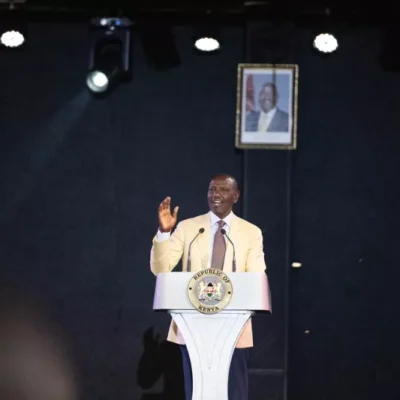
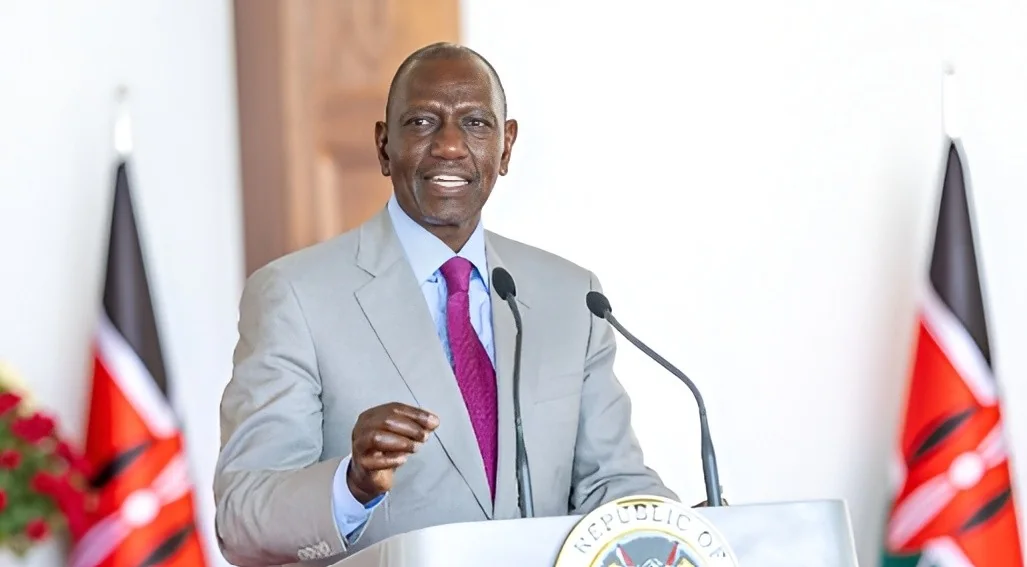
Speaking during the State of the Nation Address on Thursday, Ruto said the exercise would bring together national institutions, counties and citizens to shape a new development path for the country.
“On Wednesday, the 12th of August, 2026, we shall formally launch a national conversation on Kenya’s future beyond Vision 2030, the most consequential exercise in national reflection and public participation since the promulgation of our constitution in 2010. We shall bring together every institution of our republic, every county, and every generation,” he said.
He said political parties, the private sector, workers’ organisations, faith communities, universities, professional associations, innovators, civil society, the creative industry and young people would be at the centre of the exercise.
Ruto said he had invited Professor Hiroyuki Hino, Professor Anyang Nyong’o and other experts to examine Kenya’s future beyond Vision 2030.
He said their proposals demonstrated that Kenya could become a prosperous, industrialised and globally competitive country within one generation if citizens remained united and committed to long-term transformation.
“Their proposals provide the foundation for a much broader national conversation-a conversation that now belongs not to government, not to the authors of that report, but to every Kenyan,” he said.
“In 2010, we gave ourselves a constitution worthy of our dreams. The task of our generation is to build a nation worthy of that constitution.”
The proposed new Vision for Kenya is built around three main pillars: transforming agriculture to increase productivity, promoting industrialisation through manufacturing and agro-processing for regional markets, and developing a technology and innovation-driven economy.
The blueprint says Kenya’s transformation will require an ethical and efficient public service, strong institutions, consistent policies and closer cooperation between the government and private sector.
It notes that successful transformation in East and Southeast Asia was driven by governments that guided economic change by identifying priority sectors, supporting investment, developing skills and ensuring consistent policy implementation.
For Kenya, the government plans to prioritise sectors with strong potential for productivity growth, job creation and export competitiveness.
The blueprint proposes aligning public investment, education, infrastructure, financial systems and regulations to support agriculture, manufacturing, technology and services.
In agriculture, the plan proposes increased investment in irrigation, extension services, research, improved inputs, climate-resilient farming, rural roads and secure land ownership.
“The government will prioritise high-value agricultural activities including horticulture, food processing, value addition in coffee and tea, dairy processing, livestock and meat value chains, fisheries and aquaculture and oil crops,” reads the blueprint.
The industrialisation pillar seeks to make Kenyan products more competitive by lowering production costs and positioning the country as a manufacturing and assembly hub.
Priority areas include agro-processing, textiles and garments, leather products, furniture and wood products, pharmaceuticals, chemical industries, digital technology hubs and manufacturing for the African Continental Free Trade Area.
The technology and innovation pillar will focus on expanding technology use across agriculture, manufacturing and services, strengthening digital innovation, improving research and developing science and engineering skills.
The blueprint identifies several foundations needed to support the transformation, including integrity and value-based leadership, large-scale infrastructure development, social development, supportive financial systems, environmental sustainability, peace and security, and regional integration.
The government says infrastructure investment will cover roads, railways, ports, airports, energy, water, irrigation, sanitation and digital connectivity to support production, trade and quality of life.
It also proposes strengthening human capital through improved education, technical training, healthcare, housing, social protection and poverty reduction.
The blueprint recommends establishing a National Economic and Social Council to oversee implementation, coordinate institutions and ensure long-term development priorities continue beyond electoral cycles.
It also proposes creating a Vision Delivery Secretariat to support planning, monitoring, research, stakeholder engagement and the preparation of progress reports.
The transition from Vision 2030 to the new development vision will require a national development law, sector transformation strategies, flagship projects and a five-year Medium-Term Plan.
The government says “public participation will be central to the process, with citizens, businesses, counties, universities, religious organisations and civil society expected to take part in shaping Kenya’s future.”
The blueprint states that Kenya’s transition towards a high-income, industrialised society will depend on strong institutions, disciplined implementation, national ownership and long-term commitment.
The process is expected to culminate in the launch of the new National Development Vision by the end of 2026.