
Monday 16th November, 2026 08:47 AM|
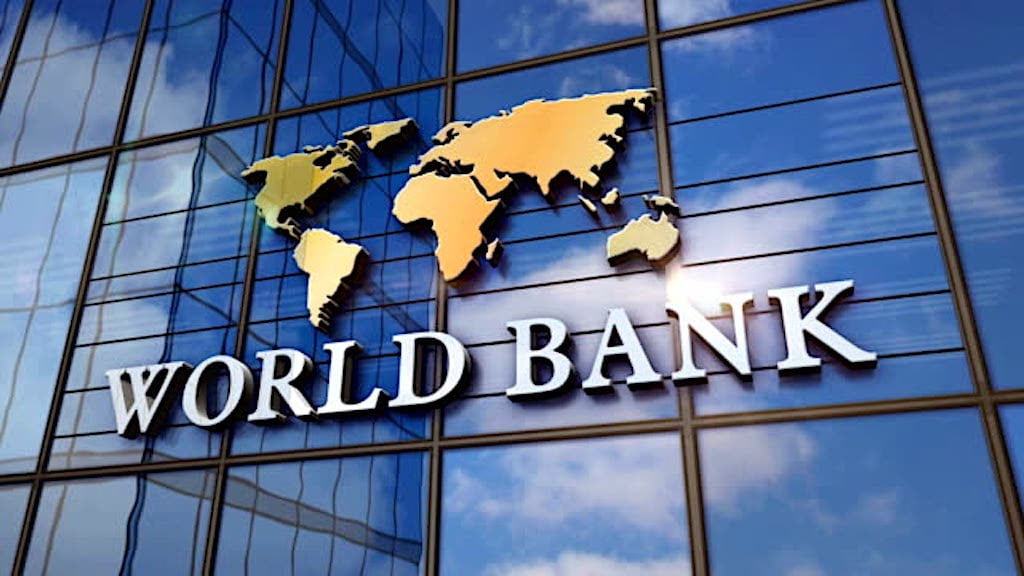
President William Ruto has defended his administration’s handling of the World Bank‘s November 2026 Kenya Economic Update, saying his government insisted that the report be made public to allow Kenyans to examine its findings.
Speaking during a church service at St Mary’s Girls High School in Narok on Sunday, November 15, 2026, Ruto said the assessment acknowledged reforms undertaken by his administration, including measures targeting corruption, public procurement and accountability in government institutions.
The President also challenged critics to consider the entire report rather than focus on its findings about corruption and procurement weaknesses.
“I have heard some people speaking on the World Bank report. I want to tell you that it is the government of Kenya, the one I am leading, that said that we want an open report. Normally, such reports were being given to governments only, but we said that we want the report to be public for Kenyans to know what is happening,” Ruto said.
The World Bank released its 34th Kenya Economic Update in November 2026, with a special focus on governance constraints to economic growth and job creation.
What the report says about SGR costs
The report uses the Mombasa-Nairobi Standard Gauge Railway (SGR) to illustrate the financial implications of governance weaknesses in major infrastructure projects.
It estimates that Kenya’s railway cost approximately Ksh988 million per kilometre, compared with Ksh741 million for Tanzania’s Dar es Salaam-Dodoma railway and Ksh689 million for the Djibouti-Addis Ababa line.
According to the World Bank, Kenya could have saved up to Ksh117 billion in initial construction costs if it had delivered the Mombasa-Nairobi railway at the same cost per kilometre as Tanzania’s project.

The report attributes at least 30 per cent of the potential savings to governance challenges, including direct contracting instead of competitive tendering, land speculation and alleged fraud involving land titling, valuation and compensation.
He also alleged that some opposition leaders criticising the project could have benefited from money linked to its tenders, without providing evidence in the remarks cited.
World Bank findings on corruption
Beyond infrastructure, the assessment examines the effect of corruption on businesses and workers.
It estimates that 39 per cent of Kenyan firms considered corruption a major or severe constraint to doing business in 2025, compared with 25 per cent in 2013.
The report also states that 36 per cent of firms experienced at least one bribery request in the preceding year.
Informal workers, who account for 83.8 per cent of Kenya’s workforce, are also affected. The World Bank estimates that they can lose up to 20 per cent of their daily earnings through bribes demanded by frontline institutions.
The report identifies procurement transparency, institutional effectiveness and public financial management among the areas requiring improvement.

Reforms Ruto cited in his defence
The President pointed to the Electronic Government Procurement system and eCitizen platform as measures introduced to improve transparency and the delivery of government services.
He also cited the Conflict of Interest Act and reforms in the management of state-owned enterprises.
Ruto said the World Bank report recognised these measures and other economic indicators, including employment growth, exchange rate stability and increased foreign exchange reserves.
Its recommendations include greater transparency in public procurement, disclosure of beneficial ownership, stronger oversight of public investments and improved implementation of accountability measures.
Ruto said his administration supported making the report public and urged Kenyans to consider its findings in full.