
The outcome report of the 1st International Conference to Transition Away From Fossil Fuels was published at the London Action Climate Week. It makes strong calls for fossil fuel phaseout plans that advance all human rights, redress economic injustices and protect environmental defenders – fully reflecting the International Federation for Human Rights (FIDH)’s contributions to the process.
25 June 2026. It is a long-known, scientifically backed fact that the dependence on and use of fossil fuels is the main historical and current driver of greenhouse gas emissions. The role of fossil fuel in climate breakdown also gravely affects the fulfillment of human rights, as this week’s record-breaking heatwave in Europe painfully reminds us.
A fossil fuel phaseout is a scientific demand as much as a legal one, as the International Court of Justice stated in its advisory opinion on climate change. World leaders must put people before extractivist profits and bring an end to the fossil fuel age–while also ensuring this transition benefits communities, advances all rights, and repairs the damage caused by centuries of dependence on these energy sources.
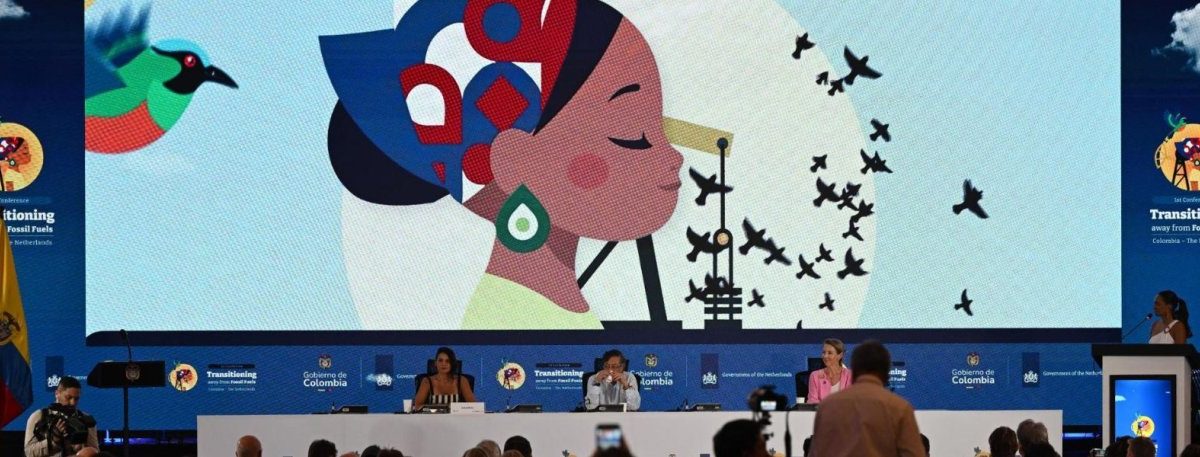
In April, Colombia and the Netherlands organised the 1st Conference on Transitioning Away from Fossil Fuels. Hosted in Santa Marta in response to the stalemate around phaseout action in United Nations (UN) climate negotiations, it convened 57 States and over 1,000 stakeholders.
The event generated new hope as it openly discussed both challenges and concrete ways for this “coalition of the willing” to move ahead with implementing a phaseout across the whole economy. FIDH contributed to the Santa Marta process, delivering written submissions and participating in online dialogues to produce inputs for the governments’ consideration.
On 23 June, at the London Climate Action Week, Colombia and the Netherlands revealed the final conference report. FIDH’s recommendations were all restated as concrete ways forward for willing countries to secure phaseout plans that can simultaneously advance human rights, protect defenders who are calling for ambitious action, and redress systemic inequalities.
The report highlighted many of FIDH’s points, including the need for:
– truly participatory approaches that involve all affected rightsholders, prevent violations of their individual and collective rights, and advance alternative sources of income that do not produce new forms of “green extractivism” or a repeat of inequalities under a fossil fuel-based model;
– protecting environmental human rights defenders and an open civic space for environmental justice;
– respecting free and prior consent for Indigenous Peoples, including for transition projects.
– strong binding rules for corporate accountability in light of carbon majors’ large contribution to emissions;
– trade and investment measures and tax policies that do not undermine climate objectives or place a burden on the least responsible communities and countries.
FIDH will continue to call for centring human rights in phaseouts at the second conference, to be held in 2027 under the co-leadership of Tuvalu and Ireland. It will also fight to ensure the Santa Marta spirit is carried into discussions on these issues at COP31. It is high time countries meet words with real and fast action grounded in science and human rights obligations.