
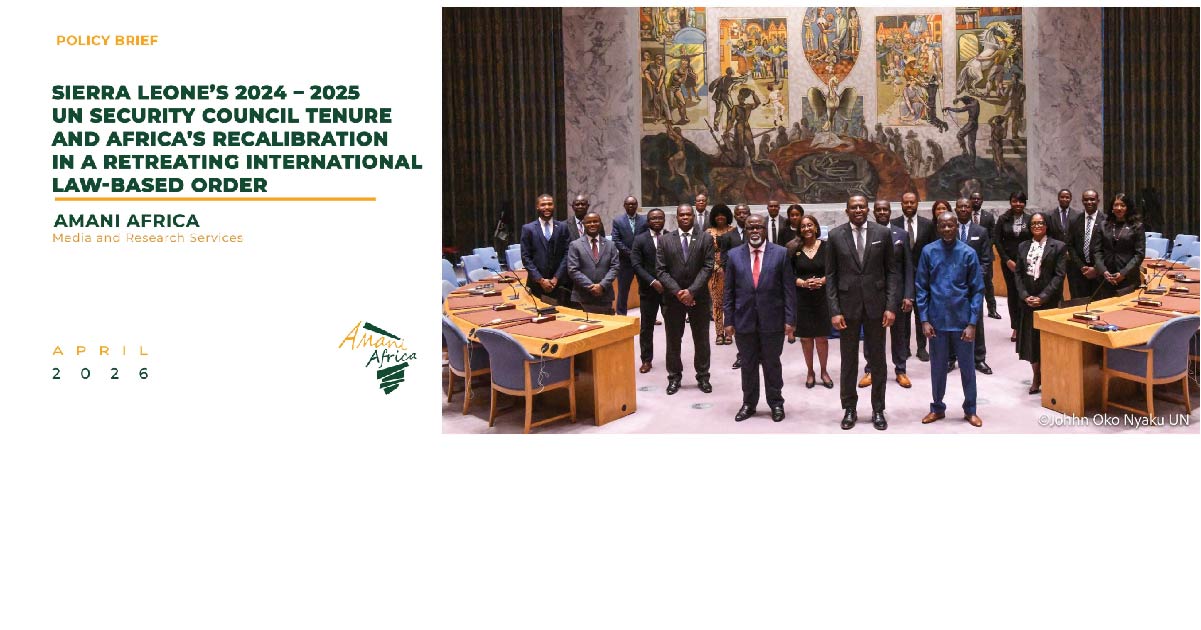
Sierra Leone’s time on the United Nations Security Council, spanning 2024-2025, occurred amidst a decline in adherence to international law. This period was characterized by increased unilateral actions, heightened geopolitical competition, inconsistent application of international standards, and challenges to the UN Charter’s collective security framework.
Analysis of Global Trends and African Response
Recent global developments have presented difficulties for the international system. These include a move away from established legal frameworks, a rise in unilateral decision-making, and increased competition between global powers. These trends have placed considerable pressure on the United Nations’ ability to maintain collective security.
Pathways for African Recalibration
Observations from Sierra Leone’s Security Council experience, combined with discussions from the 2026 Pre-AU Summit High-level Dialogue on ‘Africa at a Crossroads,’ suggest opportunities for African nations to adapt and strengthen their position. Four interconnected strategies have been identified.
Strengthening African Solidarity
One key pathway involves reinforcing collaboration among African nations within the A3 (Angola, Mozambique, and Sierra Leone) and the expanded A3 Plus group. This aims to foster a unified African voice on the global stage.
Engagement in Global Crises
Another strategy emphasizes a principled African involvement in international crises extending beyond the African continent. This approach seeks to contribute to global stability while upholding African values.
Navigating Multipolarity
Strategic navigation of the current multipolar world order is also considered essential. This involves forming coalitions and implementing stronger safeguards for resource governance to protect African interests.
Security Council Reform and Operational Subsidiarity
A dual reform agenda is proposed, focusing on reforming the Security Council and promoting operational subsidiarity under Chapter VIII of the UN Charter. These reforms aim to enhance the effectiveness and inclusivity of the UN system.
Advancing African Agency
The analysis suggests that African nations should prioritize practical solutions developed within Africa. Simultaneously, maintaining global relevance through principled diplomacy and coalition-building is crucial.