
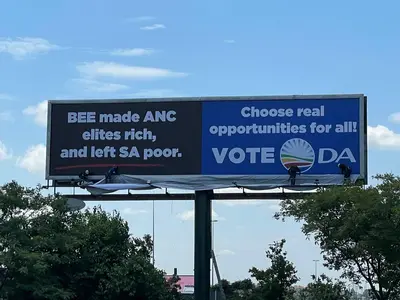
South Africa’s broad-based black economic empowerment (BEE) debate has been intensifying over the past few years, not least since the formation of the government of national unity comprising mainly two political parties diametrically opposed on the issue, the ANC and the DA. The debate has two poles: those in favour, even advocating increased regulations and those advocating scrapping the policy, arguing it has a negative impact on economic growth, investment and employment.
Ultimately, the merits of the arguments notwithstanding, the reality, from an economic point of view, remains: 32.4% of South Africans are unemployed, with youth unemployment at a staggering 62.2%. Also uncontested is that economic growth has been sluggish, averaging only 0.8% a year since 2012.
However, with divergence of opinion on broad-based BEE persisting in this economic context, the issue requires an honest, evidence-based assessment of what the policy has achieved and what it has not.
Household income data from Statistics SA and Quantec covering 2008 to 2025, together with the latest research from the Black Management Forum (BMF) and Henley Business School Africa (2026), is invaluable.
The story that emerges is neither the triumphant transformation story the successive ANC-led administrations have presented nor the wholesale failures the opposition to the ANC has tended to articulate.
In short, the policy, with its many regulations, has delivered limited gains to a select few and operates in an economy too constrained to allow those gains to reach the majority.
What the household data shows
The numbers tell a nuanced story. On the positive side, the black middle class has grown substantially. Middle-income black households rose from 1.3 million in 2008 to nearly two million in 2025, a 52% increase representing roughly 680 000 additional households.
Black representation in boardrooms, executive management and senior management in the private and public sectors has improved markedly. Broad-based BEE has also institutionalised transformation as a permanent feature of South Africa’s economic governance; embedded learnerships and skills development programmes across the private sector; and expanded market access for black-owned businesses through preferential procurement.
But the broader picture is a cause for concern because despite 17 years of broad-based BEE policy implementation, about 70% of working-age South African households remain in the low-income category, virtually unchanged from 2008. The income pyramid has therefore not improved.
In 2025, only 2.5% of black households qualified as high-income, against 24.1% of white households. Based on the results, the broad-based BEE policy has not been effectively implemented to achieve the intended broad-based transformation goals. This gives credibility to the argument that the policy is too focused on compliance scorecards and ownership transactions among a small elite and not focused enough on creating jobs, growing enterprises and lifting incomes and opportunities at the base of the pyramid, where most of the black population remains.
The verdict regarding the research is that transformation is the right goal but the implementation and execution have been limited and, in some cases, flawed in execution.
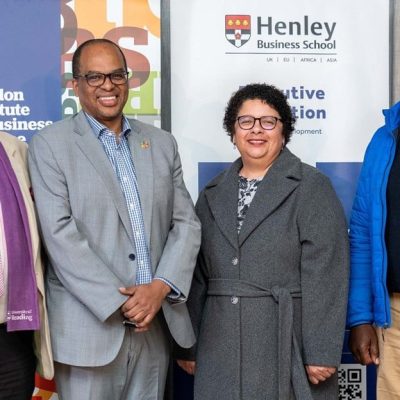
The BMF and Henley Business School Africa’s 2026 study included a survey of more than 500 business managers. The responses were interesting in that the principle of transformation is accepted and it is recognised that it has expanded opportunity and diversified leadership.
However, B-BBEE is criticised for being a compliance exercise rather than a genuine driver of transformation. The problem is the performance-scorecard culture that has been created without contributing to transformation.
The World Bank’s Drivers of Growth Report (March 2025) reinforces this concern from a different angle. It warns that excessive regulatory complexity, including aspects of broad-based BEE, discourages investment and limits new business formation. Compliance costs fall disproportionately more on smaller businesses, the enterprises that are most likely to generate employment on a large scale.
Rising above the political noise
Dismissing every critique of broad-based BEE as racism or anti-transformation by mostly political commentators is missing the point of the debate. A more mature approach to the debate might require holding both sides simultaneously: on the one hand, that while transformation is a constitutional necessity and moral imperative, the model has not delivered sufficiently for most South Africans; on the other hand, that the model has not delivered sufficiently for most South Africans. These positions are not contradictory. They are honest reflections and the starting point for serious reform.
A practical reform agenda
If we take transformation seriously, the following six reform actions would make a material difference (although this is not the only action required):
- Measure outcomes, not box-ticking. Replace compliance-driven scorecards with incentives tied to measurable results, for example the number of jobs created (especially for young people), black-owned enterprises that have been established and that have survived and are growing and households that move out of the low-income category.
- Reduce the burden on small businesses. Simplifying broad-based BEE requirements for firms with fewer than 50 employees would lower barriers to entrepreneurship and allow small enterprises to focus on growth rather than compliance administration. Small businesses are where employment could be created. Compliance is seldom recognised as a serious driver of operating costs for small businesses.
- Align skills investment with job-creating sectors. Training programmes should be directed toward sectors capable of absorbing workers on a scale: renewable energy, construction, agro-processing, logistics and tourism are but some of the sectors. South Africa’s Just Energy Transition alone offers generational skills and employment opportunities if planned correctly.
- The supply-chain/tender processes: Contractor track record and capacity should be more important than broad-based BEE status at the tender stage. Service delivery failures and cost overruns that have plagued government infrastructure projects are partly a product of awarding contracts based on scorecard compliance rather than demonstrated capability.
- Ownership beyond elite transactions. Ownership must be broadened as far as possible through initiatives such as employee share ownership schemes to ensure widespread empowerment.
- Broad-based BEE assessment and evaluation. Broad-based BEE’s impact should be assessed using real data, such as household income, employment statistics and enterprise survival rates, rather than just ownership transaction volumes. Independent reporting, free from political interference, would allow course corrections before another decade passes with the income pyramid unchanged.
Conclusion
In conclusion, broad-based BEE has produced real results but not on a broad scale. The black middle class is larger and boardrooms are more diverse but 70% of households remain low-income, the same as in 2008. Youth unemployment at 62.2% represents a fast-growing crisis with no obvious short-term solutions.
The answer is not to scrap transformation but to change implementation. The current outcomes of broad-based BEE, a compliance-driven, elite-capture-prone model of empowerment, are failing many of the people it was designed to serve. South Africa needs an amended policy framework that is outcome-focused, administratively lean, independently evaluated and genuinely broad-based. The policy must reward enterprises for creating jobs and growing incomes, not for ticking boxes. It must be one that can be defended on its merits because it is visibly working.
Professor Daniel Meyer: College of Business and Economics, University of Johannesburg, June 2026