
In 2017, when high school student Brandi Levy was disciplined by her school for a Snapchat photo that criticized her cheerleading team and featured vulgar language, the Levy family took legal action in the name of freedom of expression.
That single, frustrated post ultimately paved the way to the Supreme Court, earning an 8-1 ruling in Levy’s favor and cementing a new legal precedent for free speech in the digital age.
National Impact
It all started when the Mahanoy Area freshman created a Snapchat post expressing her frustration with not making her school’s varsity cheerleading team.
“F— school, f— softball, f— cheer, f— everything,” the post read, alongside a photo of Levy and a teammate holding up their middle fingers.
Drama spreads like wildfire in a high school setting, so it’s unsurprising that Levy’s coaches got wind of the post and suspended her from cheerleading for a year. In response, Levy’s parents sued the school, claiming that the decision violated her free speech, one of America’s most integral, sacred principles.
For decades, the court has recognized that a school can regulate on campus student speech when it is disruptive to school proceedings, vulgar or impedes upon other people’s rights.
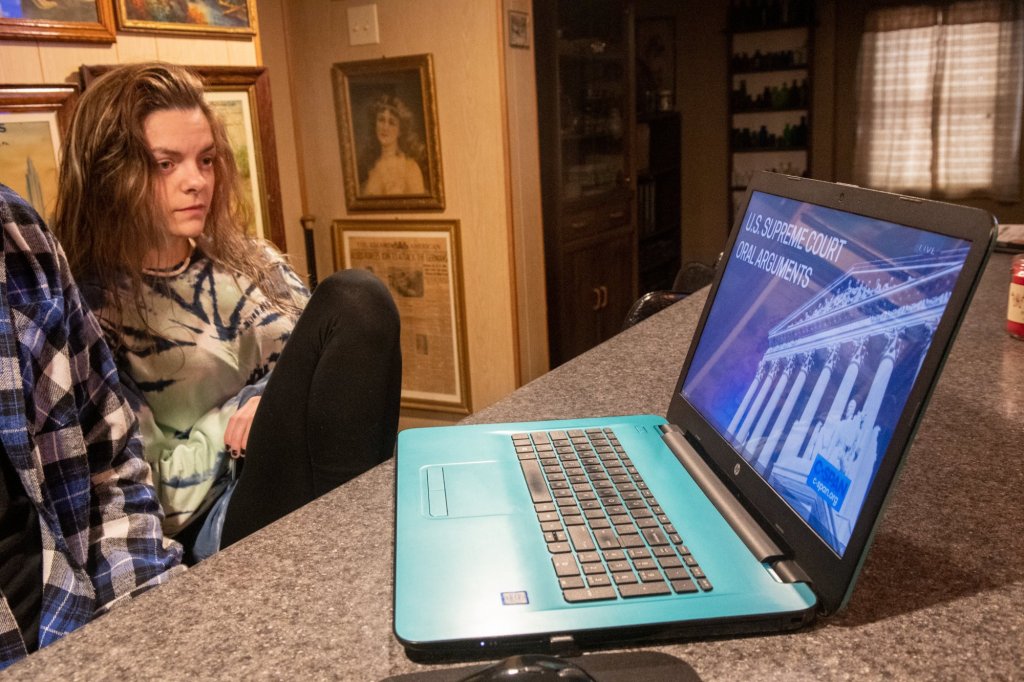
But this wasn’t one of those instances — yes, Levy’s speech referenced a school-based team, but her speech had ultimately occurred off school grounds, on her own time. For this reason, the case carried weight, defining the boundaries of students’ individual rights online. So, the U.S. Supreme Court decided to hear arguments for Mahanoy Area School District v. B.L. in 2021.

Living legacy
Eight of the Supreme Court’s nine justices sided with Levy, concluding that her first amendment rights had been infringed. The decision upheld existing precedent, noting that out-of-school student speech falls more so in the domain of parental discretion. The court also concluded that Levy’s speech did not pose an immediate harm or danger.
Mahanoy Area School District v. B.L. reaffirmed that young people are their own thinkers, their own speakers, out in the real world, and maintain the right to express those sides of themselves as they see fit.
Levy’s case was even featured in a 2025 documentary chronicling students’ speech freedoms since the landmark Tinker v. Des Moines case in 1969.
“Now that I’m older and I look back at it, I don’t regret doing it because now I’m here fighting for my rights,” Levi told the Republican Herald at the time. “I feel everyone should be able to do what I did, so I don’t regret it one bit.”
Sidelight
In a region historically defined by coal and rail, this five-year-old ruling represents a decidedly modern milestone. It pushed a local teenager to the forefront of a national conversation, permanently drawing the boundary lines for student expression on the internet.