
Trump’s sweeping sanctions against the International Criminal Court threaten global justice, disrupt human rights investigations and spark international condemnation, writes Dr Klaus Moegling.
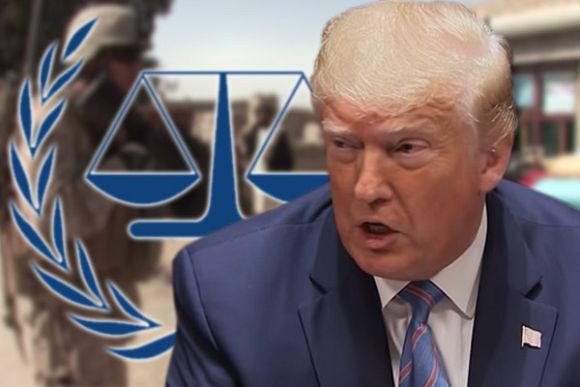
U.S. PRESIDENT Donald Trump is targeting the International Criminal Court (ICC), whose mission is to prosecute and convict high-ranking suspected criminals who have violated international law and human rights in The Hague.
The Trump Administration is now imposing sanctions against the entire ICC as an institution. This represents yet another attack on global justice.
ICC now also on the U.S. sanctions list as an institution
Until now, the U.S. Government had sanctioned “only” individual members of the ICC – including ICC President Tomoko Akane – with serious consequences for their access to digital services, assets, credit cards and travel to the U.S.
As of 9 October 2026, the ICC as an entire institution is now also on the U.S. sanctions list (‘Imposing Sanctions on the International Criminal Court’). These sanctions are already largely in effect and are set to take full effect in early April 2027, although a few individual exemptions still apply. They include, for example, a ban on NGOs and banks cooperating with the ICC, along with the threat of significant penalties.

One reason for the sanctions could be the arrest warrant issued against Israeli Prime Minister Benjamin Netanyahu, who faces charges of serious war crimes in the Gaza Strip. Palestine is an ICC member state, which is why this arrest warrant was possible. The ICC’s arrest warrant against Russian President Vladimir Putin could also be another reason for the action taken against the ICC.
An arrest warrant was issued against Putin in the spring of 2023 in connection with the abduction of 16,000 children from Ukrainian territory.
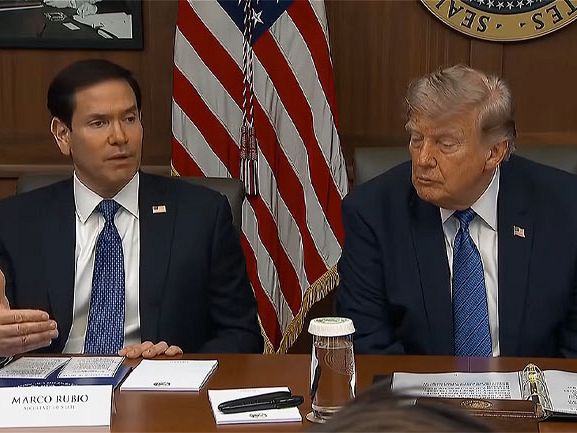
However, U.S. Secretary of State Marco Rubio is also fundamentally opposed to the international prosecution of war criminals by an independent and supranational organisation, as reported by the Legal Tribune Online:
‘Rubio also openly threatened the court with its dissolution. “Either the ICC stops its threats, or we will put an end to the ICC,” the U.S. Secretary of State declared. At the same time, he called on American allies to exert their influence on the Court.’
Eight countries – Canada, Denmark, Germany, France, Italy, Japan, the Netherlands and the United Kingdom – protested shortly after the new punitive measures against the ICC were announced in early October 2026 and declared their ‘unwavering support’ for the ICC:
As committed supporters of the ICC we regret and strongly disagree with the announcement of sanctions to be imposed upon the Court by the United States.
Nevertheless, if put into effect, these sanctions will have a significant impact on the Court’s work, its dedicated staff and their families. They work every day to bring those accused of the most serious international crimes to justice and to support their victims.
Australian Foreign Minister Penny Wong also supported a joint call for solidarity with the ICC.
U.S. NGOs cease cooperation with the ICC
The editors of Dutch investigative journalism platform Investico, Michelle Salomons and Allart van der Woude, report on the effects of the announced sanctions so far.
ICC investigators reportedly receive thousands of tips from aid and human rights organisations every year. This vital source of investigative work is at risk of being destroyed. Of the 25 organisations that have spoken out, 14 have already ceased all cooperation with the ICC due to pressure from the U.S. Government.
Among them is the major human rights organisation Human Rights Watch, based in New York, which is also simultaneously challenging the U.S. sanctions in court. Six other NGOs have already significantly reduced their cooperation. Several European and German organisations have also curtailed their cooperation with ICC investigators. U.S. NGOs are legally compelled to comply with the sanctions.
First countries turn their backs on the ICC
EU Justice Commissioner Michael McGrath expresses the EU’s solidarity with the ICC and hopes:
‘The six-month grace period before these measures take effect offers an opportunity for dialogue. In the meantime, we are prepared to support the Court and protect EU companies from the effects of these measures.’
ICC President Akane stated on 2 November 2026, before the UN General Assembly – via video only, as she was already barred from entering the U.S. – that 34 international arrest warrants are currently outstanding and have not yet been executed by the relevant states. However, she noted that six states have since withdrawn from the ICC.
The ICC, however, is continuing its work undeterred — according to Akane:
‘Despite all the challenges, the International Criminal Court will continue to fulfil its judicial mandate in full independence and impartiality, acting solely based on law and evidence.’
Calls to the UN and the EU
The European Union must distance itself and clearly draw a line between itself and the United States regarding the latter’s foreign policy, which violates international law. Furthermore, all diplomatic avenues and measures must be utilised to counter the U.S. Government’s actions against the ICC in The Hague. Cooperation between the United Nations and the European Union would also be essential in this regard.
After all, on 2 November 2026, the UN General Assembly in New York criticised the U.S. Government’s actions and attempts at intimidation by a majority vote and continued to call on ICC member states to cooperate. Ninety-three states voted in favour of the resolution critical of the U.S., 13 against, with 36 abstentions.
On several occasions within the EU – including by the Dutch Government – calls have been made in this context to protect institutions, companies, NGOs and individuals threatened by U.S. sanctions through the EU Blocking Regulation.
Overall, the European Parliament and the European Commission are outraged over the threat to the ICC. EU Foreign Affairs Commissioner Kaja Kallas called for the withdrawal of the threatened U.S. sanctions and reaffirmed that the EU would take all necessary measures to protect the work of the ICC.
Conclusion
The U.S. Government is attempting to undermine a transparent legal process – one independent of individual national interests – against individuals who are to be charged with the most serious crimes under international law and crimes against humanity.
The ICC serves as a peacekeeping force due to the deterrent effect of the criminal proceedings it threatens to initiate. Due to the existence of the ICC, high-ranking individuals will certainly think twice about whether they want to risk an international arrest warrant from the ICC, even if this will undoubtedly compete with other considerations and interests.
The midterm elections have shown how little support the U.S. public has for U.S. foreign policy that violates international law and is aggressive in nature, particularly with regard to an attack on Iran. Whether the actions against the ICC are also part of this rejection remains to be seen.
Even if the midterm results do not yet signal the end of Trump’s U.S. presidency, they are likely to raise hopes for a swift end to this catastrophe for democracy and world peace. The sanctions against the ICC have sparked global outrage. As early as 2025, a total of 79 states had publicly spoken out against the U.S. sanctions policy and in support of the ICC.
On 15 and 16 October 2026, the 27 heads of state and government of the EU also declared their support for the ICC and spoke out in favour of ‘the effective protection of international courts and their officials from any threats or sanctions’.
With the UN General Assembly’s resolution, the number of states condemning the U.S. sanctions had already risen to 93 by November 2026.
Ultimately, the question is what commitment governments and civil society organisations will demonstrate to counter the “might-makes-right” mentality with the strength of international law. On the one hand, this involves upholding just normative standards; on the other hand, it also concerns the interest of states and state alliances in not allowing themselves to be dominated by any great power, either now or in the future.
The size of the defence budget and the threat posed by the military must not determine whether human rights and international law are upheld. This is what is at stake — and nothing less.
Dr Klaus Moegling is a political scientist with a postdoctoral qualification and a university professor. He is the author of the book, ‘Realignment: Is a peaceful and sustainably developed world still possible?’, published open access.
Support independent journalism Subscribe to IA.


Related Articles