
The World Bank has sharply downgraded its global growth outlook for 2026, warning that the war in the Middle East has triggered a major energy shock that could drag the world economy to its weakest expansion rate since the Covid-19 era.
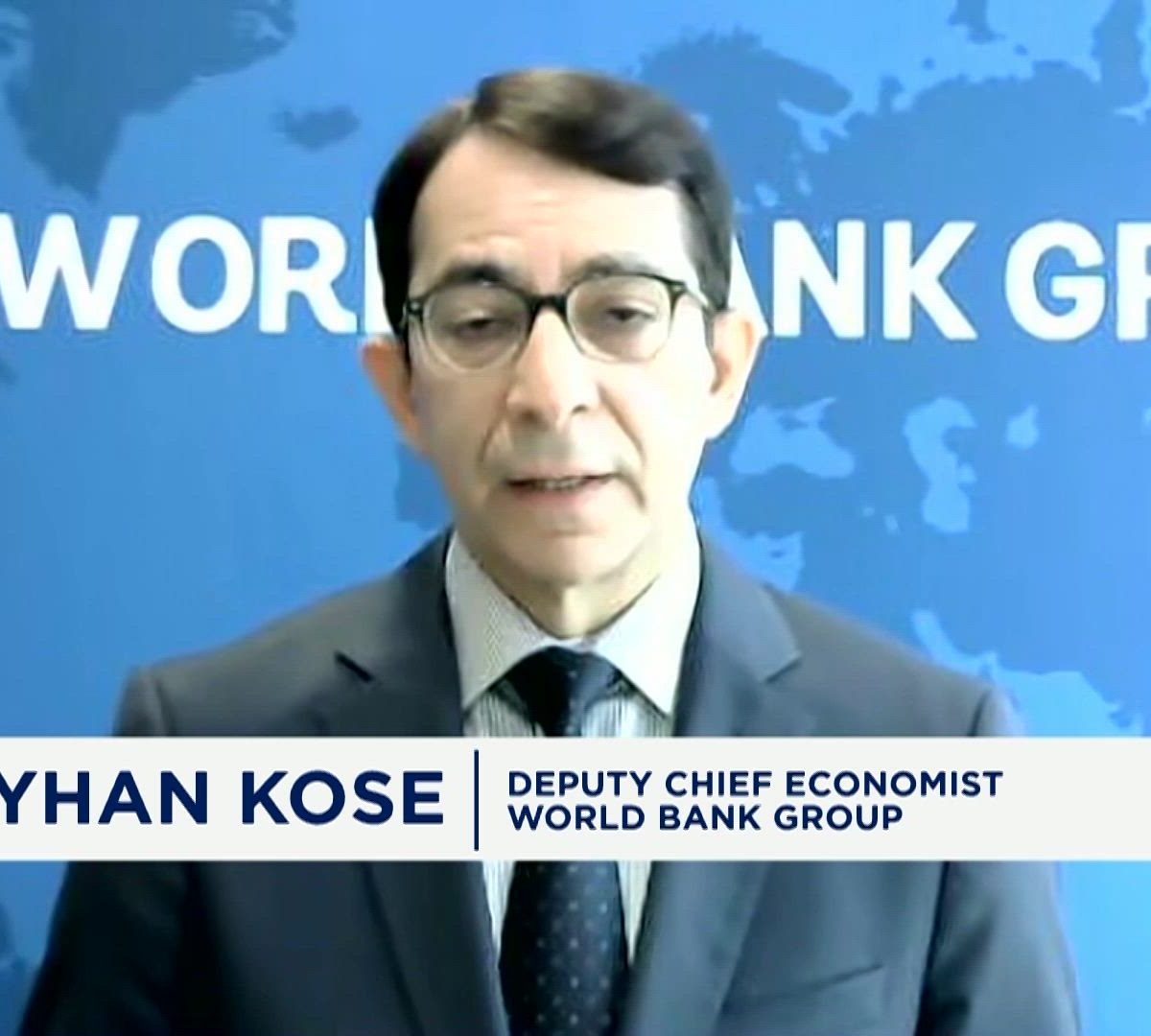
In an interview discussing the World Bank’s latest Global Economic Prospects report, Deputy Chief Economist Ayan Kose said the bank now expects global growth to slow to 2.5% in 2026, down from an earlier projection of roughly 2.8% at the start of the year. The revised figure also marks a step down from the 2.9% growth recorded last year.
The downgrade reflects the widening fallout from the conflict in the Middle East, particularly its effect on global oil markets. Kose said the World Bank has lowered forecasts for about two-thirds of economies worldwide, underscoring the breadth of the shock.
“At the global level, we were expecting growth to be around 2.8% or so at the beginning of the year,” Kose said. “Last year, global economy delivered 2.9% growth. Now we are expecting 2.5%.”
According to Kose, the central driver of the deterioration is a supply disruption linked to the closure of the Strait of Hormuz, a critical chokepoint for global crude flows. The World Bank now expects average oil prices to reach around $94 a barrel in 2026, though Kose cautioned that prices could move significantly higher if the conflict persists.
The stakes are considerable. Kose said that while inventories have so far cushioned some of the shock, that buffer cannot last indefinitely. If the conflict extends beyond July and the Strait of Hormuz remains shut, the World Bank sees a more severe scenario in which average oil prices rise to about $115 a barrel for the year. In that case, global growth could slow dramatically to just 1.3%.
Such an outcome would not only intensify energy stress but also create financial stress, he said, raising the prospect of tighter financial conditions, weaker investment and broader instability.
The warning is especially significant because the World Bank had entered the year with a comparatively more benign view of oil markets. Kose said policymakers had previously expected ample supply and even an “oil glut” globally. That assessment has now been overturned by the disruption of an estimated 15% to 20% of global oil supply flows tied to the Middle East.
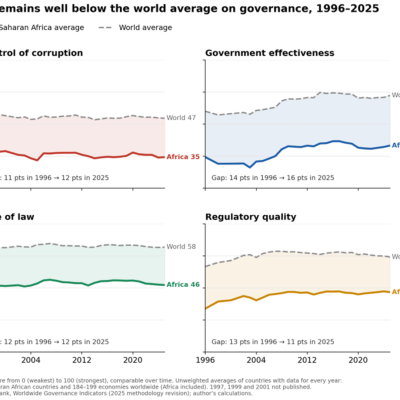
For sub-Saharan Africa, the World Bank also lowered its 2026 growth forecast, though the region is still expected to expand faster than the global average. Growth is now projected at 4%, down from an earlier estimate of close to 4.5%. Even so, the bank expects momentum to improve next year, with growth accelerating back toward 4.5%.
The regional picture, however, is highly uneven. Oil-exporting economies such as Nigeria and Angola may benefit from stronger crude prices, but Kose stressed that sub-Saharan Africa as a whole remains vulnerable because many countries are net energy importers.
That means higher oil prices are likely to feed quickly into transport costs, electricity prices, fertilizer costs and food inflation. In a region already grappling with food insecurity and limited social protection systems, the cost-of-living effects could be severe.
“The region as a whole, still, many of the economies are energy importers,” Kose said. “Then you have obviously energy shock. You have a cost of living shock, and in many countries we have problems related to food insecurity that could get worse.”
The World Bank’s concerns extend beyond near-term inflation. Kose said the region’s limited fiscal space leaves governments with constrained room to respond just as households face mounting pressure. Public debt levels have risen sharply in the wake of the pandemic, with debt on the public side now around 80% in the region, according to his remarks.
That backdrop makes policy design critical. Kose urged governments to ensure that any support measures are “timely, targeted, and temporary,” warning against blanket subsidies that could worsen already fragile fiscal positions. While policymakers may be under pressure to shield consumers from rising prices, generous and broad-based subsidy programs risk enlarging deficits and creating unsustainable budget burdens.
Instead, he said, governments should focus support on the most vulnerable segments of society, where the inflation shock is likely to be felt most acutely.
The inflationary consequences of the energy shock are also likely to complicate monetary policy. Rising fuel costs typically spill over into food and transport prices, creating a broader cost-of-living crisis that can keep inflation elevated and force central banks to maintain tighter monetary settings for longer.
For African policymakers, Kose said the challenge is not only to stabilize prices and public finances in the short term, but also to stay focused on long-term structural reforms. He pointed to the region’s pressing jobs challenge as millions of young people are expected to enter the labor force over the coming decade.
To meet that challenge, he said governments need to continue investing in physical infrastructure, digital infrastructure and human capital, while also improving business conditions to attract private capital and mobilize domestic investment.
The crisis may also have implications for energy strategy. Kose said recurrent geopolitical and commodity supply shocks should push countries to diversify energy sources, strengthen domestic resource capacity and invest more heavily in renewables. In that sense, the current turmoil could accelerate a transition that improves both energy security and climate resilience.
The World Bank’s latest assessment reinforces how quickly geopolitical conflict can ripple through the global economy, hitting growth, inflation, debt sustainability and poverty reduction all at once. For now, much depends on the duration of the Middle East conflict and whether oil flows normalize. But as the bank’s downside scenarios make clear, a prolonged disruption could leave the global economy facing a far more serious slowdown than currently projected.