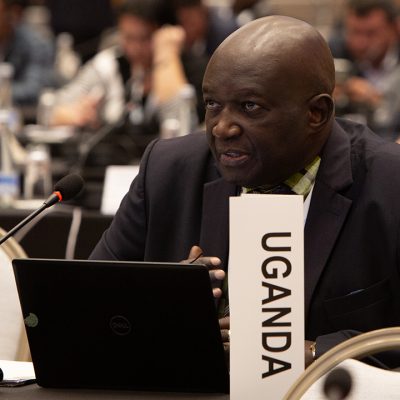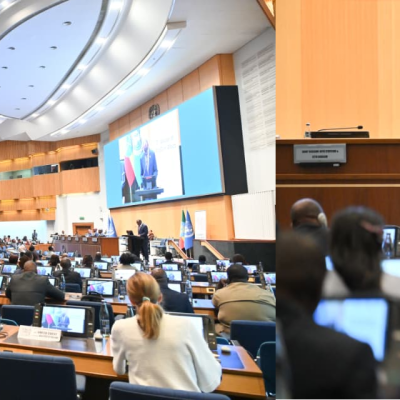



Industry leaders at the 52nd African Insurance Organisation (AIO) Conference have called for bold regulatory reforms and digital innovation to close Africa’s insurance protection gap and unlock inclusive economic growth across the continent.
Participating in a high-level panel discussion, Mr. Olusegun Ayo Omosehin, Commissioner for Insurance/CEO of Nigeria’s National Insurance Commission (NAICOM), emphasized that Africa’s low insurance penetration represents a multi-billion-dollar opportunity rather than a limitation.
Despite the recorded gap in Africa’s insurance penetration, the continent already commands an estimated $68 billion premium pool, signaling strong underlying demand where access exists.
“The gap is not about willingness to pay—it is about our ability to design and distribute products that reach people where they are,” Omosehin stated.
A key theme of the discussion was that distribution failure—not lack of demand—is the primary driver of low insurance penetration. Traditional agent-based models fail to reach up to 90 percent of the addressable population, particularly in rural and informal sectors.
Panelists emphasized that scaling insurance across Africa requires a shift to: Mobile-first distribution, Embedded insurance models, Community-based delivery channels and Digital Infrastructure Unlocking Access.
Africa’s rapidly expanding digital ecosystem is enabling this transformation: Over 500 million mobile subscribers; More than 350 million mobile wallets. These platforms provide ready-made infrastructure for low-cost, scalable insurance distribution and claims payments.
Mr Omosehin in his proposal to the challenge of balancing Innovation with Consumer Protection, expressed that whilst technology such as AI and blockchain is driving efficiency, he cautioned on emerging risks including: Data privacy, Cybersecurity threats, Algorithmic bias. Et cetera.
As a result, consumer protection and trust-building were identified as critical to scaling adoption. “Innovation and consumer protection are not opposing forces—they are mutually reinforcing,” the panel emphasized.