

For a quarter century, researchers and public health officials have debated exactly how climate change is reshaping malaria’s spread.
A new study finally resolves that debate with the most comprehensive assessment yet, and the answer turns out to be more nuanced than a simple worse-or-better verdict.

The research quantifies climate change’s historical and future impact on malaria across sub-Saharan Africa’s children, where the vast majority of cases and deaths occur.
Overall, the study has found that climate change has slightly increased malaria to date.
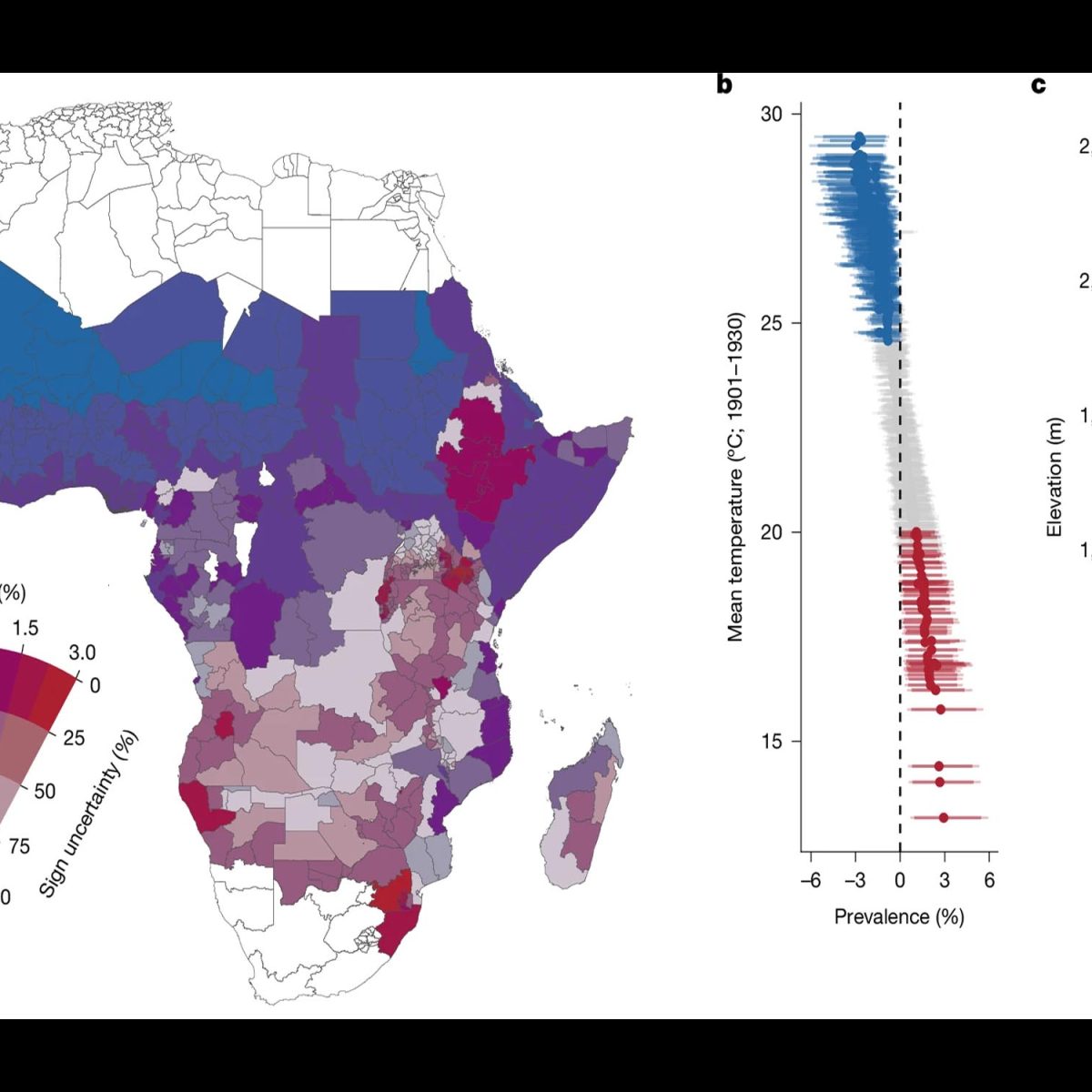
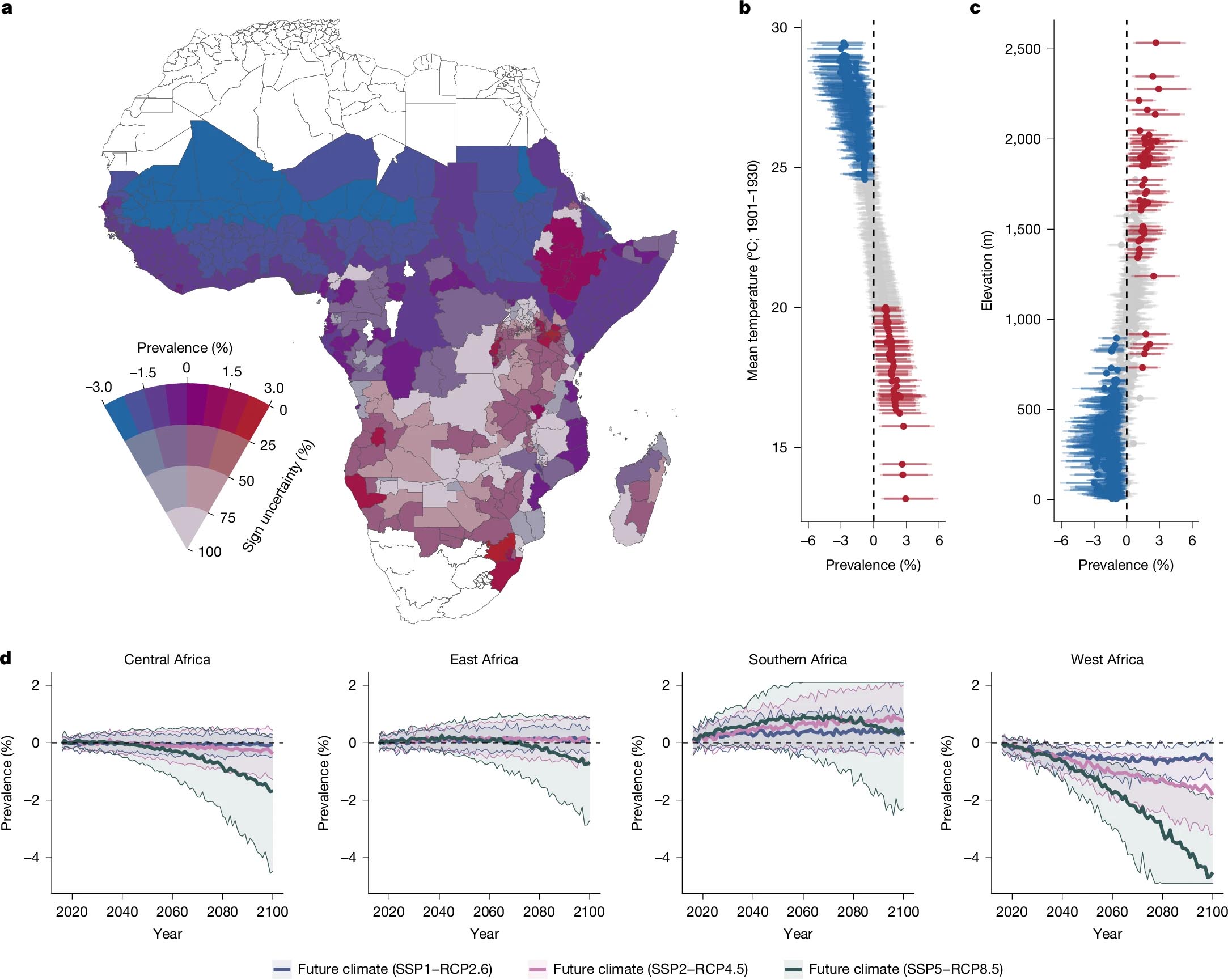
But looking ahead, that overall trend hides a sharp geographic divide. Rising temperatures could increase malaria risk in southern and East Africa while reducing it in today’s hardest-hit regions, where conditions may become too hot for mosquitoes to survive.
A disease on the move
“Climate change isn’t just making malaria worse or better – it’s moving it,” said co-author Tamma Carleton, an assistant professor at the University of California, Berkeley.
“Whether a place sees elevated malaria risks or reduced burdens under climate change depends on how hot it is today. We see relief in the current hotspots and new risk nearly everywhere else.”
Thus, climate change isn’t applying uniform pressure across the continent. It’s redrawing the map of where malaria actually thrives.
Today’s hotspots could cool off
In the warm regions where malaria is most entrenched today, climate change has already slightly suppressed the disease’s spread. That trend is expected to continue as temperatures climb high enough to become inhospitable even for the mosquitoes that carry it.
That’s a double-edged outcome, since extreme heat capable of pushing out malaria-carrying mosquitoes brings its own serious human health threats.
Researchers project that climate change will reduce malaria cases by around 5 percent in several large West African nations, including Nigeria, Burkina Faso, and Mali.
They also project that malaria could disappear entirely from extremely hot Sahelian countries such as Niger, Gambia, Guinea-Bissau, and Somalia as rising temperatures make conditions too harsh for mosquitoes.
Cooler regions face a rising threat
The opposite dynamic is unfolding in cooler regions where malaria hasn’t historically posed a major problem, including southern Africa and higher-elevation parts of East Africa.
In these areas, climate change is gradually making local temperatures more hospitable to malaria-carrying mosquitoes.
This shift is already increasing cases by around 5 percent in the Ethiopian highlands, Kenya, and Burundi, with similarly sharp increases showing up in Angola, Zambia, and northeast South Africa.
That upward trend is projected to accelerate substantially over time.
By 2100, malaria risk could rise by as much as 20 percent in the Rift Valley and coastal southern Africa. That would challenge regions with little recent experience fighting the disease.
Limiting warming saves lives
The experts found that if the world limits warming to 3.6°F (2°C), it could avert roughly five excess malaria cases per 1,000 children in southern Africa. The reductions would be even greater in the East African highlands.
Limiting warming to that threshold would also reduce the broader climate impacts expected to hit central and western Africa as global temperatures continue rising.
But the researchers are clear that cutting emissions alone won’t be enough.
Adaptation matters just as much. That’s especially true because southern and East African regions expected to face the biggest future increases in malaria risk have relatively little recent experience fighting the disease.
Preparing for new malaria outbreaks
“Governments, health systems, and communities must adapt to the evolving malaria threat,” said co-author Christopher Trisos from the University of Cape Town.
“That means getting ready now to implement more aggressive anti-malaria programs in cooler regions of sub-Saharan Africa where malaria risk is growing and which may be less experienced at tackling it.”
The researchers noted that inclusive economic development will be essential for confronting the increase in malaria driven by climate change in eastern and southern Africa.
Global health financing for effective surveillance, disease control, and better healthcare will also play a crucial role.
Both mitigation and adaptation, including active malaria elimination strategies, will need to work in tandem rather than as competing priorities.
A quarter century of debate
Malaria was one of the first health outcomes linked to climate change. But researchers say it has taken 25 years of study to determine which direction the overall trend is heading.
“The big story here is the opportunity for action: so far, elimination efforts have counteracted climate change impacts by nearly 200-fold,” said co-author Colin Carlson, an assistant professor of epidemiology at Yale University.
“Malaria elimination within a generation is not only possible, but one of the best ways to protect frontline populations from climate change impacts.”
That statistic – elimination efforts outweighing climate change’s impact by close to 200-fold so far – offers a striking counterpoint to the study’s more alarming regional projections.
It suggests that deliberate public health intervention has consistently done far more to shape malaria’s trajectory than climate change itself, at least up to this point.
Planning for what’s ahead
The study represents the first research of its kind to pinpoint exactly where future adaptation investments aimed at preventing and controlling malaria will be needed most.
It’s part of a broader effort by the Climate Impact Lab to help decision-makers direct adaptation resources more precisely.
The work builds on the Lab’s existing Adaptation Roadmap series and its Adaptation Inventory of tested climate adaptation strategies.
The study is published in the journal Nature.
—-
Like what you read? Subscribe to our newsletter for engaging articles, exclusive content, and the latest updates.
Check us out on EarthSnap, a free app brought to you by Eric Ralls and Earth.com.
—-