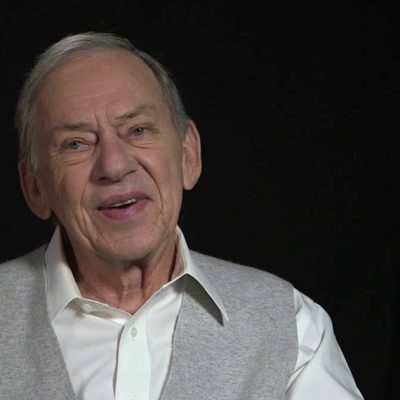

Host Landry Signé meets with H.E. Youssef Amrani, the Kingdom of Morocco’s ambassador to the U.S., on the heels of the men’s 2026 World Cup to discuss his country’s investment in sports for development. Their conversation highlights how sports and culture can create opportunities for youth and strengthen international relationships.
[music]
SIGNÉ: Hello, and welcome to season five of the Foresight Africa podcast. As always, I am your host and executive producer, Landry Signé, a senior fellow in the Brookings Institution’s Africa Growth Initiative. In this season of the Foresight Africa podcast, we are looking beyond the headlines to see how global shifts in economy, technology, culture, and politics are shaping the relationship between African countries and the United States.
With the 2026 FIFA World Cup behind us, we are reflecting today on the mark that African countries left on this competition, and on the importance of global sport to the cultural and economic development of African countries. We are incredibly fortunate to be joined in this discussion by His Excellency Ambassador Youssef Amrani of the Kingdom of Morocco.
Welcome to the Foresight Africa podcast, Your Excellency.
[1:32]
AMRANI: Thank you, Landry, for inviting me here at Brookings. I came here more than 20 years ago. Not only the building has changed, we have a new studio, but also you have a new topics in your agenda, and I am very happy to see today that you have an Africa center, that you, you’re giving priority to Africa.
And we believe in Morocco, as an African country, that Africa should be given a priority because we are facing the same challenges as far as security, economic possibilities, critical minerals. And Africa is becoming a partner to to the world, not only to the U.S., but as a country, Morocco, who first recognized the independence of the U.S.—and we are celebrating this year the 250 years of our diplomatic relations—it is good to remind how countries should work together in order to face all these challenges.
And I’m very happy here to be in this episode of your podcast to discuss about the the priorities, the ambition, and the vision of Morocco as far as the relations with the U.S. and football, which is now at the top of the agenda after the World Cup here in the U.S.
[2:51]
SIGNÉ: Amazing! Thank you so much, Excellency, for joining us.
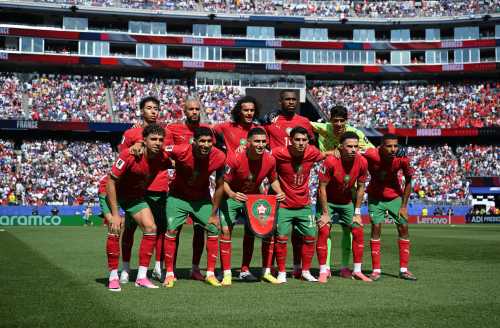
Your Excellency, African football has entered a remarkable new era. Morocco’s historic run to the FIFA World Cup semifinals in 2022, its quarterfinal appearance in 2026, and its recent rise to the sixth rank in the FIFA Coca-Cola Men’s World Ranking, the highest ranking ever achieved by an African nation, reflect both Morocco’s extraordinary progress and the growing competitiveness of African football.
What has been Morocco’s long-term strategy for developing the sport? Which investment have made the greatest difference? And what lesson can other African countries draw from its experience?
[3:59]
AMRANI: Thank you for this question. It’s a very important question, and and you rightly mentioned our team reaching the Doha World Cup, Qatar Doha World Cup in 2022, the semifinals. It was not a coincidence. It was a result of a vision, of an ambition of King Mohammed VI, who gave priority to sport, to education by the creation of many tools. And if we were able to achieve this important results in the World Cup because I think we did our own homework.
We give priority to the young generation. We acquired the necessary tools, Mohammed VI Academy football, where we trained new talents, and to create the the necessary conditions for every talent to demonstrate its potential. So this, the academy we have created illustrate perfectly this approach, because in order to produce excellent players, you have to link this with the education with modern infrastructure.
And today, the the Mohammed VI Academy in Rabat, with all this kind of excellence tools, help us to achieve this ambition. And that’s why we, thanks to this effort, we were able to achieve this this result, whether in Qatar, but also here in in the U.S. where we everybody has witnessed the importance of the contribution of Morocco in the World Cup.
We, of course, we are representing ourselves, Morocco, but also we are African country. And Africa, Africa here in the U.S. has shown that has a great potential. I was talking, lately with my friend Patrice Motsepe, who is the president of the CAF, the African Confederation of Football, and he was really insisting that 9 of 10 African countries participated in in the U.S. World Cup has reached the next stage.
And we have presented the beautiful football—
SIGNÉ: amazing—
AMRANI: —physically, but also tactically and artistically.
So I think Africa has a a future and notably that Morocco is going to host alongside Spain and Portugal the next World Cup, you know? Because football today is very important element and even a tool. It is more than a game because it brings people together, and you saw that here in the U.S.—
SIGNÉ: —absolutely.
AMRANI: Everybody recognizes the import of the African football and the stadiums were always full watching these games
[7:11]
SIGNÉ: Insightful, Excellency! And you mention it: Morocco hosting of the 2025 Africa Cup of Nations, and especially its preparations to co-host the 2030 FIFA World Cup with Spain and Portugal represent historic opportunity, not only for Morocco, but for Africa.
What are Morocco’s priorities for ensuring that these tournaments leave a lasting legacy for infrastructure, tourism, investment, local communities, and future generations? And how can that 2030 World Cup help reshape global perceptions of Africa and strengthen the continent’s capacity to host major international events?
[8:11]
AMRANI: Thank you for this question. As you you mention it, 2030 World Cup will offer us, and offers us, a unique opportunity to showcase African talent. We’ll continue in the same trend as here in the U.S., show the African talent, African innovation, African creativity, but also African, I’m I’m going to be modest, African ambition.
Because we have an ambition as African countries, and in this connection, Morocco is ready, is ready to change the narrative on African football. We already have changed in Doha, in Qatar, and here in United States, we changed the African narrative as far as football is concerned.
And also, the other countries showed that when you play against African country, you have to study it very well, because we have now our talent, and we have our vision and our ambition to move forward. Because in all countries, and especially in Morocco, we have invested in young talent, but also modern infrastructure, training centers, and world-class facilities.
And of course, what we achieve in the pitch is the translation of this policy and this approach. And I believe that, and I’m convinced also, that 2030 World Cup will allow Morocco to show the world what we have achieved and what we can deliver as a country, as a a trusted partner. And I I won’t say a natural bridge between Africa and Europe because Morocco itself is an African country, but how Africa and Europe can work together.
And you can see it is very important message we are giving to our partners. We are ready. We are ready. And this next 2030 World Cup will be an opportunity to consolidate, if I may say so, the bridge between Africa and Europe in the football. Because at the end of the day, what is important is how to achieve a more understanding, more interaction between a continent, Africa, which has the ambition and which has a strong potential to play a role in the geopolitics of the region.
Because we should not only talk about migration, talks about desertification, climate change. Yes, we have to face these issues, but we can bring an added value, and this is people-to-people interaction. Has no price. I think it is a a important tool that can bring us together to fight all stereotypes and incomprehensions.
[11:09]
SIGNÉ: Fantastic, Excellency! Major sporting events often promises jobs, investment, and economic growth. But their long-term outcomes vary considerably. How is Morocco working to maximize the economic and social returns from football while ensuring that benefits are broadly shared?
[11:38]
AMRANI: As I was saying earlier, football, sports, this kind of event is something more than a competition. They carry a vision of progress, as you say, because when you were talking about job creation, about promotion of growth, this is a vision of progress—cooperation, and global outreach. And this is what we have been trying to do in Morocco for the last years, for more than the last 20 years in the field of football, but also in the field of profound reforms, economic reforms.
Because at the end of the day, what matters the most is how much jobs do you create, and how much growth do you promote? And, you know, we showed that in the AFCON, which was hosted by Morocco, how we built important infrastructure, not only for the AFCON or for the World Cup, but for for our country.
Well, you, you travel—
SIGNÉ: —absolutely—
AMRANI: —to Morocco. I I saw you went in taking the speed train from Tangiers to Rabat.
SIGNÉ: Yes.
AMRANI: You see how Morocco has changed. Infrastructure is important, you know, and that’s what we are doing. Yesterday, we signed the ECOWAS countries a very important project for the gas pipeline between Nigeria and Morocco. All ECOWAS countries have addressed this issue as a game changer, game changer that will address, as you say, the root cause of the undevelopment of Africa. And it is through in this kind of projects, kind of infrastructure that we create jobs, that we create hope for our young generation.
[13:17]
Because our young generation in Africa, they they want jobs. They want to live in a good condition. And this kind of projects like the Atlantic project that Morocco is promoting today at the level of Africa with the creation of networks, with corridors, energy corridors will help to to create this kind of environment, positive environment for, for job creation, for promotion or growth, but also to face the instability in some countries.
Like for example, giving access to the Atlantic to the landlocked country in the south, it’s for me a game changer, but also an opportunity to give to the countries of the region access to sea, access to trade, because it’s important for their critical minerals, for everything.
So so this is I think what we we should be continuing to do in this framework of South-South cooperation. We are doing our own homework in Africa, building bridges of course between Africa, Europe, and the Mediterranean region. And of course hosting such big tournaments is not a coincidence, but rather the fruit of a clear vision that this has been carried by His Majesty King Mohammed VI. When we started with this Atlantic vision building corridor. And and infrastructure projects like Dakhla port, for example, like the one in Tangiers will create opportunities for trade and linking the countries together.
[14:55]
SIGNÉ: Amazing, Excellency! And what lesson do you think other African countries could apply, especially when it comes to using sport more effectively to create employment, local businesses, to improve quality of life?
And how Morocco is also cooperating in ensuring that some of the African, other African countries benefit from its experience in building those sport infrastructure to enhance economic growth?
[15:28]
AMRANI: I think soft power is important to create stability, to create understanding. But the most important is how you invest in innovation, in infrastructure, and the result must be visible for this young generation. And I believe that these kind of of projects that we are implementing, the ambition to transform the economies. I think we need to have the political will, the political ambition to transform issues. And you have to take risks. You know, you have to take risk. But of course, we have to to invest, to look for the necessary financial tools in order to finance development because we have no more choice that that than work working together.
And I think in this connection, this example of ECOWAS who takes ownership of these projects is essential. We need to support the integration schemes in our region, you know? And I I attended, you know, when you presented your, your book here at Brookings and and what you have developed. We need to do our own homework internally as Africans. Of course, we need our partners on board, but we need the necessary tools, the ambition to build up coherent, regional schemes. Because one country alone cannot face all these challenges. And the the the experience in Europe, in America, Latin America shows us that when we put our means together, we can achieve goals for the entire population in Africa.
So I think that sport also help because these infrastructures create opportunities and benefits for our young generation. And and disconnections, we should not wait. We should work, we should anticipate, accelerate investment in infrastructure, transportation, digital connectivity, in artificial intelligence. These are issues that creates possibilities for job.
So CAF, football, yes, it is an important element, but all of this to be in in a global strategy.
SIGNÉ: Absolutely. Integrating the broad ecosystem and strategy.
AMRANI: Ecosystem, exactly.
[17:45]
SIGNÉ: That’s amazing, Excellency. And Morocco and the United States share a longstanding partnership, and you mentioned Morocco was the first country to recognize the U.S. about 250 years ago. And this 2026 World Cup brought the Atlas Lions and supporters from across Africa to cities throughout North America. How did the embassy engage with the national team, the Moroccan and African diasporas, and American audiences during the tournament?
[18:26]
AMRANI: Well, thank you. Let me first use this platform of Brookings Institution to thank the American authorities. I followed all my team all over. I I traveled all over the country. The hospitality was there. The facilities were there, security and so on. And I can, I can say that, you know, this World Cup in the U.S. was a success. Financially, FIFA, of course, had some important resources. But also as far as football is concerned.
The other thing is that Morocco, of course, we have the history of our relations. We have the networks. We’ve been working with all the institutions, whether the FIFA or the governors or the mayors of the cities, you know. And with the White House because the White House has entitled a task force which is chaired by Giuliani to to follow up all these issues. So we did facilitate our work and we were happy to to work together in order to achieve a good presence of the Moroccan team and the Moroccan supporters.
Because, yeah, if if you have followed the Moroccan games the the majority of the followers and the supporters and the fan were were from Morocco. That’s important. They had some special flight to to the U.S., but also the importance of the Moroccan diaspora. So, and here also from Los Angeles to to Miami to Boston, they were present. They were with their families, with their wives supporting our fans. And this was really a very, very important impetus for us.
So this created also hope for the future, for the next World Cup, and we have learned some lessons from this experience and we will of course try to implement.
But as I said earlier, football is a very important tool that brings people together. So it was an occasion for us here to showcase our culture, our diverse identity: Berber, Arabs, Africans. We were watching together with our Americans friends. And I think this is here to to say that football connects people, connects culture, and creates links of friendship. And this was very important to notice during this World Cup.
So for us, for Morocco, it was an opportunity again to, for our people to see how we can strengthen the the existing tools between Morocco and the U.S. We have, we have a free trade agreement. We have a military exercise: Africa Alliance. We have political dialogue. So it was also an occasion for the people-to-people interaction, because this is also important in order to create opportunities for business, and business, of course, is important because today we open our markets to American investments. So this is, I think it’s a, it’s a very good experience, and football helps to achieve these kind of goals.
[21:33]
SIGNÉ: Amazing, Excellency. So, I understand that you are presenting also football as a, an important tool to deepen Morocco-U.S. relations while you’re also strengthening the broader framework in terms of trade, investment, tourism, education, culture, or people-to-people exchange.
AMRANI: Yes.
SIGNÉ: Is there anything that you want to further elaborate along those lines?
AMRANI: Yes. Well, continue the connection between the two countries and the two continents. Of course, today our Royal Air Maroc is flying to many cities in America.
SIGNÉ: Absolutely.
AMRANI: We have just inaugurated Los Angeles flight direct to Casablanca. It’s a major breakthrough. Of course, we have flights from New York, from Boston, from Miami, from Washington, D.C., other companies from Atlanta. So, so we are, the connection is there. We need to maybe reach better access to markets, and that’s why we have the free trade agreements, and we are on negotiations to explore all the possibilities to strengthen our trade, because trade is important. But also investment. Companies are investing in Morocco and all from Tangiers to Dakhla and then to Laayoune next week, a very important project in Laayoune.
Of course as we are talking about the political dialogue, we have a very important political dialogue and also a military cooperation. Because today we need more stability, more peace, not only in Africa, but in the whole region. I think Africa will need some, some more stability. Of course, in the Middle East. And Morocco, in any case, is always joining all the efforts that are being promoted in order to reach this peace and stability that we need today.
[23:24]
SIGNÉ: Amazing, Excellency! And now my final question.
AMRANI: Yes.
SIGNÉ: Looking beyond the final whistle, what would you like Morocco’s legacy to be 10 years after the 2030 FIFA World Cup? And how do you hope the tournament will contribute not only to Morocco’s development, but also to the advancement of African football, greater continental cooperation, and perhaps stronger international partnerships in order to make Africa be more influential on the global stage?
[24:07]
AMRANI: What I would like to to see after the 2030 World Cup, that Morocco, alongside Portugal and Spain, have helped or have demonstrated that cooperation across cultures, languages, and continent is not only possible, but it is powerful. And I would like to say that as you, you mentioned, that 2030 will reinforce the cooperation between Europe and Africa and put them together closer, and creating also bridges between societies.
So we want this tournament to be more inclusive, innovative, more organized, and centered on people. Because, of course, the only people they were concerned here, like I was said, you know, about the the price of tickets. People like to see football, but in Europe and in Africa, they’re not used to this. In America, they’re used to the highest price of tickets. So we need to work on these tickets again and see how we can be innovative in financing these projects.
But what I would, you know, see is that these three countries can work together to create a better opportunities for our young generation. Because what matter the most is our young generation. Give to the young generation hope, give them ambition to create more, to be more innovative, and to participate in the building of a safe Mediterranean, North African, and Euro African platform and atmosphere.
SIGNÉ: What a beautiful way to conclude, Excellency! We look forward to seeing what is next for Moroccan football, and thank you once again for joining us today.
AMRANI: It was a pleasure for me to be with you as always, and I always say when I see you, I have been seeing you for more than 15 years now, no?
SIGNÉ: Absolutely. Absolutely.
AMRANI: Always elegant and always with the papillon.
SIGNÉ: Thank you, Excellency.
AMRANI: Thank you.
SIGNÉ: The the pleasure is mine.
[music]
AMRANI: Thank you very much.
SIGNÉ: I am Landry Signé, and this has been Foresight Africa. Thank you, listeners, for joining me today. The Foresight Africa podcast is brought to you by the Brookings Podcast Network. Send your feedback and questions to podcasts at Brookings dot edu.
My special thanks to the production team, including Ike Blake, supervising producer; Fred Dews, producer; Dafe Oputu, Izzy Taylor, and Aysha House, associate producers; and Daniel Morales and Teddy Wansink, video producers.
The show’s art was designed by Shavanthi Mendis. Additional promotional support for this podcast comes from my colleagues in Brookings Global and the Office of Communications at Brookings.