
By Sharon Atieno Onyango
Scaling up climate finance for agriculture is among the key agendas for African negotiators as the 31st United Nations Framework Convention on Climate Change (UNFCCC) Conference of Parties (COP 31) approaches.
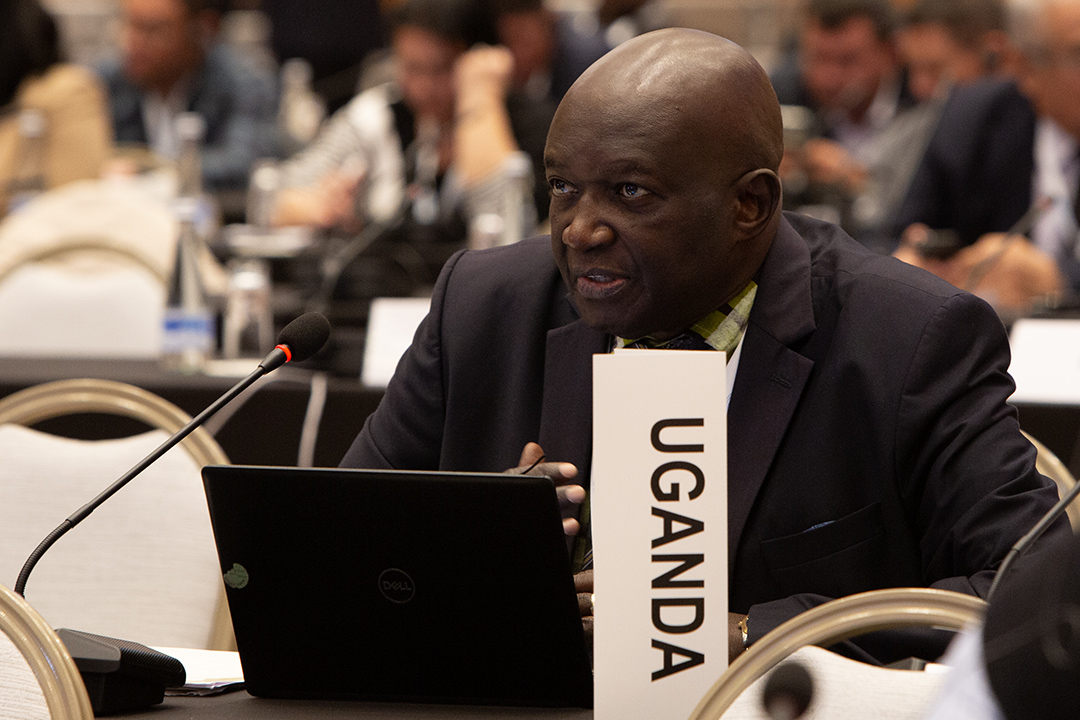
Speaking during a climate change cross border Media for Environment, Science, Health and Agriculture (MESHA) cafe, Stephen Muwaya, Africa Group of Negotiators, noted that current climate finance for agriculture is insufficient.
“The share of climate-related development finance for food systems decreased from 47% to 19% between 2000 and 2023, while international climate finance allocated to agriculture is at 4% or less,” Muwaya said.
He observed that there is a disconnect between high-level climate funding and its actual delivery to farmers, noting that only 0.3% of the total financing reaches farmers, pastoralists and other vulnerable groups.
“Agriculture is central to livelihoods, adaptation and food security but implementation is constrained by lack of finance and capacity especially for farmers and other vulnerable groups,” Muwaya said.
He noted that negotiators will be pushing for implementation drawing from the Sharm El Sheikh Joint Work on Agriculture (SJWA). This is a four-year UNFCCC process established at COP27 to strengthen implementation of climate action on agriculture and food security.
According to Muwaya, the SJWA seeks to promote holistic approaches and better coordination among Parties, UNFCCC bodies, financial entities and other organizations. It is also intended to support countries, especially to share knowledge, best practices and technical advice to help countries develop and implement national policies and plans. However, implementation is its core component.
Under implementation, there are several tools . These include the annual synthesis report which enables countries to get information about the activities that constituent bodies and adaptation funds among others are doing.
The online portal is used to implement information sharing among parties and support action while workshops highlight key issues relating to implementation that are discussed by parties.
“The central element here for the Sharm El Sheikh Joint Work is to shift from discussing agriculture and climate change to enabling action on the ground. In other words, moving from planning and discussion to on ground implementation of action,” he stressed.
Under climate finance, negotiators at COP 31 will be pushing for scaled up predictable, accessible grant-based and concessional finance, with priority for adaptation and vulnerable developing countries.
“We will also request for simplified accreditation which would allow national institutions to also be accredited,” he said, adding that they are also looking at enhancing readiness and project preparation support so national agricultural and food security priorities become cost investment plans and bankable projects.
Muwaya also noted that available technology is not always accessible. High upfront costs, limited finance and insurance, weak enabling environments and intellectual-property constraints keep useful solutions out of farmers’ reach.
Climate-resilient production, sustainable water management, digital agriculture, climate information services, sustainable land management, post-harvest management mechanization and agroprocessing are some of the technologies that farmers should be supported to access.
To unlock the scaling of these technologies, he said, the issue of affordable finance, insurance, technical assistance and the other limitations should be addressed. Also, farmers’ experience and indigenous knowledge should always be taken into account to complement research and new technologies.
The negotiators are also going to discuss systematic and holistic approaches to address farm and landscape climate action. These include using climate smart agriculture, agro-ecology, sustainable land management and nature-based solutions and the integration of crop-livestock systems.
They will also ensure food production or food security adaptation is not undermined while doing mitigation and that the poor benefit.
Muwaya noted that the online portal is the bridge to implementation. “Here the national policies and plans like the Nationally Determined Contributions (NDCs), national adaptation plan and technology needs assessment must be translated into local priorities for implementation, but they must also be translated into investment plans and projects,” he said.
“The portal will do the work of helping us to do a matchmaking between projects provided by parties and linking them to finance, technical support, and partnership which are available.”
He added that portal improvements should support South–South, North–South and triangular cooperation, peer learning and partnership-building.