
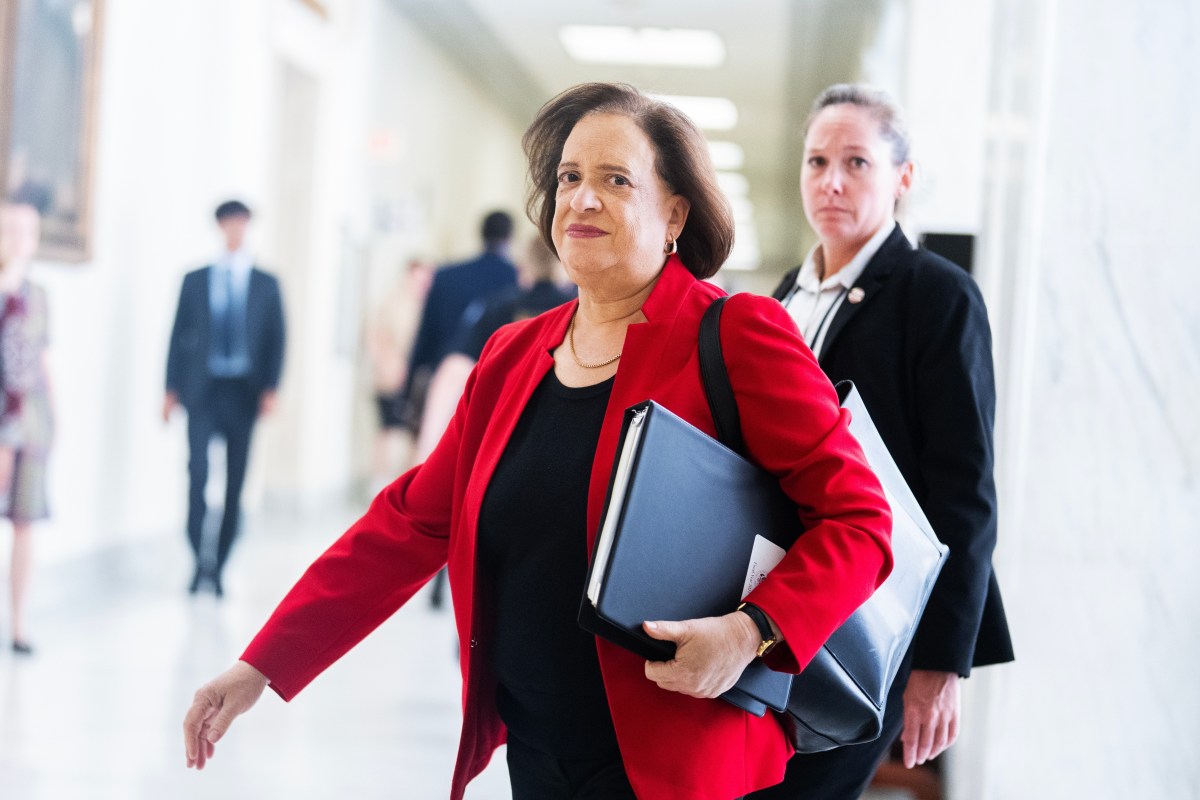
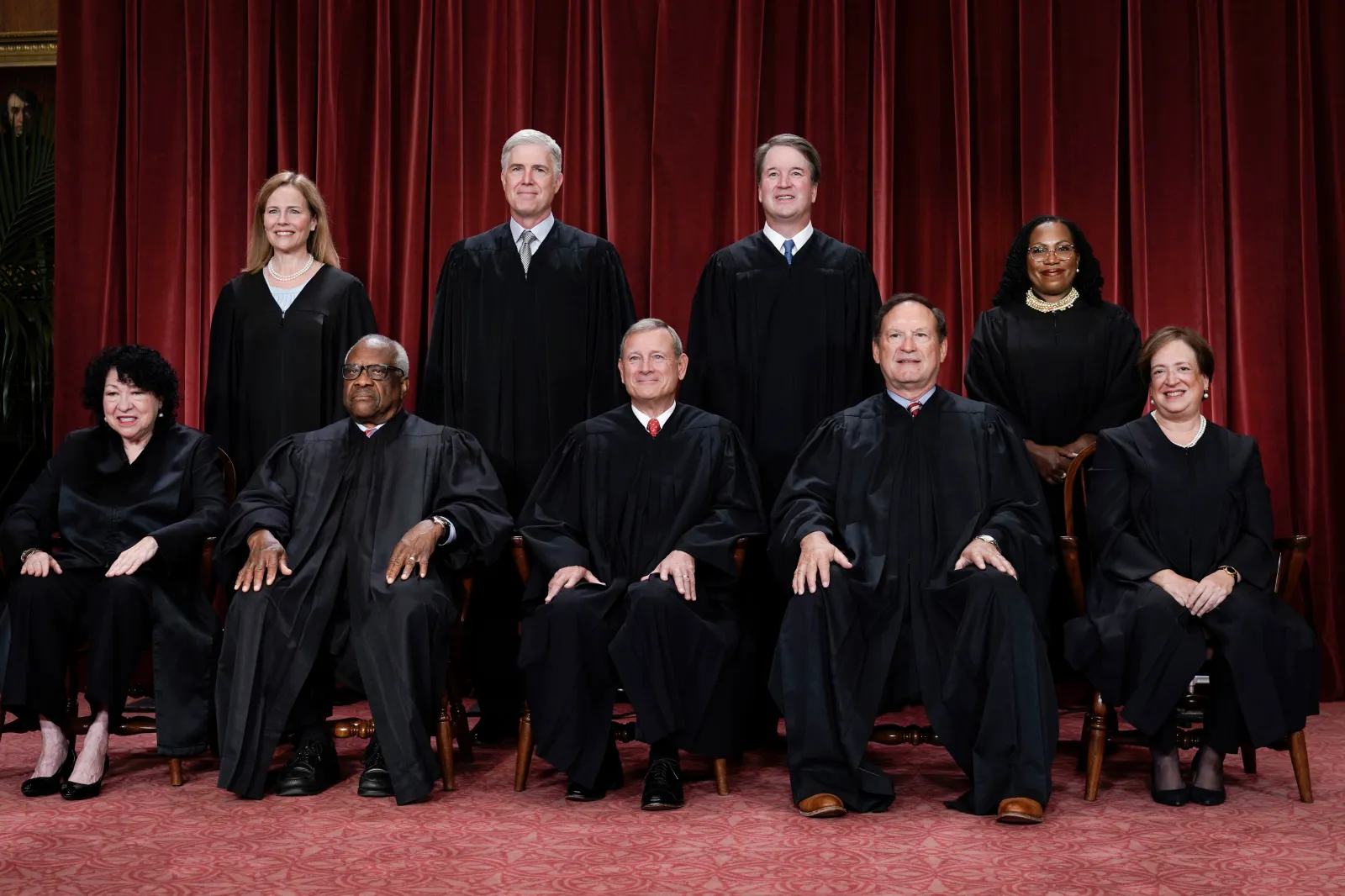
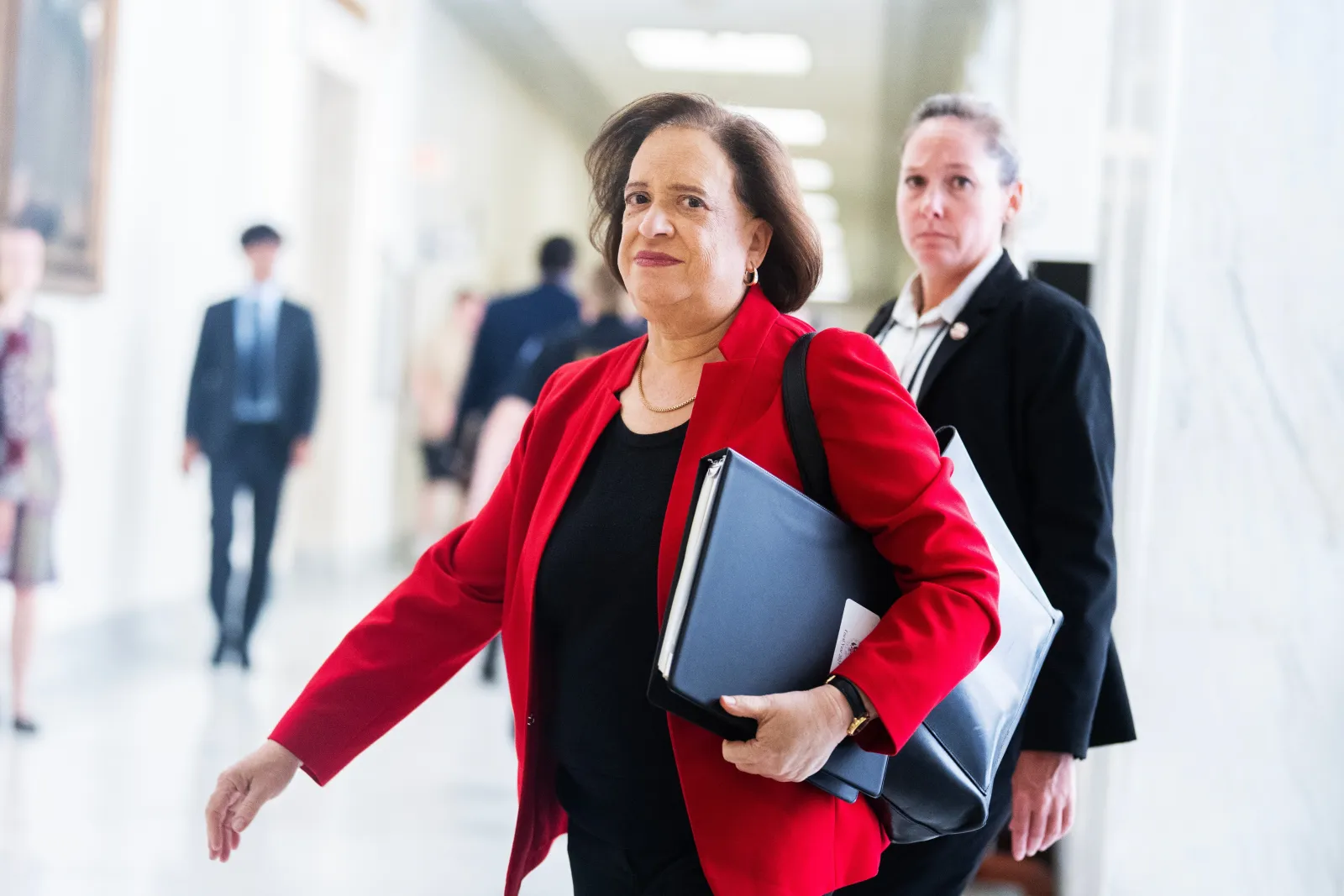
Supreme Court Justice Elena Kagan offered a glimpse into the atmosphere inside the courtroom during the rare moment earlier this year when President Donald Trump attended oral arguments in the birthright citizenship case, the first known time a sitting president has done so.
The justice called it a “non-event,” saying at a judicial conference on Thursday that the “vibes in the courtroom were the vibes in the courtroom on any other day.”
Birthright citizenship is the legal principle that grants United States citizenship to most people born on American soil, regardless of their parents’ immigration status. The administration has sought to restrict the long-standing interpretation of birthright citizenship, but those efforts were halted on June 30, when the Supreme Court struck down Trump’s executive order in a 6-3 ruling.
Kagan’s comments come as public confidence in the Supreme Court remains strained and critics question whether the court’s conservative majority is too closely aligned with Republican legal priorities—a characterization Kagan rejected Thursday by pointing to recent rulings against the Trump administration.
What To Know
Speaking before judges and lawyers from the Ninth Circuit, Kagan said Trump’s attendance at oral arguments in the birthright citizenship case in April did not affect the proceedings, describing the unprecedented appearance as “a non-event” from the court’s perspective.
She went on to note that Chief Justice John Roberts did not publicly announce or address Trump’s presence in the courtroom. Trump sat in the first row of the public section.
The justice also said that the president left partway through the session, which was two hours long. “It was a long argument. You really did kind of think he probably had other things to do,” she said.
She added, “I think he probably won’t come back.”
Trump’s appearance in the birthright citizenship case marked the first known time a sitting president attended Supreme Court oral arguments. He had previously considered attending arguments in a challenge to his tariff policy but ultimately did not, saying he did not want to distract from the proceedings.
“I will not be going to the Court on Wednesday in that I do not want to distract from the importance of this Decision,” Trump wrote on Truth Social in November.
Although the Supreme Court has a 6-3 conservative majority, three of whom Trump appointed, it has ruled against the Trump administration in several high-profile cases, including the birthright citizenship case and striking down Trump’s efforts to impose sweeping tariffs, two major policies tied to his immigration and economic agenda.
Kagan told the audience, “I don’t see this as a court that is just like, ‘We’re just going to rubber stamp what the current administration does.’ You know, quite the opposite.”
Still, some legal analysts and court critics argue that public concerns about the Supreme Court extend beyond any single case. While the justices have rejected the Trump administration on several high-profile issues, critics point to the court’s conservative majority and a series of consequential rulings on issues such as abortion, gun rights and regulatory authority as reasons many Americans continue to view the institution as politically driven.
Birthright Citizenship Case
The Trump administration had sought to deny automatic citizenship to children born in the U.S. if their parents were undocumented or held temporary legal status. Multiple lower courts blocked the policy before it reached the Supreme Court.
The case that prompted the ruling, Trump v. Barbara, had addressed whether children born in the United States to parents who are unlawfully or temporarily present are entitled to citizenship at birth under the Fourteenth Amendment’s Citizenship Clause.
The 14th Amendment states that “all persons born or naturalized in the United States, and subject to the jurisdiction thereof, are citizens of the United States and of the State wherein they reside.”
The June 30 ruling in Trump v. Barbara represented a major setback for the administration’s efforts to narrow the scope of birthright citizenship through executive action. Kagan noted this on Thursday, saying that despite “This administration, being clear how much it cared about this issue, continues to make that clear…The court said, ‘No.’”
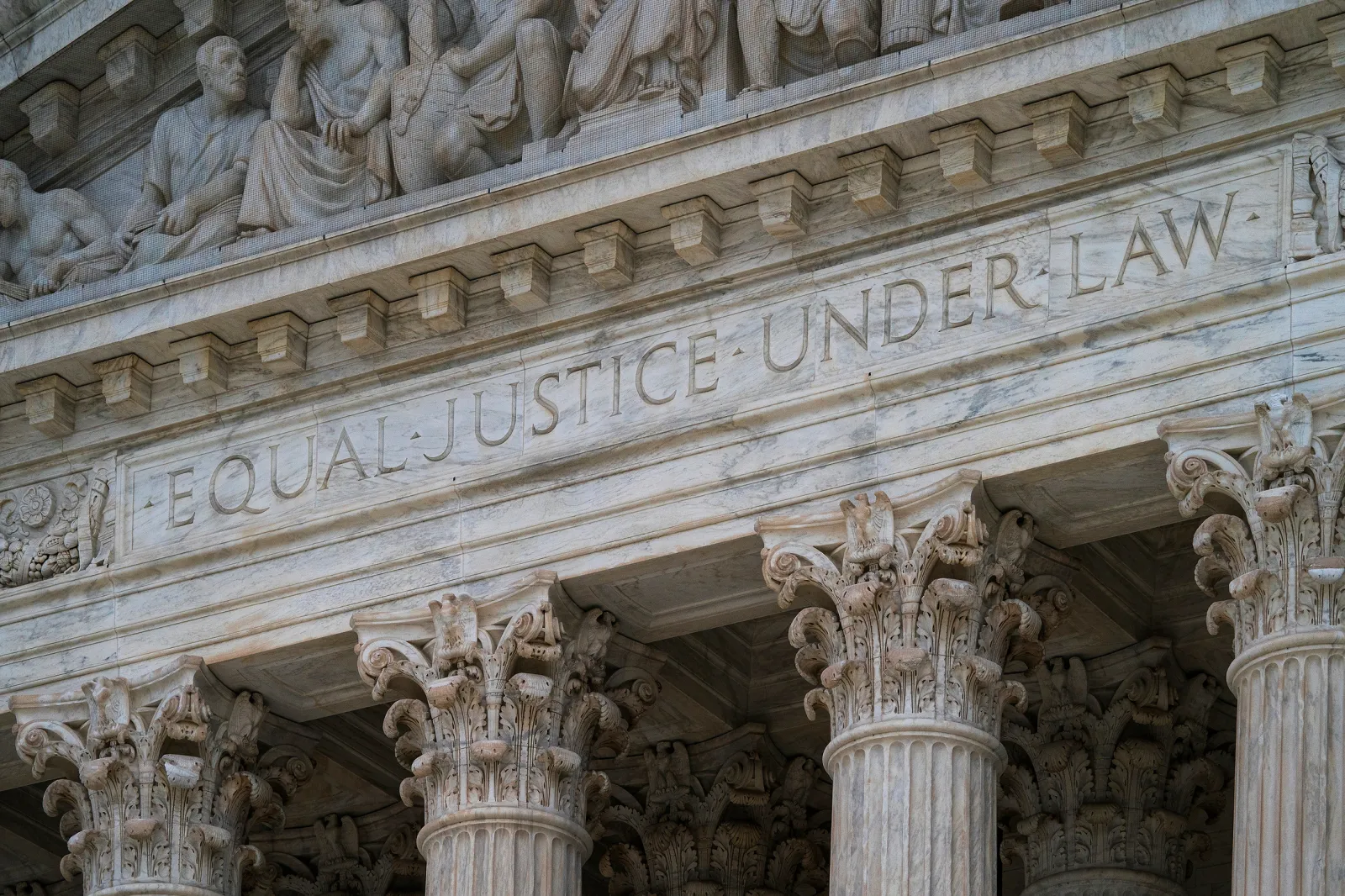
Writing for the majority, Roberts said children born in the United States “are citizens at birth,” reaffirming longstanding interpretations of the 14th Amendment’s Citizenship Clause. Roberts wrote that the framers of the amendment extended citizenship to “every free-born person in this land” and that the High Court was maintaining that promise.
The decision preserved the legal framework established by the court’s landmark 1898 ruling in United States v. Wong Kim Ark, which held that a child born in the U.S. to immigrant parents was an American citizen.
Roberts and Justice Amy Coney Barrett joined the court’s three liberal justices–Kagan, Sonia Sotomayor, and Ketanji Brown Jackson– in the majority, while Justice Brett Kavanaugh concurred in the judgment. Justices Clarence Thomas, Samuel Alito and Neil Gorsuch dissented.
Trump’s Tariffs Case
One of the most significant setbacks for the Trump administration came in February, when the Supreme Court struck down a series of sweeping tariffs that Trump imposed under the International Emergency Economic Powers Act (IEEPA), a law that gives presidents broad power to impose economic sanctions during national emergencies, but Trump is the first president to use it to impose tariffs.
Trump’s use of the 1977 IEEPA to impose tariffs without seeking congressional approval or conducting investigations first raised legal concern.
In a 6-3 ruling, the court decided that the statute did not give the president authority to impose tariffs, rejecting a key legal basis for Trump’s trade policy.
Roberts wrote in the majority opinion of Learning Resources Inc. v. Trump: “The Framers did not vest any part of the taxing power in the Executive Branch.” The opinion concluded, “We claim no special competence in matters of economics or foreign affairs. We claim only, as we must, the limited role assigned to us by Article III of the Constitution. Fulfilling that role, we hold that IEEPA does not authorize the President to impose tariffs.”
Tariffs have been a central part of Trump’s economic agenda since he returned to office in January 2025. Despite the Supreme Court’s decision striking down some of his broadest tariff measures, Trump has continued to pursue tariffs against key trading partners, including Canada.
In her speech on Thursday, Kagan said, “Tariffs is probably the key policy issue for this president,” noting that he campaigned on it and “cared an enormous amount about.”
“I don’t think that there are all that many decisions in the recent times, where a court strikes down such an important policy to a sitting president.”
Following the February ruling, Trump sharply criticized the justices who joined the majority, including his own appointees. During a White House press conference, he accused some members of the court of being “fools and lapdogs for the RINOs and the radical left Democrats,” using the acronym RINO, or “Republican in Name Only.” He also described the conservative justices as “disloyal” and “unpatriotic.”
Americans’ Views on the Supreme Court
Public confidence in the Supreme Court has declined over the past decade, reflecting growing concerns about the court’s role in increasingly contentious political and social issues, including abortion, voting rights, and immigration, among others. Gallup polling shows that approval of the court fell from 58 percent in July 2018 to 42 percent in September 2025.
A July YouGov/The Economist poll put the Supreme Court’s approval rating at 36 percent, with a 50 percent disapproval rating. About 9 percent of participants find the court “too liberal” while 44 percent find it “too conservative.” The poll surveyed 1,603 U.S. adults between July 3-6 and has a margin of error of plus or minus 3.3 percentage points.
A Washington Post/Ipsos poll found that more than half of Americans disapprove of how the Supreme Court is doing its job (55 percent), and 41 percent approve. When asked if participants think the justices mainly decide cases based on law or their personal political beliefs, 25 percent said based on law, 46 percent said based on their political beliefs, and 28 percent had no opinion.
The poll surveyed 2,648 U.S. adults between July 8-13 and has a margin of error of plus or minus 1.9 percentage points.
Contact Newsweek editors on this story: Jason Lemon and Sam Wilson.