

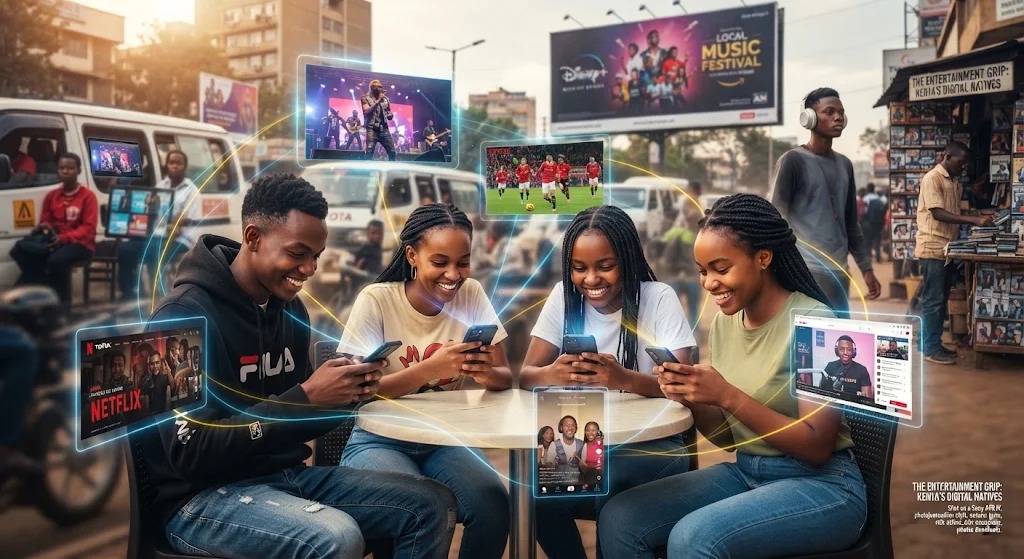
Digital platforms are reshaping how young Kenyans consume content — with consequences that cut both ways
By Caren Nekesa
Entertainment in Kenya is no longer a pastime. For a generation raised on smartphones and streaming, it is the air they breathe.
With young people constituting over 75 per cent of Kenya’s population, they are the country’s dominant consumers of entertainment content. Digital platforms have fundamentally transformed how that content is accessed, shared and internalised — faster, cheaper and in greater volume than any previous generation experienced.
The benefits are real. Entertainment provides stress relief and emotional regulation at a time when young Kenyans face mounting academic and economic pressure. It builds social bonds, fosters cultural identity and, increasingly, generates livelihoods. The creative economy — music, comedy, film, digital content creation — is producing genuine employment opportunities for young people locked out of formal job markets.
But the risks are equally real and deserve honest scrutiny. Excessive screen time eats into academic performance and personal development. Relentless exposure to idealised lifestyles on social media feeds anxiety, depression and corrosive self-doubt. Some content actively promotes drug abuse and normalises violence, reaching young audiences with little filtering or critical media education to push back against it.
The challenge for Kenya’s youth is not to retreat from entertainment but to engage with it deliberately. Balance is not a vague aspiration — it is a discipline, and one that schools, families and content creators all share responsibility for building.
Entertainment can empower a generation. Unchecked, it can quietly diminish one.