
By Daniel Otunge
Preserving forests is among the fastest and most impactful actions to combat climate change. However, global progress remains too slow to prevent deforestation, as the Forest Declaration Assessment 2026 notes. This assessment is an independent, collaborative effort led by a coalition of civil society groups and researchers called the Forest Declaration Assessment Partners.
The forest crisis is intensifying the climate emergency. In 2025, the destruction of about 7 million hectares of forest emitted roughly 3.9 billion tonnes of CO₂-equivalent emissions. Although this improved over 2024, it should not be seen as a success: the world is still 70% behind its 2030 target to stop deforestation.
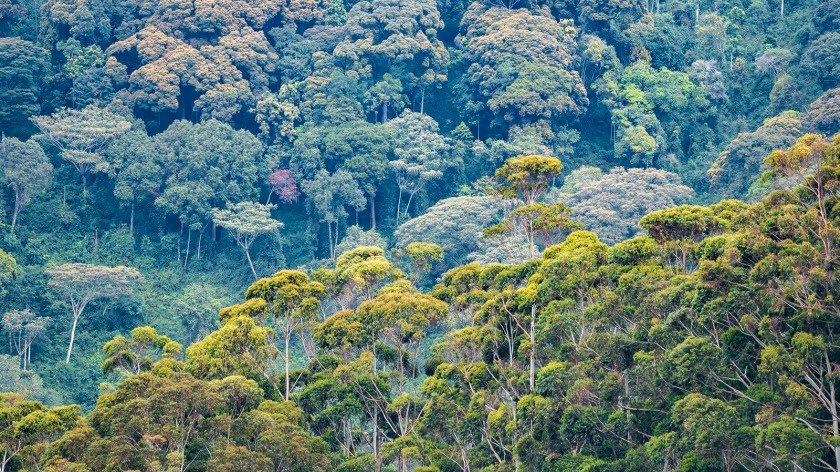
The most severe losses happen in humid tropical primary forests, which hold vast amounts of carbon accumulated over centuries. In 2025, their destruction released about 2.2 billion tonnes of CO₂-equivalent emissions, surpassing the 2018–20 baseline. Since 2021, primary-forest loss has gone beyond the 2030 target pathway by 9.5 million hectares.
This is not simply about trees disappearing from satellite images. Forest loss directly drives global heating, while rising temperatures and changing rainfall make surviving forests more vulnerable to drought, fire, and collapse.
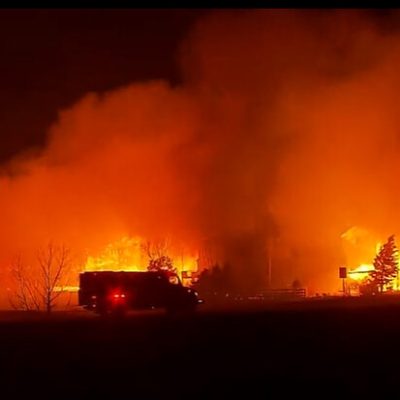
The result is a dangerous feedback loop: clearing forests releases carbon; a hotter climate weakens forests; weakened forests burn and degrade more easily; and still more carbon enters the atmosphere.

The overlooked emissions problem
The climate cost of forest destruction is routinely understated because attention focuses on clear-cutting while degradation often goes uncounted. Fire reduces above-ground carbon in tropical moist forests by an average of 49% compared with undisturbed forest. Selective logging cuts it by about 34%, while forest-edge effects reduce it by 31%.
These are not marginal losses. Cumulative emissions from degradation may be comparable in scale to those from deforestation, yet many national carbon inventories omit or underestimate them. A forest that remains technically standing can still be badly damaged: fragmented, repeatedly burned, logged and exposed to hotter, drier conditions until recovery becomes increasingly unlikely.
The immediate risk is particularly acute as drought and heat raise fire danger across the tropics. A potential 2026–27 El Niño could intensify drought and fires, especially in already stressed forests and carbon-rich peatlands. Repeated fires can transform what might once have been temporary damage into persistent degradation or permanent conversion.
The Amazon warning
The Amazon illustrates why delay is so risky. About 17% of the rainforest is already estimated to have been deforested. If that figure reaches 22–28%, combined with warming of only 1.5–1.9°C, the region could cross a major ecological threshold. Up to 80% of the forest could shift toward degraded woodland or savannah-like ecosystems.
Such a transition would not only release vast stores of carbon. It would disrupt rainfall and water cycles that support farming, compromise reservoir water quality and hydropower, and increase threats to health, livelihoods, displacement, and conflict. Protecting forests is therefore not an environmental luxury; it is central to economic and social stability.
Protection must come before restoration
The policy priority is clear: prevent the loss of intact and primary forests before attempting to repair the damage. Restoration matters, but it cannot replace ancient forests that hold irreplaceable carbon, regulate rainfall and sustain biodiversity. Only about 11.8 million hectares are currently under active restoration, roughly 6% of global reforestation potential. Even an ambitious restoration program cannot compensate for continued destruction of old-growth ecosystems.
Governments should pair real-time forest monitoring with sustained enforcement against illegal clearing, land speculation, illegal logging, and mining. Brazil’s recent reduction in forest loss under President Lula da Silva shows that monitoring backed by enforcement can deliver rapid results. However, durable progress requires stable institutions, not temporary crackdowns.
Markets also need to stop rewarding destruction. Companies should be required to trace commodity supply chains, use geolocation and due diligence, and verify that products such as timber, beef, soy and palm oil are free from deforestation and conversion. These rules must support smallholders, rather than shutting them out of the markets they depend on.

Finance and rights are central to the solution
The gap between forests’ value and the money spent protecting them is stark. Forests receive only 0.3% of global climate finance. Public forest finance averages around $6.1 billion each year, leaving an estimated annual shortfall of $67 billion. At the same time, potentially harmful agricultural subsidies total roughly $410 billion annually, about 100 times public forest finance.
That imbalance should be reversed. Funding should support forest protection, community governance, restoration, and sustainable rural production, including agroforestry and silvopasture. It should also reach Indigenous Peoples and local communities, whose territories contain around 37% of global irrecoverable carbon stocks, with 85% of those stocks located in forests. Yet much of this land still lacks secure legal recognition.
Recognizing collective land tenure, upholding free, prior and informed consent, and funding rights-holder-led governance are not side issues. They are practical climate measures that reduce deforestation and strengthen carbon outcomes.
The central choice is no longer unclear: climate policy must protect existing forests, account for degradation as well as clear-cutting, and end the incentives that make destruction profitable. Every year of delay, as the Forest Declaration Assessment report 2026 reveals, increases the odds that some of the planet’s greatest carbon stores become sources of irreversible warming.
The writer is an expert in environmental law and development communication.