From Colonial Chains to Independence: The Struggle for Tanganyika’s Freedom & Tanzania’s Liberation
Written by Keith A. Newsome on August 9, 2024
The history of Tanganyika’s colonization is a vivid reflection of the broader European scramble for Africa in the late 19th and early 20th centuries. Located on the eastern coast of Africa, Tanganyika (now part of modern-day Tanzania) was subjected to German colonization, which deeply influenced its political and social structures.
German Colonization of Tanganyika
The German colonization of Tanganyika began in the late 19th century, amid the Berlin Conference of 1884-1885, where European powers partitioned Africa among themselves without considering the existing African kingdoms and societies. The conference marked the beginning of Germany’s formal entry into the colonial race, with Chancellor Otto von Bismarck seeking to expand German influence and economic interests abroad.
In 1885, the German East Africa Company, led by Carl Peters, secured treaties with local chiefs in the coastal regions of Tanganyika, effectively laying the groundwork for German control. Although these treaties were often signed under duress or misinterpreted by local leaders, they were used by the Germans as a justification for their claim over the territory. By 1891, Tanganyika officially became part of German East Africa, a vast territory that also included present-day Rwanda and Burundi.
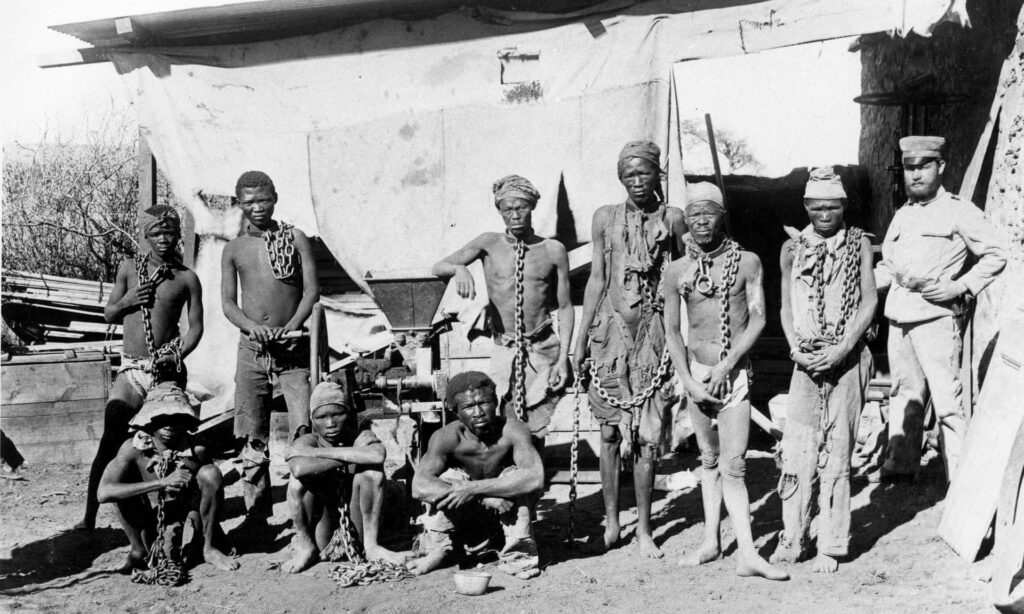
The Germans implemented a harsh and exploitative colonial administration, focusing on economic extraction, particularly in agriculture. They introduced cash crops such as sisal, coffee, and cotton, which were grown on large plantations using forced labor. This system disrupted traditional agricultural practices and led to significant hardships for the indigenous population. Resistance to German rule was met with brutal suppression, the most notable being the Maji Maji Rebellion of 1905-1907. The rebellion was a widespread uprising against German colonial authority, fueled by grievances over forced labor and taxation. The Germans responded with extreme violence, resulting in the deaths of an estimated 250,000 Africans, primarily due to famine caused by scorched-earth tactics.
Transition to British Rule
German control over Tanganyika came to an abrupt end during World War I. The East African campaign, a series of battles between the British and German colonial forces, saw significant fighting in Tanganyika. Despite initial German resistance led by General Paul von Lettow-Vorbeck, the Germans were eventually defeated. Following the end of the war, under the Treaty of Versailles in 1919, Germany was stripped of its colonies. Tanganyika was subsequently mandated to Britain by the League of Nations, marking the beginning of British rule.
Under British administration, Tanganyika was governed as a mandate territory, with a focus on preparing it for eventual self-governance. However, like the Germans, the British continued to exploit the region’s resources, particularly in agriculture and mining. The British administration was somewhat less harsh than the German regime but maintained significant control over the local population.
Path to Independence
The path to independence for Tanganyika was influenced by the global wave of decolonization following World War II. Nationalist movements gained momentum, particularly under the leadership of Julius Nyerere and the Tanganyika African National Union (TANU). Nyerere, who would later become the first President of Tanzania, advocated for peaceful means of achieving independence, focusing on education and political mobilization.
On December 9, 1961, Tanganyika gained independence from British rule, becoming a sovereign nation. In 1964, Tanganyika merged with the neighboring island of Zanzibar to form the United Republic of Tanzania. This marked the end of a long history of colonial domination and the beginning of a new era of self-determination for the people of Tanzania.