
Communiqué by Women’s Rights Organisations and Grassroots Movements from Uganda, Ethiopia, South Sudan, Sudan, and Somalia
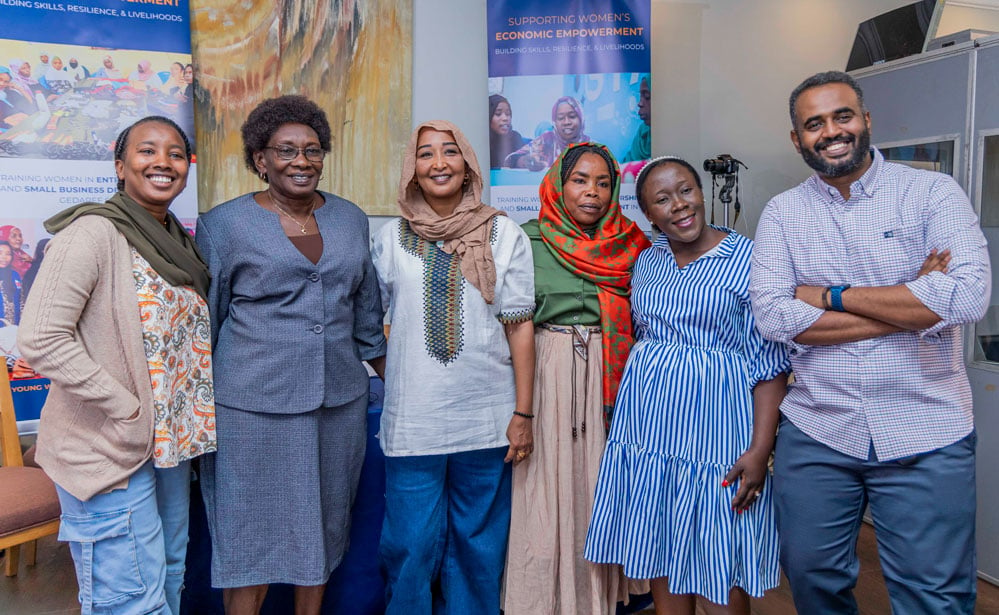
We, a collective of civil society organisations, grassroots women-led movements, informal sector workers, feminist advocates, and community leaders from Uganda, Ethiopia, South Sudan, Sudan, and Somalia, convened on April 28, 2026 with support from the Strategic Initiative for Women in the Horn of Africa (SIHA) Network, to unite our voices in demanding urgent, accountable, and gender-responsive policy action for women in the informal sector across the Greater Horn of Africa.
Women make up the majority of informal workers across the Greater Horn of Africa, in stable, post-conflict, and conflict-affected settings, sustaining households and communities through market vending, domestic work, small-scale agriculture, cross-border trade, and caregiving. Informal workers account for more than 92% of employment in sub-Saharan Africa, contributing significantly to national GDPs, food security, poverty reduction, and community resilience. Yet despite this central economic role, women in the informal sector remain systematically marginalized, criminalized and subjected to violence.
While some of our countries have established legal and policy frameworks of varying strenghts on gender equality, labour rights, social protection, and financial inclusion, weak or absent legal protections, implementation gaps, insecurity, political instability, and fragile institutions continue to leave women informal workers inadequately protected. This gap presents a challenge in translating rhetoric, policy commitments, and legal obligations into tangible practice.
As a result, women in the informal sector across Uganda, Ethiopia, South Sudan, Sudan, and Somalia, l face deeply interconnected structural barriers,including gender-based violence (GBV), conflict, displacement, financial exclusion, limited access to health services and social protection and exclusion from decision-making spaces.
We acknowledge the efforts of the governments of Uganda and Somalia in ratifying the International Labour Organization Convention 190 (ILO C190), which seeks to protect workers including women in the informal sector from violence and harassment, including in conflict-affectedsettings. We further recognise the protections afforded by the African Charter on Human and Peoples’ Rights (African Charter) and its Protocol on the Rights of Women in Africa (the Maputo Protocol). However, Sudan, South Sudan, and Ethiopia are yet to ratify t ILO C190.
At the regional level, although the Maputo Protocol provides an additional layer of protection for the rights of women in the informal sector, it too has not been ratified by Sudan or Somalia. This continues to pose a serious threat to the safety and security of women in the informal sector across the Greater Horn of Africa.
Our Collective Demands:
- Enforce Existing Gender and Labor Protections: Governments must strengthen the implementation of existing laws and ensure that women informal workers are legally recognised, protected, and included in labour rights systems. Additionally, we call on Uganda and Somalia, which have ratified ILO C190, and on Ethiopia and South Sudan, which have ratified the Maputo Protocol, to fulfill their obligations under these instruments in protecting the rights of women in the informal sector.
- Develop Comprehensive Informal Sector Policies Where Gaps Exist: Countries lacking robust protection must establish clear legal and policy frameworks, as well as comprehensive financial literacy coverage among women informal workers. To this end and connected to our first call, we further urge countries such as South Sudan, Sudan, and Ethiopia to ratify and implement ILO C190, and for countries such as Sudan and Somalia to ratify and implement the Maputo Protocol, particularly as it relates to the rights of women in the informal sector.
- Ensure Gender-Responsive Financial Inclusion: Financial systems must address women’s realities by ensuring low-barrier credit systems, alternative collateral models, savings cooperatives, self-help groups, and inclusion of displaced women.
- Inclusion of Grassroots Women in Policymaking: Women in the informal sector must be recognized not only as beneficiaries but as policy actors whose lived experiences shape solutions.
- Regional Accountability: Regional institutions, including the African Union and the African Commission on Human and Peoples’ Rights (ACHPR), must hold states accountable for their commitments to implementing women’s economic justice.
“Nothing about women in the informal economy without women in the informal economy”