
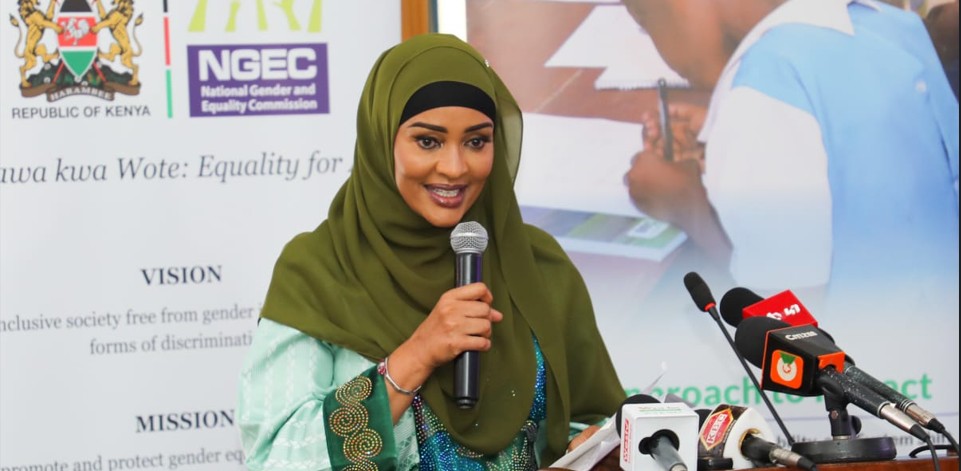
The National Gender and Equality Commission (NGEC) has called for the formal integration of Indigenous midwives into Kenya’s healthcare system, saying their close ties to communities and knowledge of Indigenous maternal care could improve access to maternal and newborn healthcare in remote, nomadic and marginalised areas.
In a statement marking the International Day of the World’s Indigenous Peoples on August 9, NGEC said Indigenous midwives have supported women for generations during pregnancy, childbirth and the postnatal period, helping safeguard the lives and dignity of mothers and newborns.
“Midwifery is one of the oldest and most important forms of care. Across generations, midwives have supported women through pregnancy, childbirth and the postnatal period, safeguarding the lives and dignity of mothers and newborns. Indigenous midwives are custodians of community knowledge on maternal care, nutrition and medicinal practice,” the Commission said.
NGEC said the role of Indigenous midwives is particularly important in underserved areas where health facilities may be far away, transport unreliable and formal healthcare services difficult to access.
However, the Commission stressed that Indigenous midwives should complement, rather than replace, skilled healthcare professionals.
“Indigenous midwives and traditional birth attendants are not substituting for qualified healthcare professionals,” the Commission said.
NGEC cited the 2019 Kenya Population and Housing Census, which estimated Kenya’s maternal mortality ratio at 355 deaths per 100,000 live births, with wide disparities across counties. The ratio ranged from 67 deaths per 100,000 live births in Nyeri to 641 in Garissa.
The Commission also cited the 2022 Kenya Demographic and Health Survey, which found high rates of home births in several counties. Home births accounted for 50 per cent of births in Mandera, 48 per cent in Tana River, 47 per cent in Turkana, 46 per cent in Wajir and 45 per cent in Samburu.
It said the figures highlight the challenges faced by communities where long distances to health facilities, poor transport infrastructure and limited emergency referral services can hinder access to skilled maternity care.
NGEC urged national and county governments to strengthen referral links between Indigenous midwives, Community Health Promoters and health facilities, expand emergency obstetric and newborn services, and provide culturally responsive maternity care.
“Every woman is entitled to healthcare that is both clinically safe and culturally respectful,” the Commission said.