
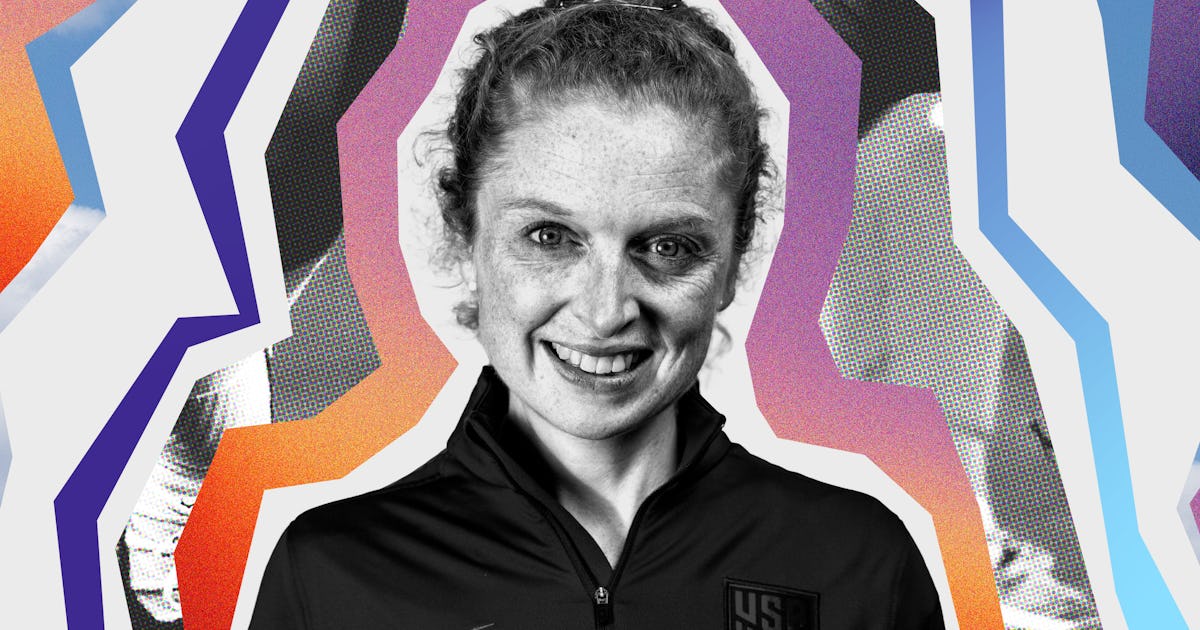
With less than a year until the 2027 FIFA Women’s World Cup, preparation is well underway for both athletes and team staff members.
Optimizing player performance includes nailing down travel plans, sleep routines, recovery needs, and even proactively planning around their menstrual cycles. While the latter may not be typical of many work places, it’s a practice that’s baked into the culture at the United States Women’s National Team, thanks in part to Georgie Bruinvels, the team’s female health consultant.
Bruinvels has been studying the impact of menstrual bleeding on athletic performance for more than 10 years, and she worked with Emma Hayes at Chelsea Football Club Women before following Hayes to the USWNT. “One big myth is that your period will hinder you,” she says. “If you empower players about their nutrition, recovery, sleep, or mindset and support them through a female lens, then I don’t think the menstrual cycle should hold them back.” The same is true for non-athletes, too.
Below, Bruinvels shares how she supports the USWNT, what normal folks can learn from athletes, the benefits of tracking your cycle, and more.
What does your role include outside of game days or World Cup prep?
My real focus area is anything and everything off the pitch, which we call “the other 22 hours of the day.” Players may feel like they’re being pummeled from all angles, whether it’s travel, an increasing game schedule, environmental considerations, or media demands. Soccer, specifically in the U.S., is becoming more and more popular as a sport, which puts athletes in the limelight, and they aren’t necessarily trained to deal with that from a mental-health perspective. There’s so much they suddenly have to juggle.
What can normal folks take away from the work that you’re doing with athletes?
One of the most important things that we do at U.S. Soccer is creating a culture of conversation about the menstrual cycle. We normalize the topic through an action-orientated focus. It’s not just about saying “I’m on my period” or “I’ve got these symptoms.” We’re also doing something about it, like looking at diet, recovery, and sleep options that could be helpful for each individual player. These athletes really show that if you’re proactive and prepared, anything is possible.
Outside of the world of professional sports, the idea of “cycle syncing” your workouts or daily routines has gained popularity recently. What tools can non-athletes use to work with their cycle?
The first thing is to get people tracking their cycles and symptoms, whether it’s with a diary, a calendar, or an app. Increasing one’s own knowledge about their cycle is key.
What can people learn from tracking their own cycles and symptoms?
It should be thought of as a vital sign. If your cycle gets a bit longer or a bit shorter or if your symptoms get worse or your bleeding gets heavier, that is your body telling you something.
Treatment should always be individualized. But one thing we do know is that as the hormones change throughout a cycle, they affect the whole body — the brain, heart, lungs, body temperature, heart rate, breathing, appetite, and more.
At some points in your cycle, you might feel super energized, but at other points, you might feel tired. If you track these things over time and can see patterns like “Oh, three days before I start my period, I notice I want sugar more,” then you can have a bigger breakfast, more protein in your diet, and more food throughout the day to stop energy crashes, for example. You might also notice that if you get really bad menstrual cycle cramps, stretching, using heat, and having a good diet may help that. It’s important to understand what your normal is.
This interview has been edited and condensed for clarity.