
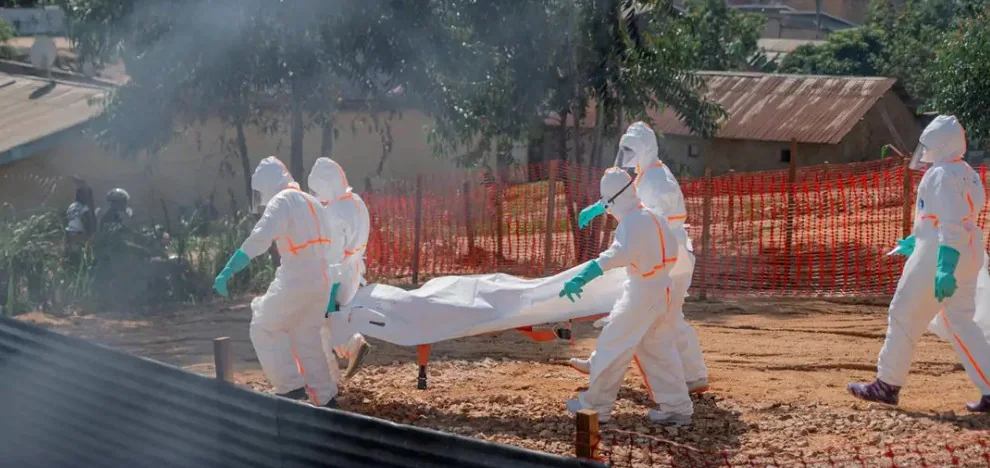
Kenya’s second Ebola Bundibugyo victim was buried on Saturday under strict infection prevention measures, with health workers disinfecting the grave and transport vehicle and burning protective equipment after the burial.
The 65-year-old woman died on Friday and was laid to rest at Lang’ata Cemetery, where access to the burial site was restricted to prevent unauthorised entry.
Citizen TV
, 10 health workers in protective gear surrounded the vehicle carrying the body as it approached the graveside, while family members and onlookers were kept at least 500 metres away. The grave was disinfected before the body was lowered into it and again as the burial progressed.
Health workers also disinfected the vehicle after it had transported the body, wrapped in a whole bag. After the burial, the workers similarly disinfected their protective equipment before gathering it in one place and setting it on fire.
The World Health Organisation (WHO) recommends safe and dignified burials to help prevent Ebola transmission. The virus can spread through direct contact with the body fluids of an infected person, including after death, making it important for trained burial teams to handle the deceased while wearing appropriate protective equipment.
The deceased was a close family member and direct contact of the first patient to die from the virus on October 5. She had been placed under quarantine and developed symptoms on October 13, when she was admitted to an infectious disease unit for treatment, the Ministry of Health said in a statement.
Her death left seven confirmed patients receiving care in two isolation facilities as health authorities continue to monitor the outbreak. According to the Ministry of Health, all nine confirmed cases remain linked to one cluster of known contacts, with no evidence that the disease has spread into the wider community.
The Ministry has since urged the public to avoid contact with the body fluids of sick people and to avoid handling bodies of suspected Ebola victims. It has also advised regular hand washing and urged anyone experiencing symptoms such as fever, weakness, muscle pain, vomiting, diarrhoea or unexplained bleeding to seek medical help from relevant authorities.