

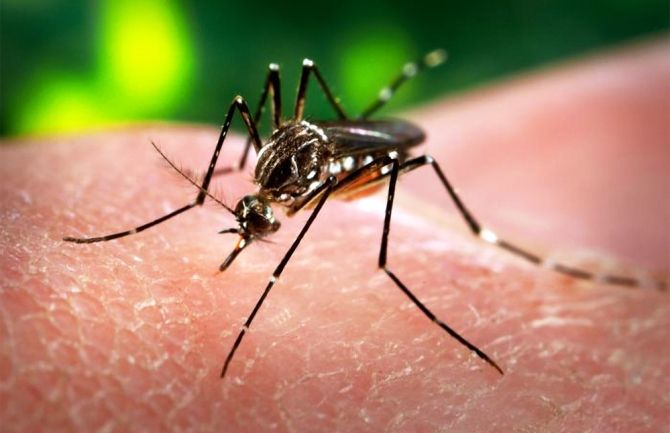
In Africa, malaria cases are falling in number, but the disease continues to evolve, and treatments must keep pace with it. Kenya is preparing to diversify its treatment approaches to prevent the most commonly used drugs from losing their effectiveness. This scientific race also brings back to the fore, for those arriving from Europe, doubts about antimalarial prophylaxis – a well-established practice, yet one that is not without its limitations, contraindications and side effects.
Kenya changes its strategy against malaria
Kenya is preparing to introduce new methods of treating malaria, with the aim of preserving the effectiveness of available drugs and preventing the spread of resistant strains of the parasite.
According to reports in the Kenyan press, the Ministry of Health aims to introduce a treatment system in November based on multiple first-line therapies, rather than relying predominantly on a single drug combination.
The strategy, known as Multiple First-Line Therapies (MFT), involves the use of various combinations of approved antimalarial drugs, including artemether-lumefantrine, artesunate-pironaridine and dihydroartemisinin-piperaquine.
The principle is simple: if the parasite is continuously exposed to the same drug, the risk of it developing resistance mechanisms increases. Diversifying treatments, on the other hand, reduces this pressure and helps maintain the effectiveness of the treatments for longer.
The new approach does not mean that the medicines used to date have suddenly become ineffective. Rather, it is a preventive therapeutic strategy designed to stop the problem from becoming more serious in the years to come.
A disease that continues to pose a threat
Malaria remains one of Kenya’s major public health emergencies. The country has recorded millions of cases in recent years, with a particularly high concentration in the western regions, around Lake Victoria, where climatic conditions favour the proliferation of Anopheles mosquitoes.
But the risk is not limited to these regions. Coastal areas, including Malindi, Watamu and Mombasa, are also affected by the presence of the parasite, although the level of transmission can vary significantly from one location to another and throughout the year.
Climate change, variations in rainfall and the spread of new mosquito species are also contributing to changes in the geography of the disease.
Drug resistance is a further cause for concern. The World Health Organisation has reported the emergence of partial resistance to artemisinin in several African countries, including Uganda, Rwanda and Tanzania.
What about Italian tourists? Prophylaxis is no guarantee
For those travelling to Kenya from Italy, malaria is one of the health issues to consider before departure. For years, drug prophylaxis has been recommended as one of the main forms of prevention, involving medicines to be taken before, during and after the stay, depending on the prescribed drug.
But prophylaxis is not an absolute shield. No antimalarial drug guarantees 100 per cent protection, and the medicines can cause side effects, which may be significant in some individuals. Gastrointestinal disturbances, photosensitivity, insomnia, mood changes and other adverse reactions are possible, depending on the specific drug used.
It is precisely on this point that a growing concern is emerging amongst travellers and residents: systematic drug prophylaxis, prescribed without an individual risk assessment, may prove to be a questionable form of prevention.
The editorial stance of Malindikenya.net, which has long been critical of an approach considered outdated and not without risks, is that malaria prevention cannot be entrusted solely to a tablet. The assessment of the balance between benefits and possible side effects must take into account the destination, the duration of the stay, personal circumstances and the type of journey.
This does not mean that prophylaxis is useless or that it should be rejected out of hand. International health recommendations continue to advise it for certain destinations and categories of travellers. The decision should therefore be discussed with a doctor specialising in travel medicine, rather than relying on general advice or the experiences of other tourists.
Prevention also involves protecting against mosquitoes
A key part of prevention involves reducing the risk of bites. Anopheles mosquitoes, which transmit malaria, are particularly active from dusk until dawn.
Sleeping in protected areas, using insecticide-treated mosquito nets, applying suitable skin repellents and wearing clothing that covers the arms and legs in the evening are measures that help to reduce the risk of infection.
Accommodation fitted with air conditioning, screened windows and insect control systems can also offer greater protection.
Drug prophylaxis, where indicated, should be regarded as a complement to these measures, not a substitute for them.
Fever after a stay in Kenya: be vigilant
One aspect often underestimated by tourists is the possibility that malaria may develop even after returning to Europe.
The onset of fever, chills, sweating, headache or general malaise following a stay in a malaria-endemic area must be reported immediately to a doctor, specifying the trip to Kenya.
The disease can manifest itself even weeks later and, in some cases, even longer. A prompt diagnosis is crucial, as Plasmodium falciparum malaria – the most common form in Kenya – can rapidly progress to a serious condition.
The absence of symptoms whilst on holiday should therefore not be interpreted as a guarantee that one has escaped infection.
New treatments, old questions
The introduction of new drug strategies in Kenya represents an important step in the fight against malaria. But the issue is not merely about the availability of more effective medicines. It also concerns the approach to prevention, particularly for those travelling to Africa as tourists.
Malaria prophylaxis, which originated in a healthcare and scientific context that has evolved over time, cannot be regarded as a universal solution, nor is it, by definition, a harmless practice. Its effectiveness is not absolute, and the possible side effects deserve to be assessed with the same care as the risk of infection.
For those who regularly visit the Kenyan coast, the issue is even more pressing: malaria exists, but prevention must also be up to date, tailored to the individual and informed.
Kenya’s new strategy against drug resistance is a sign that medicine cannot afford to stand still. And perhaps the approach to traveller prophylaxis, too, deserves to move away from automatic routines and protocols applied indiscriminately, to make way for a more modern, informed and responsible assessment.