
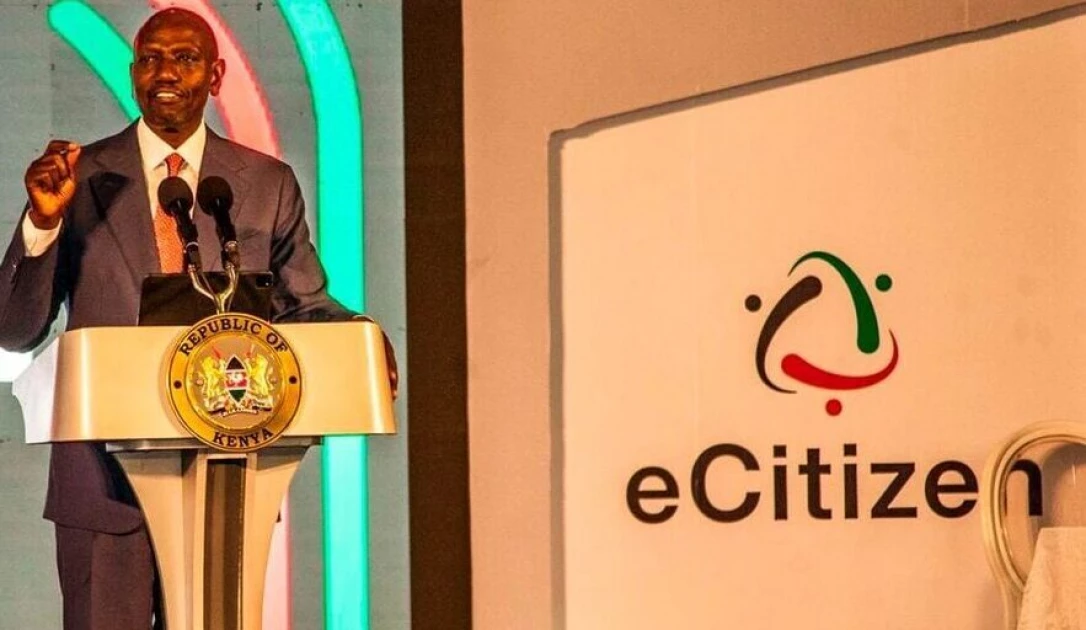
The Kenyan government is preparing to monetise non-personal data collected through its eCitizen platform and other State systems, with plans to build a formal marketplace where researchers, businesses, NGOs, and innovators can purchase anonymised government datasets, Business Daily reports.

The Ministry of Information, Communications and the Digital Economy (MICTDE) is proposing a new National Data Governance and Emerging Technologies Council to aggregate data from government institutions and oversee its commercialisation.
Under the proposal, the council would facilitate the sale of at least 1,000 datasets from various sources over the next five years, creating a new revenue stream for the exchequer.
Non-personal data collected through eCitizen includes business registration trends, demand for government services, passport and immigration application volumes by region, birth, death and marriage registration trends, vehicle registration statistics, and land transaction volumes. Data from the Kenya National Bureau of Statistics and other State agencies would also feed into the marketplace.
Beyond eCitizen, the government is eyeing datasets such as traffic flow patterns and regional crop production data for monetisation.
Personal data, including names, phone numbers, national identification numbers, and images, will not be included, in line with Kenya’s data protection laws.

The marketplace is estimated to cost up to Sh396 million to develop and operate over five years. The ministry argues that the scale of data generated through government digital services justifies the investment.
According to the National Data Governance Policy, the government would establish clear licensing models and pricing tiers, including free access for public good uses, alongside transparent revenue treatment for government data.
The proliferation of sector-specific and government digital services, including eCitizen, has generated massive data volumes across public and private sectors, the ministry noted in the policy proposal.
Kenya could become one of the first countries in Africa to establish a formal public data marketplace. Comparable models already exist elsewhere: Singapore provides free access to some datasets while charging for specialised information, and the United Kingdom’s Ordnance Survey generates over Sh34 billion annually from the sale of State-owned geospatial data.
The economic stakes are significant. Kenya’s data economy could spur investment in data centre infrastructure worth more than Sh104 billion by 2031 and boost the artificial intelligence sector, currently valued at Sh31 billion, according to the US International Trade Administration.
The proposed council will be supported by a Data Governance Office to manage the marketplace and implement the wider policy framework. The policy formally designates data as a strategic national asset, a framing that has gained currency globally as governments seek to capture more economic value from public information.
Go to TECHTRENDSKE.co.ke for more tech and business news from the African continent and across the world.
Follow us on WhatsApp, Telegram, Twitter, and Facebook, or subscribe to our weekly newsletter to ensure you don’t miss out on any future updates. Send tips to editorial@techtrendsmedia.co.ke