
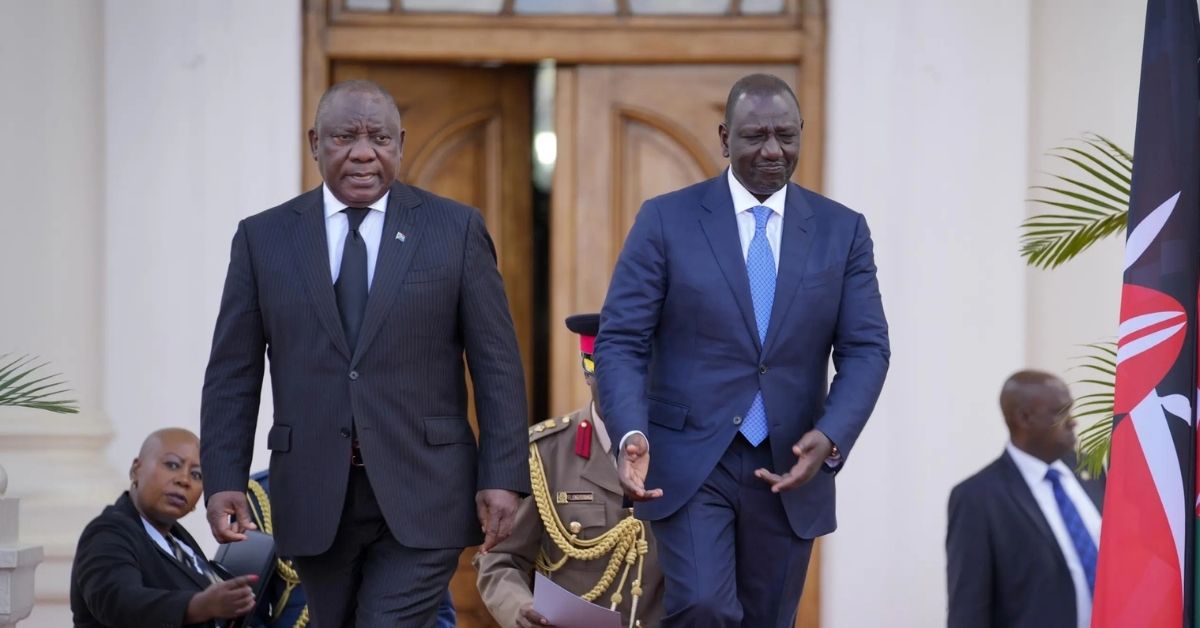
When President William Ruto arrives in Pretoria for a three-day state visit this week, he will seek to reaffirm relations with one of Africa’s most influential powers.
Yet beneath the diplomatic ceremony lies a relationship increasingly shaped by diverging foreign policies and competing visions of Africa’s place in the world.
Both countries are regional economic hubs and vocal advocates for African agency. But as geopolitical competition intensifies, they are increasingly pursuing different pathways to global influence.
Kenya has deepened engagement with Western powers as a pragmatic intermediary between Africa and the West while South Africa embraces an assertive Global South posture, aligning with emerging powers that challenge Western hegemony.
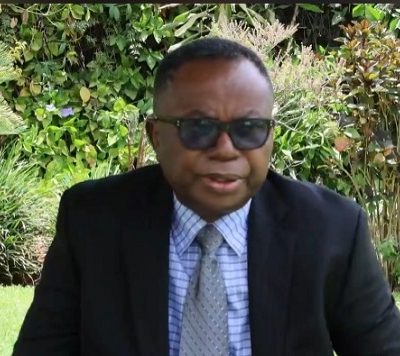
Despite these differences, they remain aligned on multilateral issues. Kenya’s UN diplomat, Ekitela Lokaale, told this outlet both countries have consistently advocated for reforming global governance, greater African representation within the UN system, and stronger AU-UN cooperation.
He also noted that their diplomats work together on sustainable development, peacebuilding, and digital governance.
Yet shared objectives do not always mean shared strategies.
When South Africa hosted the historic G20 Summit in Johannesburg in late 2025, Kenya’s diplomatic posture came under intense scrutiny.
Despite its loud calls for increased African agency, Nairobi’s top leadership stayed clear, opting to send a low level delegation that mirrored Washington’s boycott of the summit.
Analysts suggest Kenya’s move signalled discomfort with Pretoria’s anti-Western agenda. South Africa’s focus on climate resilience and wealth redistribution clashed with US priorities, prompting the boycott and Pretoria’s subsequent exclusion from the 2026 US-led G20 process.
Kenya’s decision not to attend the Johannesburg summit was widely read as a signal of alignment with Washington, with officials privately supporting the African Union attendance of the 2026 G20 in Miami, framing the tensions as a bilateral issue between the U.S. and South Africa rather than a continental grievance.
It was therefore notable when President Cyril Ramaphosa skipped the France–Africa Summit in Nairobi last month. The timing drew attention, coming shortly after reports that France had withdrawn his invitation to the upcoming G7 Summit in France and extended it to Ruto instead.
While his office cited scheduling constraints, the sequence fuelled speculation about widening divergence between Africa’s two leading powers in how they engage Western partners and respond to global security and geopolitical challenges.
The Russia–Ukraine war highlights these dynamics clearly. When the crisis began, Kenya adopted one of Africa’s strongest pro-Ukraine positions, condemning Russia at the UN Security Council and calling for respect for Ukraine’s sovereignty and territorial integrity.
South Africa, by contrast, declined to condemn Moscow despite sustained Western pressure, abstaining from key UN resolutions and attributing the conflict to NATO expansion.
UN General Assembly voting data, however, shows both overlap and divergence. According to U.S. State Department figures, Kenya aligned with U.S.-prioritised positions 42% of the time in 2024, compared to South Africa’s 39%.
On Russia–Ukraine-related resolutions, Kenya’s alignment with the U.S. stood at 75%, versus South Africa’s 50%, with similar trends in 2023.
This points to Kenya’s closer alignment with Western positions on Ukraine, while South Africa maintains greater strategic flexibility shaped by BRICS membership, historic ties with Russia, and a non-aligned approach to great-power competition.
The divergence extended to the recruitment of African nationals into Russian forces. After a Kenyan intelligence report found over 1,000 Kenyans had been deceived into joining the war, Nairobi reached an agreement with Moscow in March 2026 to halt recruitment.
South Africa has quietly repatriated affected citizens but avoided public confrontation with Russia.
Although Kenya has subtly adjusted its position on the Russia–Ukraine conflict, moving from earlier vocal criticism toward a more neutral and non-aligned stance outlined in a new foreign policy sessional paper, it has remained cautious toward Russia’s actions.
Unlike Ukraine, where voting patterns reveal a clear divergence between Nairobi and Pretoria, the Israel-Palestine conflict presents a more nuanced picture.
UN General Assembly voting records show that both countries frequently opposed U.S. positions on resolutions relating to the conflict.
In 2024, Kenya’s voting coincidence with Washington stood at 13%, compared with 10% for South Africa. The narrow gap suggests convergence in multilateral voting despite differences in rhetoric and bilateral relations with Israel.