
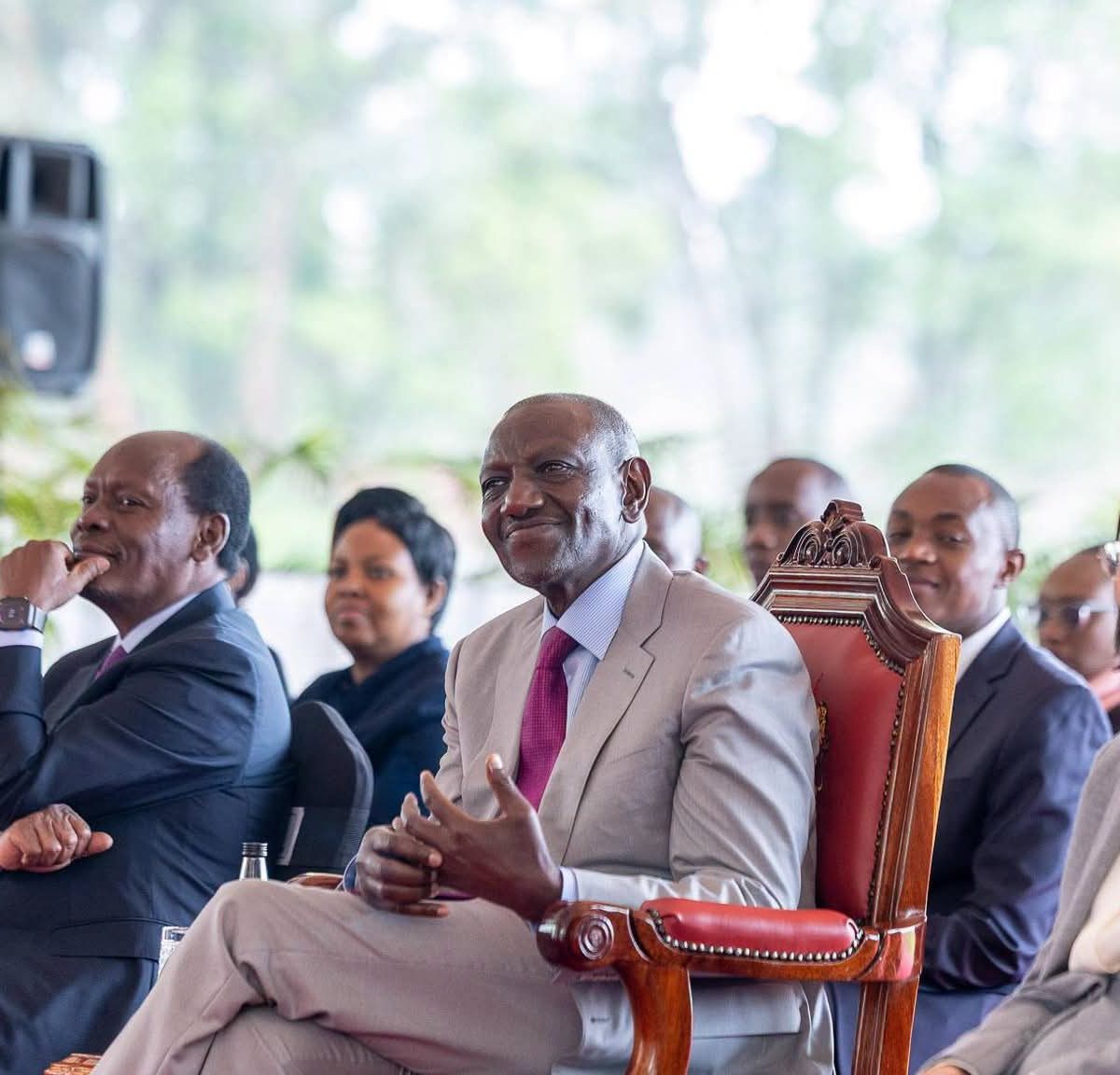
Addressing a gathering of global tech leaders, educators, and young innovators at State House, President William Samoei Ruto outlined a bold vision for the nation’s technological future. He emphasized that global leadership in the coming era will no longer belong solely to those who master today’s tools, but to those who imagine, invent, and build solutions the world has not yet conceived—redefining economies and shaping the trajectory of humanity in the process.
The President noted that while artificial intelligence, robotics, quantum computing, biotechnology, space physics, and autonomous systems power today’s modern world, the technologies of tomorrow remain unnamed. This rapid evolution, he argued, shifts talent development from a mere educational routine into a vital national competitive agenda for survival and growth.
According to President Ruto, nations that focus on cultivating active innovators rather than passive consumers of technology are the ones destined to lead the 21st century. Highlighting Kenya’s growing global reputation as a tech hub, he warmly welcomed university students, lecturers, and industry partners to celebrate their remarkable achievements on the international stage.
A central highlight of the address was Kenya’s stellar performance at the recent Global Huawei ICT Competition, recognized as the largest ICT skills contest worldwide. Competing against over 220,000 participants from 2,000 institutions across more than 100 countries, all three qualifying Kenyan university teams returned home with prestigious global honors.
The highest distinction was awarded to the Kenyan Cloud Track team, which secured the Grand Prize—marking Kenya’s first top-tier victory since joining the global contest in 2019. The President commended the students and lecturers from Jomo Kenyatta University of Agriculture and Technology (JKUAT), Tharaka University, Mount Kenya University, and Machakos University for proving Kenya’s capacity to build world-class cloud infrastructure and AI capabilities.
Further successes were celebrated in the Network Track, where a multi-university team took second prize, demonstrating critical expertise in networking, cybersecurity, and wireless technologies. President Ruto underscored that these technical skill sets form the protective backbone of the country’s expanding digital highway and broader digital infrastructure.
Special recognition was given to an all-women computing team from JKUAT, who secured second prize alongside the prestigious Women in Tech award. Highlighting their sharp intellect and dedication, the Head of State applauded their accomplishment as a significant milestone toward gender inclusivity and leadership in high-tech fields.
The President also commended the team from PC Kinyanjui Technical Training College, celebrating them as the first Kenyan TVET institution to qualify for the regional finals. He pointed out that these successes are not isolated incidents, but clear evidence that Kenya is rapidly solidifying its place as a top-tier global exporter of digital talent.
This burgeoning confidence, President Ruto noted, is reflected in sustained investments from global tech giants such as Huawei, Microsoft, Amazon Web Services, and Apple. These international powerhouses continue to partner with local institutions—including the University of Nairobi, JKUAT, and Strathmore University—to nurture globally competitive skills on Kenyan soil.
To complement these private sector initiatives, the Kenyan government has made deliberate investments in digital infrastructure, deploying an additional 37,000 kilometers of fiber optic cable and establishing hundreds of digital hubs. These interventions have already equipped over 1.9 million Kenyans with digital skills and created upwards of 350,000 digital jobs across the nation.
Highlighting the rapid digitization of public governance, President Ruto revealed that government services available on digital platforms grew from just 350 when he took office to over 25,000 today, with targets approaching 100,000. Transitioning government payments to digital platforms aligns with the overarching vision of building a transparent, efficient, tech-driven society.
Turning to human capital as Kenya’s most valuable asset, the President announced the recruitment of 20,000 new teachers to join the 100,000 already hired under his administration. He reinforced the government’s commitment to ensuring that every student in universities and TVETs receives full educational funding, removing financial barriers for learners regardless of their social or economic backgrounds.
Beyond immediate educational support, the nation is laying long-term institutional foundations by establishing specialized hubs, including the Kenya Advanced Institute of Science and Technology, the Open University of Kenya, and the expanding Konza Technopolis. These initiatives, alongside newly operationalized AI, cloud, and cybersecurity policy frameworks, aim to seamlessly connect local startups with global markets.
In closing, President Ruto officially launched registration for the 11th edition of the Huawei ICT Competition, calling on students across all colleges and TVETs to participate. He expressed firm confidence that the next global tech champion could be sitting in a classroom anywhere in Kenya—from Busia and Wajir to Lungalunga or his home village of Sugoi—ready to lead the country into a prosperous digital future.