
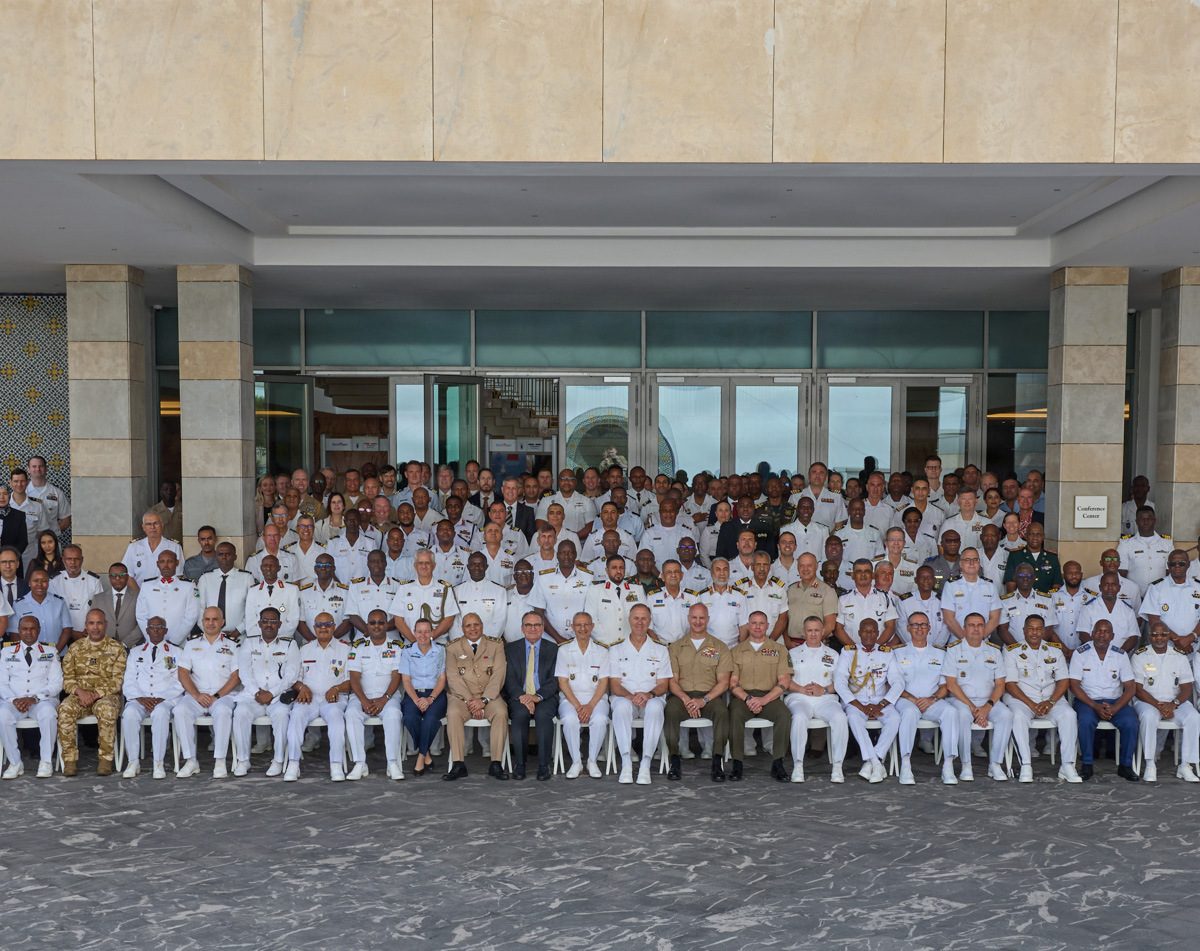
As naval leaders from across the continent gathered in Rabat, Morocco for the fourth annual African Maritime Forces Summit they acknowledged an array of threats. Illegal fishing, piracy, smuggling, terrorism and transnational crime all trouble African waters.
But maritime leaders said the potential for growth and prosperity in the maritime domain far outweigh the threats. Unlocking this potential will require cooperation and innovation.
“Maritime security represents the shared responsibility and the strategic priority that can only be achieved through sustained dialogue, mutual trust, coordinated action and effective partnership among all stakeholders,” Rear Adm. Mohamed Tahin, Inspector of the Royal Moroccan Navy told attendees during the opening ceremony.
The five-day summit was hosted by the Royal Moroccan Armed Forces, United States Naval Forces Europe and Africa, and U.S. Marine Corps Forces Europe. More than 40 African nations and nearly 20 partner nations participated.
The event reflected of “Morocco’s steadfast commitment to promoting African cooperation, strengthening regional stability and fostering collective efforts in support of maritime peace and security,” Tahin said.
The summit also featured interactive breakout sessions involving a simulated illegal, unreported and unregulated (IUU) fishing incident. Organizers distributed for discussion scene-setter papers, which are introductory policy or political documents, original articles written for the summit, and condensed versions of academic research and analysis.
Commander of the Somali Navy and Coastal Defense, Brig. Gen. Abdulwahab Abdullahi Omar, thanked the international community for supporting the Somali National Armed Forces and said the country has made significant gains in the fight against (IUU) fishing, piracy and maritime terrorism, the Somali National News Agency reported.
Somalia has enhanced maritime security through all available partnerships, and Mogadishu has held recent discussions with the U.S. regarding Red Sea security. Yemen’s Houthi rebels are known to supply weaponry to the al-Shabaab terror group in Somalia. The Houthis have also recently intensified threats against vessels crossing the Bab el-Mandeb Strait, which separates Yemen from Djibouti and Eritrea.
During the summit, Tahin also revealed plans to establish the Africa Multidomain Training and Experimentation Center, or AMTEC, which Morocco and U.S. Africa Command (AFRICOM) recently agreed to pursue.
The facility is expected to include a training area, drone academy and a center for developing and testing emerging technology. Artificial intelligence, drones, satellites and modernized data-sharing platforms ae changing maritime operations and should be incorporated into African security collaboration, Tahin said.
The Africa Senior Enlisted Leaders Conference was also held during the summit. These discussions aimed to establish a professional enlisted corps across continental navies. Senior noncommissioned officers from partner nations shared experiences and promoted “mutual professionalization,” Morocco World News reported. Arabic, English, French, Portuguese and Spanish interpreters facilitated the talks, which covered national policy modernization, regional cooperation and technological innovation in maritime security.
Ghana’s Flag Officer Commanding of the Western Naval Command, Commodore Samuel Ayelazono, said AMFS26 underscored the importance of intelligence sharing, inter-agency coordination, regional partnerships and technology in enhancing maritime security, Ghanaian news website MyJoyOnline reported.