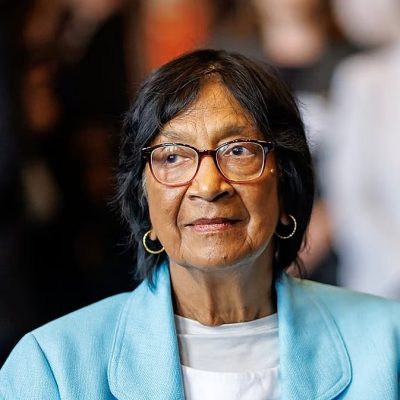

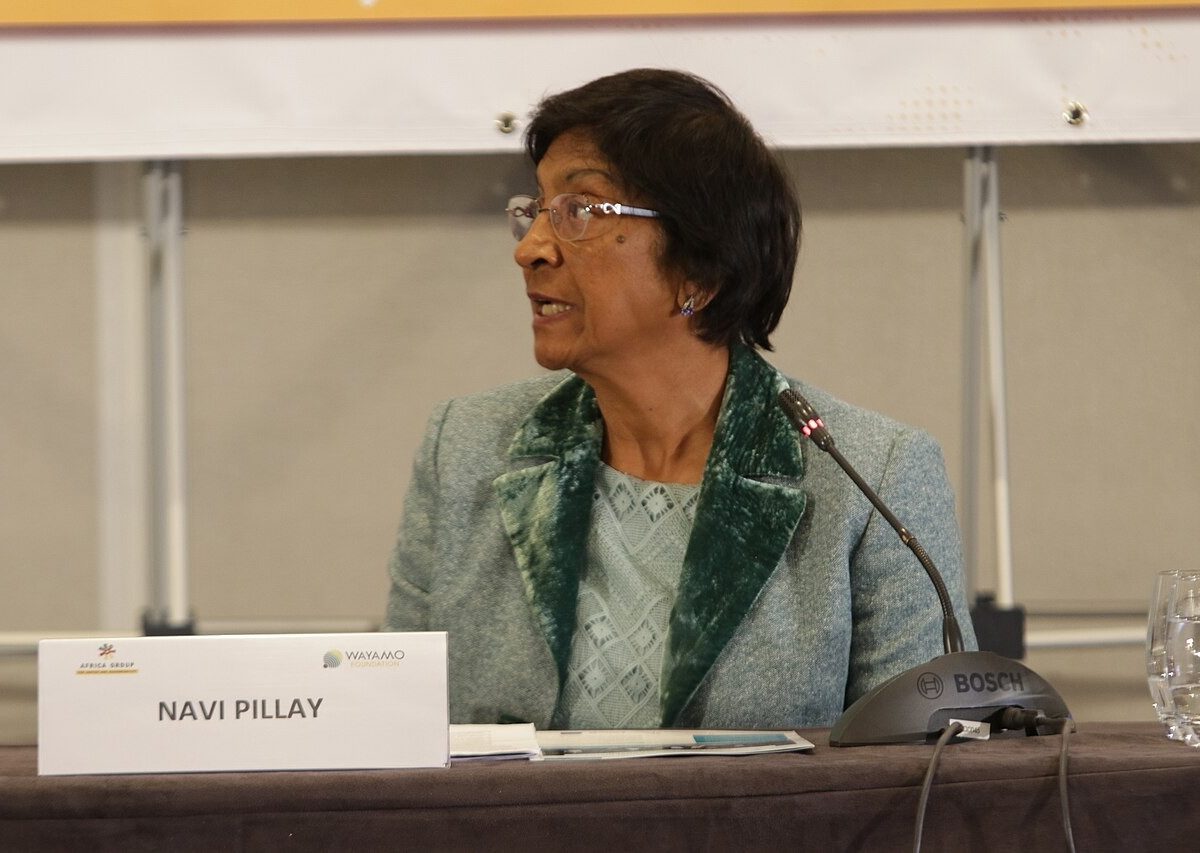

Navi Pillay speaking at a symposium on international criminal justice in Cape Town in August 2018. Photograph: Wayamo Foundation / Wikimedia Commons, CC BY-SA 2.0
Navi Pillay, the Nobel Peace Prize laureate who as UN human rights chief pressed for an international investigation into the massacre of Tamils at Mullivaikkal, has urged the United States to return to defending human rights, days after Washington imposed sweeping sanctions on the International Criminal Court (ICC).
“My message is: ‘You have to get back to playing your serious role as a leader, playing a liberatory role for the rest of the world’,” Pillay, 85, said in an interview in The Hague on 13 October, where she is serving as a judge at the International Court of Justice (ICJ).
The United States announced the sanctions on the ICC, where Pillay served as a judge from 2003 to 2008, hours after her Nobel Prize was announced on 9 October. The US Secretary of State, Marco Rubio, called the ICC a “rogue court” that would never be allowed to prosecute Americans.
Pillay said the timing could not be a coincidence.
“I think it’s very unfortunate. However, the plans of targeting international criminal justice through the ICC were brewing all the time,” she said. “That’s why the first thing I did when I returned from Nuremberg to The Hague is to go to the staff of the ICC to show solidarity for their work in promoting international criminal justice and to protect those who’ve already been sanctioned.”

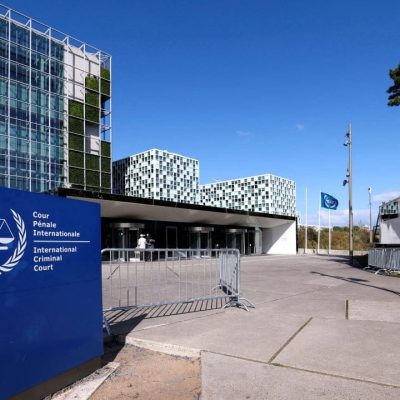
The International Criminal Court in The Hague. Photograph: OSeveno / Wikimedia Commons, CC BY-SA 3.0
European states, Canada and Japan have backed the court since the sanctions were announced.
Gaza and sexual violence
Pillay chaired the UN Commission of Inquiry on the Occupied Palestinian Territory, which concluded last year that Israel had committed genocide in Gaza. She described the backlash against its report as “false propaganda by lobbies that promote Israel”.
As a judge of the International Criminal Tribunal for Rwanda, she was part of the bench that first ruled that rape and sexual violence could constitute genocide. She said sexual violence was still not pursued enough in war crimes cases, in part because mainly male prosecutors believed it would detract from their cases, and that she planned to work on the issue after her term at the ICJ.
“There is a solid base, laid not only by the Rwanda tribunal but by subsequent international tribunals, that you can no longer ignore sexual violence as collateral damage or as a ‘reward for soldiers’,” she said.

The gates of the Peace Palace in The Hague, the seat of the International Court of Justice. Photograph: Hansmuller / Wikimedia Commons, CC BY-SA 3.0
Sri Lanka
As UN High Commissioner for Human Rights, Pillay called for an independent international investigation into the killing of Tamil civilians within days of the end of the armed conflict in 2009. She travelled to the North-East in 2013, and set up the UN investigation that in 2015 found reasonable grounds to believe that war crimes and crimes against humanity had been committed.

Pillay is garlanded on arrival at Jaffna Public Library on 27 August 2013. File photograph: Northern Provincial administration / np.gov.lk
Sri Lanka is not a party to the Rome Statute of the ICC. Tamil rights groups have filed submissions urging the ICC prosecutor to investigate crimes against Tamils.