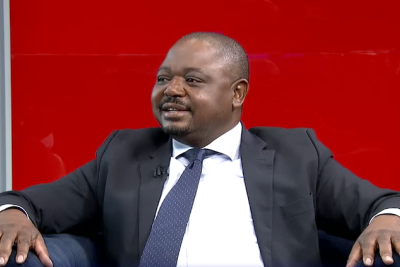

Mashele has argued that South Africa underestimated the consequences of taking Israel to the International Court of Justice (ICJ), claiming the move exposed the country to growing international pressure at a time of domestic political and economic weakness.
Speaking on 702, he said South Africa had become caught up in a wider global realignment as geopolitical power shifts away from traditional Western dominance.
Mashele described the current international environment as a period of significant change, marked by tensions involving the United States, Iran, Israel, Russia, China and other global powers.
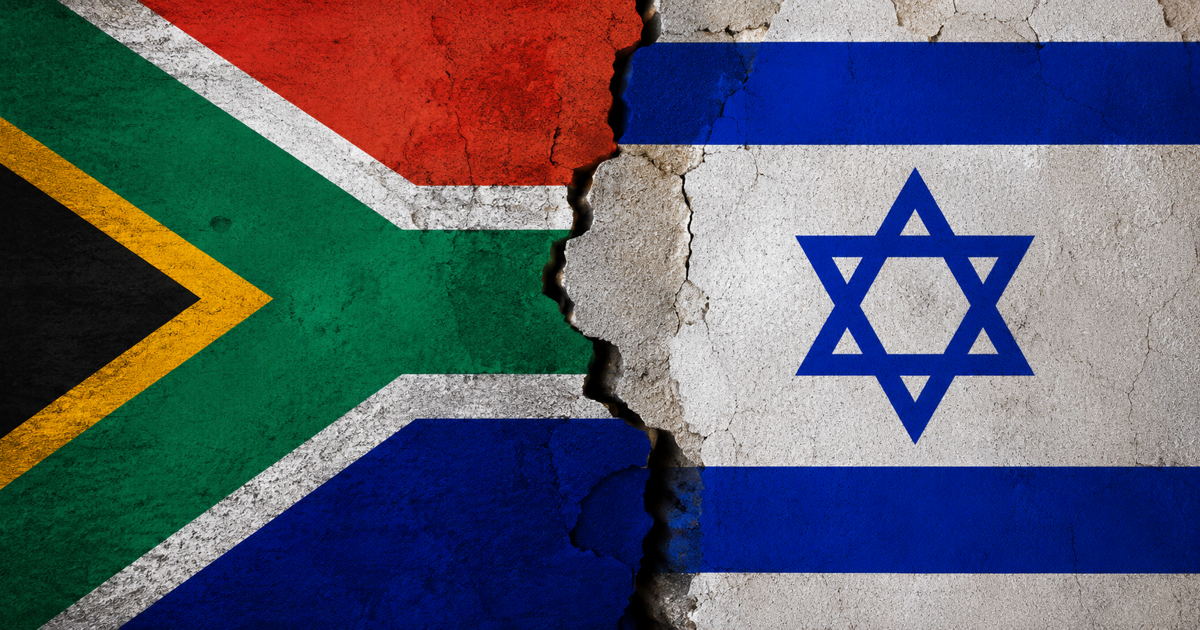
South Africa’s ICJ case against Israel
Mashele argued that South Africa attracted unwanted attention from the United States after taking Israel to the ICJ over the war in Gaza.
“South Africa took up the cause of the Palestinians and went to the International Court of Justice to make a case against Israel,” he said.
According to Mashele, the decision was driven partly by domestic political considerations.
He argued that the government believed the move would strengthen its moral standing at home, but said that calculation had failed.
“The standing of the South African government, particularly the ANC component, in the eyes of the South African public, has actually worsened,” he said.
Mashele also claimed there had been insufficient consideration of the possible consequences of the ICJ case.
“No, there was insufficient calculation of costs. They actually didn’t calculate the costs,” he said.
Debate over migration crisis
The discussion also focused on South Africa’s immigration challenges.
Mashele rejected suggestions that the country’s migration tensions were being driven by foreign powers, arguing instead that the issue stemmed from failures within the South African state.
He said the government had lost control of borders, public institutions and service delivery, leading to growing frustration in communities where residents compete for jobs and services.
“The problem of the immigration crisis in South Africa is the collapse of the South African state,” he said.
Mashele argued that concerns about illegal immigration were rooted in employment and service delivery pressures rather than foreign interference.
He also defended the view that employers were increasingly hiring foreign nationals because they were willing to accept lower wages and were less likely to be unionised.
The issue has also attracted attention from elsewhere on the continent, with the South African government previously indicating it was prepared to account for its handling of anti-immigrant protests before the African Union.
Read more: SA has ‘nothing to hide’ should AU seek answers on anti-immigrant protests
Ramaphosa, Parliament and political battles
The conversation also touched on President Cyril Ramaphosa’s efforts to halt parliamentary processes related to the Phala Phala matter.
Mashele claimed the ANC was determined to shield Ramaphosa from political consequences linked to the controversy.
He also criticised Economic Freedom Fighters leader Julius Malema, saying opposition parties were using the issue to expose the ANC while simultaneously advancing their own political interests.
MK Party’s future questioned
Mashele was equally critical of the MK Party, describing it as a political vehicle centred on former president Jacob Zuma rather than a sustainable political organisation.
His comments came amid internal turmoil in the party following the expulsion of senior figures.
Mashele argued that the party’s future remained heavily dependent on Zuma’s leadership and questioned its long-term viability.
June 30 unlikely to be turning point
Looking ahead to the planned anti-illegal immigration action on 30 June, Mashele predicted the day would pass without dramatic changes.
He said illegal immigration would remain a challenge after the date and suggested organisers would seek to avoid violence and legal consequences.
“My sense is that there won’t be one. I don’t think that anyone in the leadership of this movement wants to take responsibility for violence,” he said.
Mashele added that the underlying issues driving public anger over immigration would remain unresolved beyond the planned demonstrations.
The planned 30 June demonstrations have prompted concerns about possible unrest and political tensions.
Related: Malema urges cool heads and police unity amid crime intelligence arrest saga