
There is a deep wound that has been created that even when this administration is gone will still be there. This is going to take generations to heal.
— Alisa D., LGBT service provider in Texas
In March 2022, the Houston Home Journal reported on the story of Jacqueline Rozier, who moved to Houston County, Georgia in 1975. She had enlisted in the United States Air Force and served for 33 years at Robins Air Force Base. She raised her children in Houston County. For half a century, Houston County had been her home.
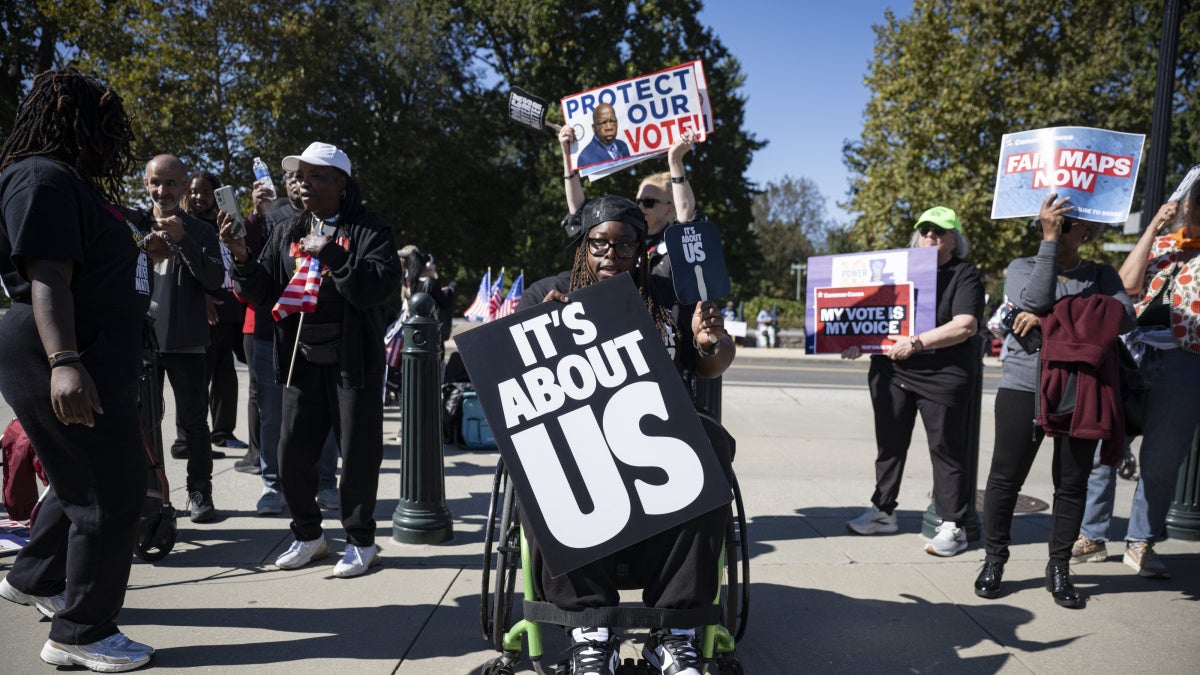
In 2022, at the age of 67, Rozier ran for the Houston County Board of Commissioners as an independent candidate but lost by a margin of nearly two to one to her opponent, a white man named Tal Talton. Jacqueline Rozier had little chance of succeeding from the outset. Houston County is more than 30 percent Black, but the Board of Commissioners is elected at-large, meaning that all five seats are chosen by voters countywide rather than by district. In places where voting is racially polarized and white residents form the majority, an at-large system allows the majority to decide every seat. In a district system, Black voters concentrated in a given area could make up a majority in at least one district and theoretically have a stronger opportunity to elect their preferred candidate. At-large voting has its merits and some strong proponents, but in the particular context of struggles around voting rights in the US, it was regularly used as a tool for diluting the Black vote in the South after the Voting Rights Act of 1965. In practice, the result of the at-large system is often that Black candidates have a more difficult time getting elected to office.
Black residents comprise 32.4 percent of Houston County’s voting-age population; white residents comprise 55.7 percent. Since 1980, just one Black candidate has won a seat on the five-member Board of Commissioners: Houston Porter Jr., who won in 1980, 1984, and 1988. Since Porter’s last victory in 1988, Black candidates, including Rozier, have run and lost in 1992, 1994, 2002, 2016, 2020, and 2022.
The county’s at-large system has to be seen in the context of local history. Houston County sits on ground where Georgia enforced, throughout the twentieth century, what the complaint in Rozier’s case describes as “draconian laws that rigidly segregated communities across the state and relegated Black communities to second-class status.” Between 1877 and 1950, there were at least four documented lynchings of Black residents in Houston County, according to research by the Equal Justice Initiative. In the 1890s, groups of white residents conducted “whitecapping” raids—organized night-time violence intended to keep Black residents in a subjugated position. During the Jim Crow era, Black residents of Houston County were disenfranchised through poll taxes, literacy tests, and all-white primary elections. Houston County schools remained segregated long after school de jure racial segregation of schools was declared unconstitutional in 1954, and the county did not take proactive steps to desegregate them until 1970, when a federal court ordered officials to do so. In the 1940s, the federal government built Jody Town outside Robins Air Force Base as a segregated residence for the base’s Black civilian employees; residents built a thriving community there, but in the 1970s, the county demolished it under the banner of urban renewal and relocated the residents.
This history helps explain the atmosphere in which Black residents were unlikely to win at-large elections. Nor was racism simply an artifact of local history. The year before Rozier became the lead plaintiff in a federal voting rights case, a group of white Houston County high school students were filmed imitating the Ku Klux Klan in an incident that drew national coverage, and the Houston County school district settled two OCR racial harassment complaints against a cheerleading coach found to have created a racially hostile environment for two Black students.
On January 16, 2025, mere days before Trump’s second inauguration, the Department of Justice sued Houston County, alleging that its at-large system violated Section 2 of the Voting Rights Act. In practice, Black voters backed their candidates cohesively and white voters voted as a bloc in favor of others. Since 2016, fewer than one in ten white voters had supported a Black-preferred candidate and this meant these candidates were not elected. On March 24, 2025, just two months after it had brought the case, the department abruptly dropped its own case without providing much in the way of explanation. The Civil Rights Division filed a one-sentence notice of voluntary dismissal that did not give a public rationale for dropping the case: “Pursuant to Federal Rule of Civil Procedure 41(a)(1)(A)(i), the United States respectfully gives notice that it dismisses United States v. Houston County, No. 5:25-cv-25.” The division did not issue a press statement, as it has done in some other cases it walked away from, and the public affairs office declined to comment to some reporters who covered the move.
On October 30, 2025, lawyers filed Rozier v. Houston County Board of Elections on behalf of Rozier and Hiram Morgan, a Black resident who has lived in Houston County since 1974. The new case was a private suit where Rozier and Morgan were trying to advance a legal effort similar to the one DOJ had first brought forward. This meant individuals carrying a significant burden that had previously been partially carried by the country’s largest law enforcement institution.
Rozier told a local television station that she hoped the suit would force the commissioners to reconsider the system that had elected them: “I believe that they in their heart believe that they’re doing the best job, and I believe that they think they are; the problem is how they got elected.” That Rozier had to bring her case as a private action, rather than benefit from federal enforcement as plaintiffs often did in previous years, illustrates the broader decline in federal civil rights enforcement.
This chapter documents what the recent federal withdrawal looks like across four enforcement areas—voting, policing, education, and housing—from the perspective of people whose rights are at stake.
Voting
Houston County, Georgia
Community members have pressed the significance of the Houston County case publicly. Local news report that at a county commissioners’ meeting in April 2025, Gregory C., a Black resident, spoke about the at-large system that has kept Black candidates off the five-member board. He said that if the county replaced its countywide seats with single-member districts, a candidate like him would at least have a chance to run for the office in a competitive race. He acknowledged the commissioners could not promise him victory, but he said he only wanted rules written to “give me the chance.” Under the at-large system, he did not have one, “and that’s a problem.”
The same local outlet also quoted Michael J., a Black Houston County resident, as saying:
Intention versus impact is an incredible thing, right? So even if you’re not purposely doing it, the impact is still there. I think that whether they have our best interest in mind doesn’t really matter if we’re still not getting representation.
The attorney who represents Rozier and Morgan explained in another local media interview their proposed remedy is single-member districts; five districts in which each community elects its own commissioner. At least one of these districts would be majority-Black.
Carlos A, a civil rights attorney, told Human Rights Watch the impact of DOJ withdrawal from voting cases was profound:
When DOJ brings litigation in the voting rights section, it sends out a guiding light—an indication of what the law means, and of what those in power must do to comply. Without them there, it leaves a large leadership gap.
Texas Redistricting
In 2025, the DOJ reversed its position in a key Texas voting rights redistricting case, eventually arguing majority-minority congressional districts the state had created to try and ensure that minority populations could elect some of their preferred candidates to Congress were themselves unconstitutional racial gerrymanders. The case centered on Texas’s mid-decade congressional map, which broke apart existing districts where Black and Latino voters would constitute a majority and have more electoral power. DOJ first opposed those changes as discriminatory. Then, after Trump’s inauguration, it adopted Texas’s view that the districts designed to help ensure minority representation were unlawful uses of race.
Texas State Senator Borris Miles, who represents a predominantly Black district in Houston, criticized the bill before the Texas House Select Committee on the redistricting. When sharing video from his testimony on Facebook, he wrote:
This redistricting map is a slap in the face to Black, Latino and any voter who calls Texas home. We’ve witnessed an unrelenting and massive assault on our voting rights, aimed at silencing the voices of Black, Brown and marginalized communities — unlike anything we’ve seen since the Jim Crow Era. This mid-decade RIG-DISTRICTING is just Jim Crow in a new Cadillac.
Turtle Mountain and the Importance of Private Actions
Throughout the history of the Voting Rights Act’s Section 2, private citizens and groups brought many of the lawsuits that enforced it. Recently, some courts have ruled these private actions are not authorized by the statute—sharply increasing the importance of the same government-led enforcement efforts the Trump administration has moved to abandon.
In 2023, the Eight Circuit Court of Appeals held that private parties have no implied right to sue under Section 2 of the Voting Rights Act. In May 2025, a panel of that court went further, ruling that private parties could not enforce Section 2 through Section 1983 either. This leaves the Department of Justice as the only party able to bring a Section 2 case anywhere in the circuit’s seven states. But since January 2025, the Civil Rights Division has been hollowed, dismissed pending Section 2 cases, and turned its voting work towards what it claims to be widespread voter fraud.
Private enforcement is more than supplementary to the government’s work on Section 2. Of the more than 1,500 Section 2 challenges filed between 1982 and 2024, private plaintiffs brought over 90 percent of them and accounted for nearly 90 percent of all successful cases, according to an April 2026 draft research paper by Professor Christopher Seaman at Washington and Lee University School of Law. His research found the Justice Department filed about 114 Section 2 cases across more than four decades, which is fewer than three a year. Private lawyers and civil rights groups brought the remainder.
The Turtle Mountain case began in 2022, rising from a challenge brought by the Turtle Mountain Band of Chippewa and the Spirit Lake Nation to a North Dakota redistricting map that split the two tribal communities into separate districts. After a trial, a federal court ruled in November 2023 the map violated Section 2, because it diluted Native voting strength by splitting the two tribes so that neither could elect its preferred candidates, and ordered a new map. Under that new map, voters elected Collette Brown, the first Spirit Lake Nation member elected to the North Dakota legislature and a plaintiff in the case. In May 2025, the Eighth Circuit panel held the plaintiffs did not have the legal right to bring the case in the first place.
After the ruling, the Campaign Legal Center quoted Wes Davis, a plaintiff in the case and chair of North Dakota Native Vote, as saying:
We went to court because the map the state passed made it harder for Native voters like me to have a real voice. The court agreed and gave us a fair chance to elect candidates. Now, the Eighth Circuit wants to take away my right to question maps that silence votes, not because we were wrong, but because they say the Voting Rights Act does not create rights. That’s not justice and we’re going to keep fighting for that.
The Center’s press release also centered Zachery S. King, another plaintiff:
I joined this case because I saw firsthand how the state’s map silenced Native voters in our community. It split us up in ways that made it nearly impossible to elect people who understand our lives… The court says that we never had the right to challenge it in the first place and that no North Dakota voter has that right anymore. That’s not just disappointing — it’s dangerous.
Stephen T., a former DOJ attorney, described what the DOJ’s retreat means for Section 2 enforcement:
The Eighth Circuit’s Turtle Mountain case—if it’s upheld, private parties can’t sue under Section 2 of the Voting Rights Act at all. Only DOJ can sue. And DOJ won’t. That’s the end of Section 2 enforcement in the Eighth Circuit.
Abandonment in Other Cases
The Department of Justice has dropped other important Voting Rights Act cases, including a separate single-member district case in Pennsylvania. In Pennsylvania, DOJ had sued the city of Hazleton in January 2025, arguing that its at-large city council elections denied Hispanic residents equal opportunity to elect candidates of their choice. Hispanic voters were about 43 percent of the city’s voting age population yet they had never elected a council member. The DOJ had originally asked the federal court to order single-member districts as a remedy, but voluntarily dismissed the case about three months later without a clearly stated reason.
In several matters, DOJ has switched sides and appeared against the plaintiffs it previously supported. In Texas, the department had sued since 2021 to block congressional maps it found to dilute Black and Latino votes, only to argue in 2025 that those districts drawn to address this vote dilution amounted to unconstitutional discrimination. In Louisiana, the department withdrew a Supreme Court brief it had filed defending a majority-Black district and joined the white plaintiffs who argued the district violated their voting rights; the US Supreme Court struck this district down in 2026. the Lauren P., a longtime voting rights attorney, described the pattern:
The Georgia and Pennsylvania single-member district cases were bread-and-butter VRA cases. They were dropped. And it’s not only that DOJ is missing in action—they’re engaging on the other side.
The Red Line for Civil Rights Project, led by former Justice Department staff, has catalogued more than 100 cases across the Civil Rights Division’s docket in which it says the administration had shut down, dismissed, or reversed its position, including at least seven Section 2 cases it had been litigating to protect minority voters. The division has instead pursued its new enforcement priority: alleged voter fraud. Since January 2025, it has opened approximately three dozen lawsuits against states across the country demanding voter registration files, meaning the staff and resources previously used to address racial discrimination in voting would be deployed to execute the administration’s efforts to stop unsubstantiated voter fraud. At the time of publication, no federal district or appellate judges had ruled in favor of the Justice Department in these cases.
Policing
Louisville, Kentucky
In March 2023, after a two-year investigation, the Justice Department found the Louisville Metro Police Department “discriminate[d] against Black people in its enforcement activities,” used excessive force, and conducted searches on invalid warrants. The investigation was sparked by the 2020 police killing of Breonna Taylor. Officers shot and killed Taylor, a Black woman, after bursting into her home in the middle of the night on a “no-knock” warrant. In the final weeks of the Biden administration, the DOJ and the city signed a consent decree on December 12, 2024.This decree, like many others, was a significant step towards reform. It outlined limits on police use of force, enhanced de-escalation and other forms of training, required comprehensive data collection and retention to analyze racial disparities, and required ongoing oversight by an independent monitor to ensure the changes were implemented over time.
The Trump DOJ moved to dismiss the consent decree in May 2025, arguing the previous administration wrongly equated statistical disparities with discrimination, the decree would have required unnecessary federal “micromanagement,” and took away control from local elected officials. A federal judge dismissed the case on December 31, 2025. In March 2026, the DOJ moved to drop the remaining federal criminal charges against two officers involved in the warrant that led to Taylor’s death.
Breonna Taylor’s mother, Tamika Palmer, responded to the motion to dismiss the criminal charges, telling ABC News that:
She was killed because of their lies and negligence, and somebody should be held accountable for that. Breonna doesn’t get to come back. She doesn’t get to put it behind her. There’s no putting it behind me. Every day since that day has been March 13th.
Lonita Baker, the Taylor family’s attorney, told reporters:
We take away at this point—the consent decree gone… and now dismissing the case where there is clear evidence, where another officer agreed to testify. If you can’t be held accountable when there’s clear evidence as a police officer, when can you be held accountable?
For Cassia H., a community organizer who helped pass a ban on no-knock warrants in Louisville in 17 days during the 2020 protests against Taylor’s killing, the dismissal was devastating. The city has since replaced the enforceable federal decree with what the mayor calls a “community commitment.” Cassia H. told Human Rights Watch:
I am personally afraid of police. I don’t want my children to grow up that way. My son is 17, six feet, 200 pounds, he has locks in his hair. He’s a beautiful young man in my opinion, but he’s probably scary to some other folks. It’s been hard to have that conversation with him…. Our mayor has adopted 90 percent of the consent decree as a “community commitment” but there is no enforcement mechanism. It is a promise with no teeth.
Minneapolis, Minnesota
The Minneapolis consent decree came after a DOJ investigation that found the Minneapolis Police Department engaged in a pattern of excessive force and unlawfully discriminated against Black and Native American people. The agreement was the culmination of years of advocacy and 2,300 documented community testimonies submitted by Communities United Against Police Brutality (CUAPB). The decree, signed in the last days of the Biden administration, required the Minneapolis Police Department to reform its use-of-force policies, restrict military-style tactics at protests, prohibit officers from handcuffing children under 14, expand training and community engagement, and submit regular updates to an independent monitor, among other measures.
When the Trump DOJ dismissed the decree in May 2025, one week before the fifth anniversary of George Floyd’s murder, it said the decree was part of Biden Civil Rights Division’s “failed experiment of handcuffing local leaders and police departments with factually unjustified consent decrees.” A federal judge approved DOJ’s dismissal soon after, citing concerns about the strength of the investigation’s data and the ongoing cost of the external monitor.
Michelle G., a longtime CUAPB organizer, explained to Human Rights Watch what her group had contributed and how it was undone:
We founded this organization 26 years ago after Lucas Sanders was killed—shot 37 times, not armed. We collected 2,300 experiences from residents. We organized around two dozen community events. We created a people’s consent decree. We knew that the only way any of this would be implemented is if the DOJ was involved.
Minneapolis Mayor Jacob Frey announced the city would continue implementing the terms of the consent decree voluntarily, but residents were skeptical.
Policing In Other Jurisdictions
A number of cities had received DOJ “pattern or practice” findings under the prior Justice Department documenting systematic excessive force and racial discrimination by law enforcement before the Trump DOJ dismissed important police reform efforts. Phoenix offers a useful example. In June 2024, the Justice Department had concluded that Phoenix police used excessive force, discriminated against Black, Hispanic, and Native American residents, and violated the rights of unhoused people. In May 2025, the department closed the investigation and formally retracted its prior findings without the city agreeing to reforms. The Civil Rights Division said the prior findings incorrectly equated statistical disparities with intentional discrimination and criticized consent decrees as a general practice for taking away local control of policing. At the same time, the Justice Department dropped consent decrees in other jurisdictions, including Memphis, Mount Vernon (New York), Oklahoma City, Phoenix, Trenton (New Jersey), Louisiana State Police. In each case, the DOJ investigation was the primary mechanism pushing reform.
In May 2025, the DOJ closed its investigation of the Memphis Police Department and retracted the findings it had issued in December 2024, which had documented a pattern of constitutional violations following the death of Tyre Nichols, an unarmed 29-year-old Black man brutally beaten by officers in the department during a January 2023 traffic stop. Nichols died days later from blunt force injuries. The Justice Department claimed that its prior findings of abusive practices lacked adequate factual basis and that court-enforced oversight represented expensive and unneeded micromanagement of local policing.
Kristen Clarke, former leader of the Civil Rights Division told the Associated Press the extensive findings were compiled using data, body camera footage, and information provided by officers within the department. She said, “To wholesale ignore and disregard these systemic violations, laid bare in well-documented and detailed public reports, shows patent disregard for our federal civil rights and the Constitution.” The message to police departments across the country was the federal government would not hold them accountable for abuse.
Jessica B., a civil rights attorney and former DOJ attorney, explained to Human Rights Watch:
The private bar cannot replicate what DOJ brings to policing work—the sophisticated technology, the data analysis, the pattern-and-practice subpoena power. States are being emboldened. I certainly wouldn’t direct anybody to my old agency now.
Education
Cottonwood-Oak Creek, Arizona
In January 2025, the Department of Education’s Office for Civil Rights closed a three-year investigation into the Cottonwood-Oak Creek Elementary District in Arizona. OCR found the district had made “minimal and ineffective” attempts to address racial and sexual harassment. The findings documented a deeply harmful environment including students who were groped, a kindergartener using the N-word in front of a teacher, swastikas being drawn on student notebooks, and students saying, “slavery is good” and “white power.” One child was subjected to a mock “baptism” by classmates. LGBT students reported anxiety attacks and “considering harming themselves” after sustained harassment. Human Rights Watch has documented an increase in hostile school environments for LGBT students and a proliferation of efforts to pass anti-LGBT laws in the United States in recent years.
Kate Sierras, the mother of a gay seventh grader who was “baptized,” described what happened to her daughter in an interview with ProPublica:
Almost immediately my daughter’s whole personality changed. She just went from a vibrant, happy, confident person to a person with dark circles under her eyes. She started having panic attacks every day. It got to the point where I would drive her to school, and she wouldn’t get out of the car.
In January 2025, the district agreed to extensive staff training, student training, and two years of monitoring. After the agreement was reached, the district did not hear from OCR again, a district official told reporters. This collapse in communication happened in multiple jurisdictions after the change in administration, leaving the compliance promises from the school districts to go unmonitored.
Lubbock, Texas
Through 2024, OCR was actively investigating nine complaints in the Lubbock-Cooper Independent School District concerning racial discrimination. According to media reports, White students played whipping sounds on their phones when Black students walked through the halls, Black students were subjected to repeated racial slurs, two students with no prior disciplinary records were sent to the county’s detention school on disputed charges. Reporting described one student as “so fearful of authority figures that he repeatedly wet himself rather than challenge being denied access to a bathroom.”
The grandfather of the boy at the center of one of those cases—Ja’Maury, a 12-year-old Black student—alleged that he was falsely accused and interrogated by school officials without his parents present. Ja’Maury said in an interview with the Texas Tribune that:
[The police officer] was yelling and threatening to send me to juvie if I didn’t say I did it. I was scared. It was a white person’s word against a Black person’s word. People kept on messing with me about it, saying I was a pedophile, saying I was a pervert. After that I almost hated life, I didn’t even want to live no more after that. That was horrible.
Tracey B., a white Lubbock parent whose son witnessed the harassment of Black classmates, described the changed environment of the schools:
Things have absolutely gotten worse. People are more emboldened. People have always had racist ideas, but now there’s no consequences for being racist.
In 2025, the Trump administration closed the Dallas OCR office and terminated the investigator assigned to the Lubbock cases. Paige D., an attorney representing Lubbock families, emailed the investigator in July 2025. The autoreply informed her that “the employee no longer has access to the email.” Paige told one reporter that OCR had been “close to making a determination.” Now, she said, “There has been no outreach, no communication, nothing. Period.”
Phyllis G., a leader in the Lubbock NAACP chapter and area native, described the combined effect of federal withdrawal and the political environment created by the Trump administration as “breaking” people in the Black community. Phyllis explained to Human Rights Watch the chapter now receives frequent calls from parents seeking help for racial incidents they no longer bother reporting to the Department of Education, believing nothing will come of it.
Another NAACP community leader in Lubbock, Milton L., described a wider set of consequences to Human Rights Watch:
The kids don’t know their rights. The parents don’t know about policy changes. And the phone ban in Texas schools is targeting the one tool families had to document what was happening to their children—video evidence of discrimination. ‘We the People’—we [Black people] for a long time were not really a part of the Constitution. But we should be.
Rapid City, South Dakota
In April 2025, OCR terminated its Voluntary Resolution Agreement with Rapid City Area Schools. The agreement had been reached after a 14-year-long federal investigation found that Native American students in Rapid City were approximately four times more likely to be suspended and five times more likely to be arrested than white peers, and were systematically excluded from advanced coursework. The terminated plan had mandated new staff training, improved data tracking protocols, a stakeholder feedback committee composed of Native American community members, and advanced course placement opportunities.
The school district had supported the agreement in a July 2024 statement:
The Board acknowledges that there is a great deal of work to be done to ensure Native American students are treated equitably in the district, and we will not shy away from this work… The OCR Agreement and the actions it requires serve as proactive steps toward continuous improvement in the District.
Nick T., a leader on Native rights, discussing the termination, told local news:
This decision to roll back a previous mandate to ensure the district complies with the implementation of the 1964 Civil Rights Act when it comes to the treatment of Native students is flat out racist, unjust, discriminatory and deprioritizes Native children in this community.
One former Justice Department attorney now working in civil rights for a nonprofit told Human Rights Watch about the impact on families at risk:
It’s like a double punch—we’re not getting what we need, and also they’re attacking the programs we still have left. People will self-censor, and we’ve seen it. School districts getting rid of programs before anyone comes after them because they don’t want to be the subject of investigation. And the reality is: even if they do put it back when this administration ends, what’s going to happen to the kids who are learning right now? They will never be able to get those years back.
Springfield, Massachusetts; Carteret County, North Carolina; and Other Jurisdictions
Across the country, OCR had entered resolution agreements with districts where racial harassment had been documented in detail. In several of these cases, the agreements have not been followed up with ongoing monitoring under the Trump administration because of inadequate staffing and shifts in enforcement priorities.
In Springfield, Massachusetts, a Black family filed a federal civil rights complaint with OCR in 2024, which remains unresolved. In this case, white students held a mock “slave auction” on Snapchat, bidding for the sale of Black students. Allyson L., the mother of Skyla, the eighth-grade Black student who was “sold” in the mock auction, filed the discrimination complaint. She told one local organization that:
I am deeply saddened and hurt by what my daughter has experienced at Southwick Regional School. We’re living through trauma and stigmatization.
Bishop Talbert Swan II of the Greater Springfield NAACP told reporters that he worries about a generation learning that discrimination is acceptable:
When you’re talking about 13-year-olds holding a slave auction, it lets you know that these racist attitudes are not dying. They’re being reproduced over and over again from generation to generation.
In Carteret County, North Carolina, two Black teenage brothers were repeatedly harassed by white classmates. In February 2025, citing “dramatic changes underway in Washington, D.C.,” the school district asked OCR to “nullify its findings and the deal” it had just reached, according to emails obtained by ProPublica. OCR reportedly has neither responded to the district’s request to dismiss nor any reform measures. In Colorado, according to the same ProPublica investigation, students played whipping sounds on phones and said Black classmates should be shot “to make us a better race.” In Ohio, the only two Black students in a district were called the N-word starting on their first day, called “porch monkey,” and told to pick cotton. In Illinois, white students put Confederate flags in class PowerPoints and shook a school bus to knock Black students down.These are each cases where discrimination was followed by a civil rights complaint, investigation, and agreement that was not followed up on after President Trump took office. After learning about these incidents of alleged discrimination, it appears the bodies established by Congress to address these issues through impartial investigation and efforts towards redress and reform, have gone missing in action.
The statistics bear out these stories. In the first six months under Trump, OCR required changes or monitoring in just 59 cases, down from 336 during the same period the prior year. Zero new racial harassment resolution agreements have been reached since Trump took office.
One civil rights attorney, Matthew P., told Human Rights Watch the message that non-enforcement, specifically the lack of correspondence and oversight of previously finalized reform agreements, sends to school districts:
It does send a message to districts that they don’t have to try to comply with these things, that they won’t be subject to meaningful compliance enforcement. That’s a really scary reality.
Shirley O., a civil rights attorney, observed that even within recent administrations, there was a precedent and procedure for handling long-running desegregation cases that has not held this time:
Even in the first Trump administration, there was a change in priorities, but there was an understanding that for desegregation cases, there is well-established law about how you go about closing those cases, and there was adherence to that precedent and to those processes and procedures in a way that has not proven to be true this time around.
Housing
Environmental Justice and Housing Cases
In July 2025, HUD dropped seven major housing discrimination and environmental justice cases involving communities of color that had been ongoing for up to seven years, including three in which HUD had formally found violations.
In Chicago, the city had pressured a recycling company, General Iron, to close its plant in the white neighborhood of Lincoln Park and reopen in a neighborhood on the Southeast Side that is 83 percent Black and Hispanic. HUD found in 2022, the move would bring “environmental benefits to a neighborhood that is 80% White and environmental harms to a neighborhood that is 83% Black and Hispanic.” In July 2025, HUD reportedly told the city it would stop monitoring the civil rights agreement that required Chicago to reform zoning and land-use practices that concentrated industrial pollution in Black and Latino neighborhoods. According to reporters, department leadership said it would no longer treat environmental harms as fair housing violations in situations without explicit indication of intentional discrimination, in line with President Trump’s April 2025 order seeking to end disparate impact enforcement.
Cheryl J. of People for Community Recovery, a community organization on the Southeast Side, told the Chicago Sun-Times that:
It’s terribly wrong for the federal government to drop these cases, because the cases have proven that the city of Chicago has made discriminatory practices against the Southeast Side of Chicago.
The department also closed or reversed multi-year investigations into municipal housing discrimination in 2025. In Cincinnati, Ohio, federal investigators had been investigating a complaint alleging that local land-use and zoning policies concentrated new low-income housing complexes in poor Black neighborhoods, cementing racial segregation. In other cases, the department closed investigations in which it had previously determined there was enough evidence to open a formal civil rights investigation. In Memphis, HUD was probing if and how the city coerced residents in a poor Black neighborhood to sell homes under market value for a city facility.
Rather than addressing the underlying complaints or making final determinations in Cincinnati or Memphis, new HUD leadership circulated a memo that it would find no cause on the merits in Cincinnati and other cases, and in Memphis, rescind letters documenting its prior findings. Leadership cited President Trump’s executive order ending disparate impact enforcement to justify its decision in the Chicago case, gave no reason for halting its work on the other complaints.
One HUD staffer who was particularly interested in environmental justice said that while her cases had not been officially deprioritized, she has struggled to advance the casework due to a fear of drawing attention to the case and being under the gag order restricting communication. “It’s just sort of that feeling of you don’t want to draw attention to this case, so might as well not work on it,” Miriam E. told Human Rights Watch.
LGBT Fair Housing
Kennell S., a gay Black man in Arkansas, filed a fair housing complaint with HUD alleging discrimination by a landlord who had refused to rent to him. Two days later, HUD sent him a letter informing him that his allegations were “not subject to federal law,” a reversal of the department’s prior position on the statute’s coverage. No investigation was conducted.
While no federal law explicitly protects LGBT people from housing discrimination, the Biden administration took executive actions designed to close that gap. Following the Supreme Court’s 2020 decision in Bostock v. Clayton County—which held that Title VII’s prohibition on sex discrimination in employment extends to sexual orientation and gender identity—HUD concluded the Fair Housing Act’s sex discrimination provisions are comparable to those of Title VII and likewise prohibit discrimination on the basis of sexual orientation and gender identity. A February 2021 memo directed HUD to accept and investigate all such complaints. The Trump administration’s reversal of this interpretation left LGBT people without a federal avenue to challenge housing discrimination.
For Kennell, living in Arkansas—one of eighteen states with no explicit state-level housing protections for LGBT people—left him with nowhere to turn. He described to a reporter what the landlord had told him:
She said I was too flamboyant. That it’s a whole bunch of older people staying there and they would feel uncomfortable seeing me coming outside with a dress or skirt on.
He explained that when he went to HUD for support, “I went through pure hell just to get turned away.” Kennell was working to find stable housing and after being denied by the landlord, felt that this rejection from HUD set him back to the beginning of his struggle.
A nonprofit fair housing group in Colorado told Human Rights Watch that it has also been receiving increased complaints of discrimination against LGBT couples seeking to buy or rent homes. The organization sends independent “testers” to verify potential discrimination and then supports victims of discrimination who wish to file complaints with HUD. This group said that it no longer hears from HUD in a timely manner after years of a collaborative relationship to address potential rights violations.
The Ongoing Harms
The impacts of federal rollback of enforcement across the four domains of enforcement activity described above—voting rights, policing, education, and housing—share some common patterns. Agreements built over years were withdrawn, monitoring has ground to a halt, families who once trusted federal agencies are losing faith, and the human, financial, and civic costs of discrimination are compounding.
Agreements Withdrawn, Monitoring Stopped
Without an independent federal monitor and without a federal court order, there is no mechanism to verify whether institutions that entered agreements are following through. In Carteret County, the school district urged OCR in February 2025 to unwind its findings and the agreement, citing “shifts in federal policy and leadership in Washington.” A developer in North Carolina walked away from a housing discrimination settlement agreement, citing the Supreme Court’s decision in Students for Fair Admissions v. Harvard as grounds for refusing to consider race at all. Such agreements typically include compensatory damages for the victims, policy changes by the housing provider, fair housing and nondiscrimination training, and ongoing monitoring. The dropped consent decrees and reconciliation agreements were the product of years-long investigations and community organizing, investments that were wiped out in the course of months.
One HUD fair housing lawyer told Human Rights Watch a respondent rescinded all their offers because of the change in policy base made remediation a voluntary process.
Collapse of Trust
Multiple interviewees described a collapse in trust that goes beyond any individual case. Families who filed complaints in good faith shared information about their vulnerability, their children’s experiences, and their political identities. That information is now in the hands of an administration that some worry may use it against them. One civil rights lawyer described the dilemma:
I think it could take a really long time to rebuild the trust lost with people who are seeking help. OCR, if you want to get help, you basically have to share your story and share your consent and accept that it’s going to be a black box from there on out. And that was already a pretty big thing to ask of people. But we’re now in a situation where people have turned over that information—including that they are a part of a vulnerable group, or that they may have certain political ideologies that have subjected them to threat—and that information is now in the hands of an administration that is weaponizing it against people. To actually have the risk that your vulnerable information that you shared at a time of need could be used to harm you is a whole other thing that’s so much worse.
The federal agencies were the last resort for many families, especially in states without strong civil rights agencies or in politically hostile jurisdictions. OCR investigations are free, making them a key source of relief for families who cannot afford private lawyers. Vince L., former OCR lawyer said there aren’t good alternatives:
When people say [discrimination victims] could go to the state civil rights division or find a lawyer, they’re either naive, misinformed, or pulling your leg. States have 60-day statutes of limitations compared to the federal 180 days. They don’t have the expertise, no published decisions, no funding carrot-and-stick. These people have nowhere to go.
Amber C., an advocate for racial justice in Kentucky, explained:
It really pisses me off because it wasted so much time and money. It’s going to take lifetimes to undo so much of this.
Kendra R., a person who filed a disability accommodations complaint in Colorado, said:
I went into a very deep, dark depression after all of this happening. You process for months on whether or not you should even do anything. Is it even worth the hassle?
Abandoned
The harm to children and families is significant. Media reports documented students, whose experiences are described in this report, who discussed experiencing fear, depression, and suicidal ideation after discrimination went unaddressed. And the psychological toll is not confined to children. Kendra R. sought mental health treatment after being fired for what she believed was disability-based discrimination and enduring a drawn-out complaint process with the EEOC. She is on medication and attends therapy after losing months of work and finding little help.
Communities that had spent years—sometimes decades—securing a federal remedy watched that remedy evaporate in a matter of weeks. In many of the cases decribed in this report, the underlying conduct is now likely to continue because the reform efforts were ended without evidence the original misconduct had ended.
In a dissenting opinion, Supreme Court Justice Jackson warned that race-blindness would “entrench” inequality rather than end it. “Deeming race irrelevant in law,” she wrote, “does not make it so in life.” What the families and communities documented in this chapter have lived is the other side of that warning. None of the harms documented in this chapter ceases to exist because a federal agency has stopped investigating them. They become, instead, harms without a remedy.
The families and communities documented here followed all the right, often complicated, steps to achieve remedy. They filed complaints, gathered testimony, sat for interviews, negotiated and entered into formal agreements, trusted federal attorneys, investigators, and monitors, organized their neighbors, and turned over information about their most vulnerable moments. Then, the system they relied on told them, essentially, their rights no longer mattered.