

From Abdolreza Alami
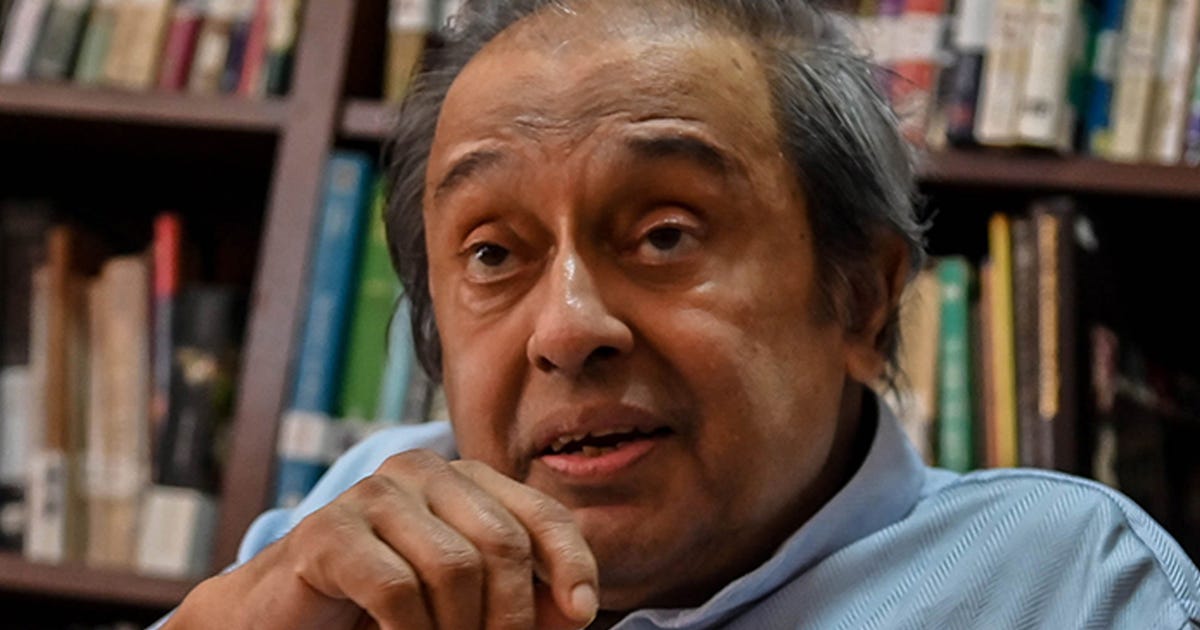
The passing of Chandra Muzaffar on Nov 27 at the age of 79 marks the loss of one of Malaysia’s most distinctive public intellectuals, whose voice extended far beyond Malaysia.
For Iranians who live and work in Malaysia, Chandra represented a remarkable intellectual bridge between Southeast Asia and West Asia, between Islamic thought and universal human values, and between national sovereignty and global justice.
With international affairs increasingly shaped by geopolitical rivalries, selective interpretations of human rights and competing media narratives, his writings consistently returned to a fundamental question: should international relations be governed by power or moral principles?
A Malaysian intellectual with a global conscience
Born in Kedah in 1947, Chandra devoted nearly five decades to scholarship, social activism and public discourse.
In 1977, he founded Aliran, a multiethnic social reform movement committed to justice, freedom and solidarity. His academic career included positions at Universiti Sains Malaysia and Universiti Malaya, where he became the first director of the Centre for Civilisational Dialogue.
Through the International Movement for a Just World (JUST), he brought his intellectual concerns to an international audience.
His books, including Human Rights and the New World Order, Universalism of Islam and Global Ethic or Global Hegemony? reflected an intellectual commitment to understanding the relationship between ethics, political authority and international inequality.
What distinguished Chandra was his ability to connect Malaysia’s domestic concerns about social justice and multicultural coexistence with broader questions about the international distribution of power.
For him, justice was neither geographically confined nor the exclusive possession of any religious or political tradition.
Challenging the legacy of colonialism
Chandra understood that the end of formal colonial rule did not necessarily eliminate the structures of domination that shaped relations between nations.
He examined how unequal economic relationships, military intervention, political pressure and dominant media narratives could perpetuate dependencies long after countries had achieved independence.
His criticism of American foreign policy and Western hegemony was rooted in this broader intellectual framework.
Importantly, his critique was not a rejection of Western civilisation or its intellectual achievements. Rather, he questioned the concentration of power and inconsistencies between the principles proclaimed by powerful nations and their conduct in international affairs.
This perspective resonates with the historical experiences of both Malaysia and Iran, two societies whose understanding of sovereignty has been profoundly influenced by encounters with foreign intervention and imperial power.
Chandra’s advocacy of Malaysia’s non-aligned foreign policy reflected his belief in the importance of independent judgement in international affairs.
Palestine and the universality of justice
Few international issues occupied as prominent a place in Chandra’s writings as Palestine. He regarded Palestinian dispossession, occupation and displacement as fundamental questions of justice rather than merely matters of religious solidarity.
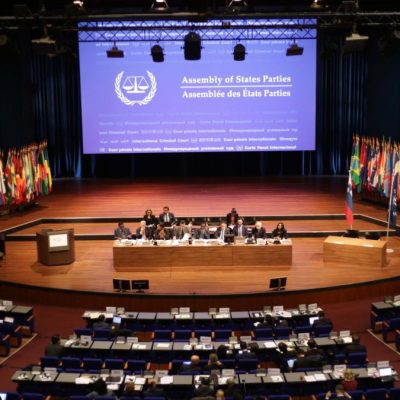
In an FMT article in January 2023, Chandra examined the importance of international institutions in addressing Palestinian rights.
During the Gaza war, he continued to emphasise the historical roots of the conflict, questioning approaches that addressed its immediate consequences without confronting the circumstances that had produced them.
His position also contained an important educational dimension. In November 2023, he told FMT that educators needed a comprehensive and unbiased understanding of the Israeli-Palestinian conflict.
For a scholar of media and communication, this aspect of his work is particularly significant. Public understanding of conflicts depends not only on what is reported but also on which historical experiences, perspectives and voices are included or excluded.
Chandra recognised that understanding Palestine required both historical knowledge and intellectual honesty.
Understanding Iran beyond familiar narratives
As an Iranian academic based in Malaysia, I find Chandra’s engagement with Iran particularly noteworthy.
He approached Iran not simply through the familiar frameworks of nuclear disputes, sanctions, religious differences or regional rivalries, but through its historical experience and aspirations for political independence.
In his 2012 article, Iran: The Price of Resistance, he examined the pressures confronting Iran in relation to its opposition to American dominance and Israeli policies in West Asia.
He placed tensions between Washington and Tehran within the wider context of regional power struggles, the consequences of the 1979 Islamic Revolution and Iran’s commitment to the Palestinian cause.
He also examined the geopolitical significance of Iran’s relationships with regional actors, including Hezbollah in Lebanon.
Readers may disagree with aspects of his analysis or with Tehran’s policies, but Chandra’s contribution lay in bringing historical and geopolitical perspectives into a discussion often dominated by immediate security concerns.
His concern was not confined to the sovereignty of a particular country. It extended to the human, economic and cultural consequences of war.
Rejecting sectarianism
Another important dimension of Chandra’s legacy was his opposition to sectarian divisions within the Muslim world.
In 2013, through JUST, he initiated a joint appeal for an end to violence between Sunni and Shia Muslims by former prime minister Dr Mahathir Mohamad and former Iranian president Mohammad Khatami.
He also advocated recognition of the Amman Message, which acknowledges the legitimacy of different Islamic schools of jurisprudence.
For Iranians living in Malaysia, his willingness to discuss these sensitive issues through scholarship and dialogue was especially meaningful.
Chandra understood that theological differences need not become political hostilities and that religious identity should not prevent mutual understanding.
An intellectual bridge worth remembering
Chandra’s legacy offers a valuable perspective on relations between Malaysia and Iran.
Diplomatic and economic relations are important, but enduring understanding between nations also develops through universities, intellectual exchanges, cultural engagement and independent media.
His work demonstrated the contribution Malaysian intellectuals can make to conversations about global affairs, including those concerning regions geographically distant from Southeast Asia.
He was not a figure whose every political position commanded universal agreement. Nor should an intellectual tribute require such agreement.
The enduring value of his work lies in the questions he raised, the historical perspectives he introduced and his willingness to engage with difficult subjects.
Malaysia has lost a distinguished scholar. Iran has lost an intellectual who sought to understand its historical experience. And the wider international community has lost a persistent advocate of dialogue and global justice.
His passing reminds us that intellectual independence, historical understanding and empathy remain indispensable in an increasingly divided world.
May his soul rest in peace. Al-Fatihah.
Abdolreza Alami is a geopolitical strategist, a senior lecturer, a researcher and an FMT reader.
The views expressed are those of the writer and do not necessarily reflect those of FMT.